Hikers from West Java often cut their teeth on volcanoes such as Gede, Pangrango or Ciremai before setting their sights on something bigger. Kilimanjaro, Africa’s highest mountain, is a natural next goal. If you are looking for Kilimanjaro climbing with Sundanese speaking guide support, we will be straightforward: native Sundanese speakers among Tanzanian mountain guides are very rare, but there are workable alternatives.
From Javanese volcanoes to Kibo
Kilimanjaro is also a volcano, but its summit is much higher than anything in Java, and the thin air changes everything. Experience on Gede or Ciremai helps with stamina and steep trails, yet altitude affects even strong hikers. Acclimatisation, meaning slow ascent and enough rest, is what matters most.
Why health checks are easier in Sundanese
Every day on the mountain, guides check you with a pulse oximeter, which reads your oxygen level and pulse in seconds. They also ask about headache, appetite, sleep and dizziness. When you are exhausted, explaining symptoms in English is hard, and small misunderstandings can lead to wrong decisions.
Safety briefings, about pacing, layering clothes against the cold and what to do if someone feels unwell, also matter. Hearing them in Sundanese or Indonesian means you understand not just what to do, but why.
Kilimanjaro climbing with Sundanese speaking guide: who is in the crew
Tanzanian rules require licensed guides, employed through a registered operator, to lead every climb. Your team will normally include a lead guide, assistant guides, a cook and porters, and their working languages are Swahili and English.
Depending on what we can confirm for your dates:
- a lead or assistant guide who speaks Sundanese or Indonesian as a second language, where available;
- a professional interpreter in Sundanese or Indonesian who climbs with you;
- written briefings in Sundanese or Indonesian on key safety points.
We will tell you honestly what is possible and never promise a specific option in advance. More about the language is in the Sundanese language article on Wikipedia.
Route choices
- Machame: popular, scenic and varied, with camping throughout.
- Lemosho: starts in western rainforest and gives a steady build-up.
- Marangu: the hut route, with dormitory-style sleeping.
- Rongai: approaches from the north on the drier side.
- Northern Circuit: the longest itinerary, circling the quieter northern slopes.
- Umbwe: very steep and best for experienced hikers.
Best months, training and halal meals
January to March and June to October usually offer the best conditions. Train with long walks on hills or stairs carrying a daypack, and speak to a doctor before travelling. Cooks can usually prepare halal meals when asked in advance, and guides can allow time for prayer during rest stops. If your climb overlaps with Ramadan, discuss fasting with your doctor, because hydration at altitude is crucial. See what a Kilimanjaro climb costs for an explanation of what is included.
Safari or Zanzibar afterwards
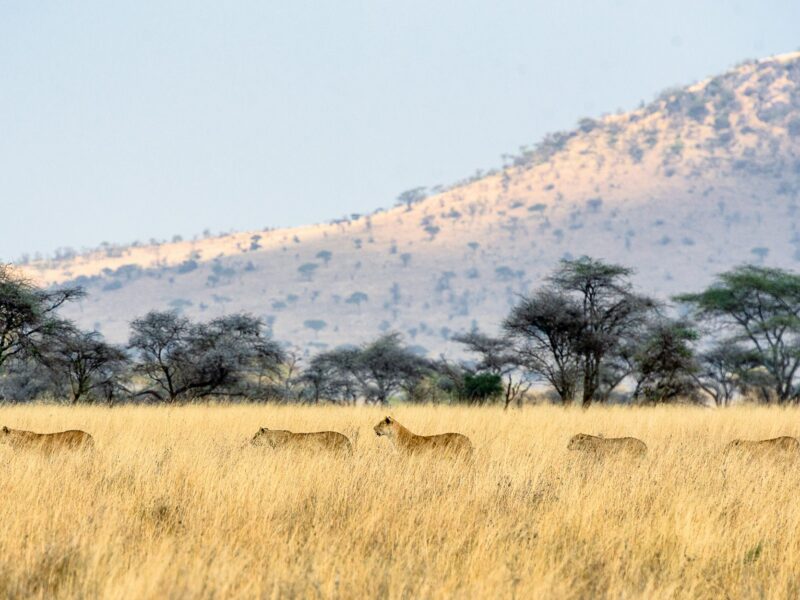
A few days in the Serengeti or Ngorongoro Crater after the climb is a gentle way to recover, and Zanzibar’s Swahili coast offers beaches and history. Most climbers fly into Kilimanjaro International Airport (JRO), often via Doha, Dubai or Istanbul from Jakarta. Check the official Tanzania eVisa portal for current entry rules.
Sundanese-speaking support is limited, so contact us early; the sooner you ask, the better the chance of a guide for your climb. Share your dates through our planning form.
Questions from Sundanese climbers
More Language Guides
Prefer to plan in another language? See all our safari and Kilimanjaro guides by language, or browse: