West Java is a land of volcanoes, tea gardens and crater lakes, so Sundanese travellers may feel a spark of recognition when they look down into the Ngorongoro Crater. Arranging a Tanzania safari with Sundanese speaking guide support is another matter. Native Sundanese-speaking guides are very rare here, and we would rather say so clearly than promise something we cannot deliver.
Sundanese (Basa Sunda) is spoken mainly in West Java and Banten in Indonesia, and nearly all Sundanese speakers also use Indonesian. You can find out more in the Wikipedia article on the Sundanese language.
Sundanese, Indonesian or both?
Because most Sundanese travellers are fluent in Indonesian, the practical question is often which language suits each member of your group best. Depending on availability, we can look at:
- a guide who speaks Sundanese or Indonesian as a second language, where one is free on your dates;
- an English-speaking guide-driver working with a professional interpreter in Sundanese or Indonesian;
- written notes in Sundanese or Indonesian, such as your itinerary and key park rules, where possible.
Indonesian speakers are also uncommon among Tanzanian guides, so we check carefully. We never commit to a single option until it is confirmed.
Why it is worth having explanations in your language
Guides constantly interpret what you see: how a hyena clan shares a kill, why impala leap high when alarmed, what the colour of a bird’s plumage tells you about the season. Each explanation tends to spark another question. When the answer arrives in a language everyone understands, children and older relatives stay engaged for longer, and nobody feels left out.
It also helps on cultural visits. Learning how Maasai families manage cattle, or how the Hadzabe near Lake Eyasi still hunt and gather, is far more meaningful when you can ask questions freely.
Volcanoes, craters and the land you will cross
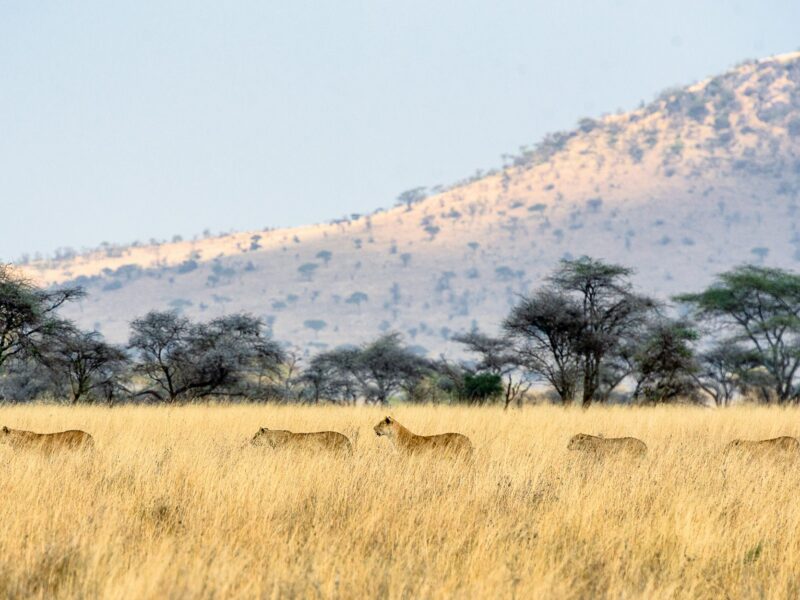
Northern Tanzania’s landscapes were shaped by volcanic activity, much like the highlands around Bandung. The Ngorongoro Crater is a huge collapsed volcano whose floor teems with wildlife, and the Ngorongoro Conservation Area around it also protects Maasai grazing lands. Beyond it, the Serengeti stretches across open grassland, while Tarangire is known for baobabs and elephants and Lake Manyara for its forested shoreline. Travellers with more time can add the southern parks.
Tanzania safari with Sundanese speaking guide: how it works
You travel in a private 4×4 with a pop-up roof, so everyone gets a clear view. Your guide-driver also manages park permits and safety, and an interpreter, if you choose one, rides with you throughout. Lodges can usually provide halal meals on request, and short stops for prayer can be planned within park rules.
- Tell us your dates and language needs through our planning page.
- We check language options and send a suggested route, perhaps based on our safari packages.
- You confirm, and we book everything.
Seasons and flights from Indonesia
The dry season from June to October is excellent for game viewing. In January and February, the wildebeest herds calve in the southern Serengeti and Ndutu area.
From Jakarta, journeys to Kilimanjaro International Airport (JRO), Julius Nyerere International Airport (DAR) or Zanzibar (ZNZ) usually connect through hubs such as Doha, Dubai, Istanbul or Addis Ababa. Rules for visitors change, so check the official eVisa portal before booking. Sundanese interpreters are hard to find, so the earlier you enquire, the better the chance of a Sundanese-speaking guide, though we always try our best.
FAQs
More Language Guides
Prefer to plan in another language? See all our safari and Kilimanjaro guides by language, or browse: