Highlights of Lake Eyasi
- Morning hunt with the Hadzabe
- Datoga blacksmith visit
- Onion farms and lakeside scenery
Best time to visit
All year.
Getting there
Around 1.5 hours from Karatu.
Ideal for
Cultural travellers, add-on to a northern safari.
Want to include Lake Eyasi in your trip? Browse our Tanzania safari packages or ask for a tailor-made quote.
Meet the Hadzabe
Lake Eyasi is a seasonal soda lake south-west of the Ngorongoro highlands. Its shores are home to the Hadzabe, one of the last hunter-gatherer peoples in Africa, who live by hunting with bows and gathering roots, berries and honey. Their language uses click sounds and is unrelated to those of their neighbours.
Nearby live the Datoga, pastoralists and skilled blacksmiths who turn scrap metal into arrowheads and jewellery, and the Iraqw farmers of the highlands.
A typical visit
- Pre-dawn departure to join a Hadzabe group around their fire
- Morning hunt or gathering walk in the bush
- Demonstrations of fire-making and archery
- Visit to a Datoga homestead and forge
- Afternoon walk along the lakeshore and onion farms
Responsible cultural tourism
Visits are arranged with the communities, and fees are paid directly to them. Photography is welcome when you ask first. Your guide explains customs and translates.
Itineraries
Lake Eyasi is included in our 9 days safari with Lake Eyasi and can be added to any northern circuit safari from Karatu.
The landscape
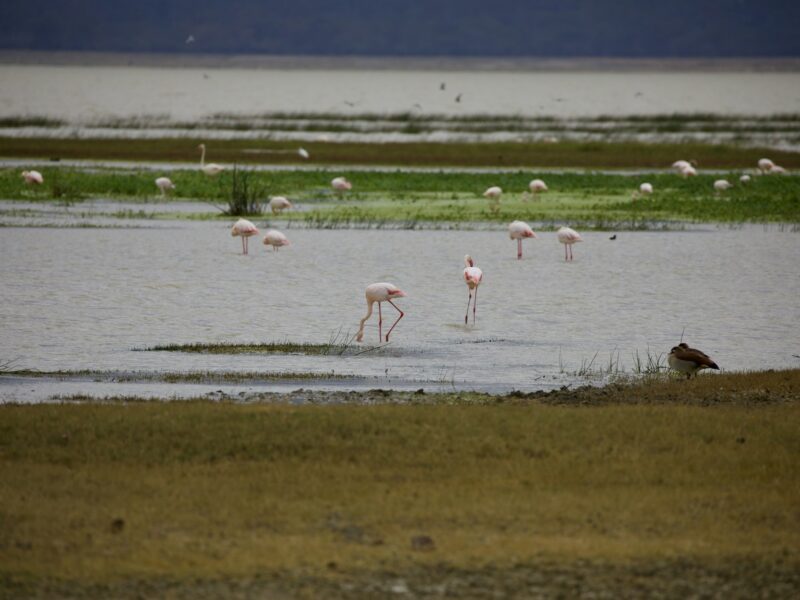
Lake Eyasi lies in a shallow basin beneath the Eyasi escarpment. Its water level varies dramatically with the rains, and in the dry season it can shrink to salt flats. Doum palms and acacia trees line the shore, and flamingos and pelicans visit when water is present.
Practical tips
- Wear comfortable shoes and long trousers for the bush walk
- Bring water and sun protection
- Follow your guide’s advice on photography and etiquette
Who the Hadzabe are
The Hadzabe (also called Hadza) are one of the very few groups in Africa who still live partly or wholly by foraging. Their total population is small, and only part of the community lives fully by hunting and gathering today; others combine foraging with work and school. Their language, Hadzane, includes click consonants and is not closely related to any other living language.
Men hunt with bows and arrows, often targeting birds, small antelope and baboons, while women gather tubers, berries and baobab fruit. Honey is highly valued, and the Hadzabe are known for working with the honeyguide, a bird that leads people to bees’ nests and then feeds on the wax left behind.
The Datoga and the Iraqw
The Datoga are Nilotic pastoralists who keep cattle and goats around the lake. Visitors often watch Datoga smiths melt scrap metal over charcoal and hammer it into arrowheads, bracelets and knives, which they trade with the Hadzabe. Datoga women are recognisable by their leather dresses decorated with beads.
The Iraqw live on the cooler highlands around Karatu and are known for their farming terraces and distinctive houses. A visit can easily include all three communities.
How Lake Eyasi fits your safari
Lake Eyasi works best as a one or two-night detour from Karatu, between the Ngorongoro Crater and Tarangire or Lake Manyara. The road from Karatu descends to the lake, with the final section on dirt.
| Plan | Suits |
|---|---|
| Half day from Karatu | Travellers short on time; leave before dawn |
| One night at the lake | Most visitors; a relaxed hunt and village visits |
| Two nights | Photographers and those who want walking and birding too |
You can see how it fits into a full itinerary on our 9 days safari with Lake Eyasi or the longer 11 days private safari with Lake Natron and Lake Eyasi.
What to expect on the morning hunt
The hunt is not a performance; it follows the group’s own plans. You may walk for one to three hours through thorny bush at a quick pace, and there is no guarantee anything will be caught. Many visitors find the most memorable moments are the quieter ones: watching fire being made with sticks, sharing roasted tubers or listening to stories by the fire.
- Wear sturdy closed shoes and long trousers to protect against thorns
- Start before sunrise, as the group moves early before the heat
- Carry water and a hat; the lake basin can get very hot by late morning
- Expect to see hunting and possibly butchering of small animals
Combining with other destinations
Lake Eyasi sits close to the Ngorongoro Crater, so most guests visit the crater on the day before or after. You can also combine Eyasi with the Serengeti by returning through Karatu and the Ngorongoro highlands. For a broader view of cultural experiences, see our Tanzania cultural tours.
Safari itineraries that include this destination
- 9 Days Tanzania Safari with Lake Eyasi (9 Days)
- 11 Days Private Safari with Lake Natron & Lake Eyasi (11 Days)
- 12 Days Safari, Culture & Zanzibar (12 Days)
Lake Eyasi on a Tanzania Private Safari
A visit to Lake Eyasi is about people rather than game, and it is best experienced on a Tanzania private safari. Around one and a half hours from Karatu, the lake is home to the Hadzabe hunter-gatherers and the Datoga pastoralists. Visiting with your own guide means a small, respectful group and time to understand what you are seeing.
A private cultural visit
- An early start to join a Hadzabe morning hunt
- A visit to a Datoga blacksmith
- Lakeside scenery and onion farms
- Easy to add before or after the Ngorongoro Crater
Your guide helps with translation and context, and can shorten or extend the visit depending on your interest. Eyasi can be visited all year. Look for itineraries including Eyasi in our Tanzania safari packages, or plan your private safari and we will build it into your route.
Related reading from our Safari Journal
- Ngorongoro Crater vs Serengeti: Do You Need to Visit Both?
- Lake Natron: Flamingos, Volcanoes and Waterfalls
- Tanzania Welcomes a Record 5.9 Million Visitors: What It Means for Your Safari
Further reading
Learn more from independent, authoritative sources: