Many Malaysians have already climbed Mount Kinabalu in Sabah, and some arrive in Tanzania wondering how much harder Kilimanjaro will be. The honest answer is that Kilimanjaro rises to 5,895 metres at Uhuru Peak, far higher than Kinabalu, and altitude becomes the main challenge. If you are interested in Kilimanjaro climbing with Malay speaking guide support, this page explains what we can realistically arrange and why it helps.
Malay (Bahasa Melayu) is not a common language among Tanzanian mountain crews. For background on the language and its close link to Indonesian, see the Wikipedia entry on Malay.
Understanding every briefing in Bahasa Melayu
As you gain height, your guides watch closely for altitude sickness. Each day, they use a pulse oximeter to check your blood oxygen and heart rate, and they ask how you are eating, sleeping and feeling. The early signs, such as headache, nausea or unusual fatigue, are easy to play down if you are unsure how to explain them.
Being able to say exactly what is wrong in your own language, and to understand the guide’s response, can make the difference between a safe ascent and a risky one. The same goes for safety briefings on pace, drinking enough water and what to expect on summit night.
Kilimanjaro climbing with Malay speaking guide: crew and options
Every climb is led by licensed mountain guides working with a registered operator. A typical crew has a lead guide, assistant guides, a cook and porters, who normally speak Swahili and English.
Native Malay speakers among them are rare, so the options usually include:
- a lead or assistant guide who speaks Malay or Indonesian as a second language, where one is available;
- a professional Malay interpreter who climbs with your group;
- written Malay briefings on safety and altitude symptoms, prepared in advance where possible.
We confirm what is possible for your dates and do not promise any single option beforehand.
Comparing the main routes
| Route | Best suited to |
|---|---|
| Machame | Scenery and variety, for fit first-timers |
| Lemosho | A gradual, quieter ascent from the west |
| Marangu | Hut sleeping instead of camping |
| Rongai | A drier northern approach |
| Northern Circuit | Maximum acclimatisation time |
| Umbwe | Experienced trekkers who want a steep challenge |
Find more detail on the Machame route, the Lemosho route and the Marangu route, or compare them all on our Kilimanjaro climbing page.
Preparation, halal food and the best months
Most climbers aim for January to March or June to October. Kinabalu or Gunung Tahan experience is useful preparation, but long training walks with a daypack over several months matter more. Visit a doctor before you go.
Mountain cooks can generally provide halal meals if you ask in advance, and guides can plan short pauses for prayer. If your climb falls during Ramadan, discuss fasting with your doctor and with us, as hydration at altitude is vital.
Pairing the climb with safari or Zanzibar
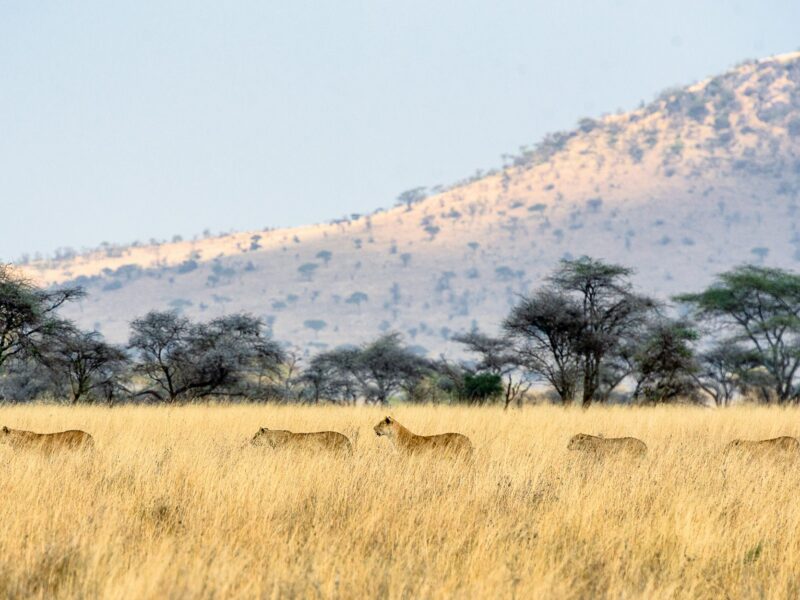
After the descent, many climbers spend a few days on safari in the Serengeti or Ngorongoro, then relax on Zanzibar’s beaches. Our Kilimanjaro and safari page has combination ideas.
Most climbers fly into Kilimanjaro International Airport (JRO), with connections from Southeast Asia commonly via Doha, Dubai or Addis Ababa. Check the latest entry rules on the official eVisa portal before you book.
Malay-speaking support takes time to secure, so the earlier you ask, the better the chance of a Malay-speaking guide on the mountain. Start with our planning form.
Kilimanjaro questions answered
More Language Guides
Prefer to plan in another language? See all our safari and Kilimanjaro guides by language, or browse: