For climbers from the Ethiopian highlands or northern Kenya, Kilimanjaro is the great mountain on the neighbourhood horizon. If you are interested in Kilimanjaro climbing with Oromo speaking guide support, it is important to know that native Oromo speakers are rare among Tanzanian mountain guides. We can still look at several practical options and confirm what is possible before you book.
Oromo, or Afaan Oromoo, is widely spoken in Ethiopia and northern Kenya, but Tanzanian crews work mainly in Swahili and English.
Highland living and the altitude question
Growing up or living in the highlands of Oromia or around Addis Ababa may give you some advantage, but it is no guarantee against altitude sickness at 5,895 metres. The same daily checks apply to every climber. Hiking in the Bale Mountains or other Ethiopian ranges is excellent preparation for the walking itself.
Why your own language matters on the mountain
Each day, your guides measure blood oxygen and pulse with a pulse oximeter and ask about headache, nausea, appetite and sleep. Being able to describe how you feel precisely, and to understand advice about slowing down or turning back, is a real safety benefit. Briefings before summit night, covering timings, warm layers and emergency plans, also need to be fully understood.
Kilimanjaro climbing with Oromo speaking guide support: who does what
Only licensed mountain guides, working for a registered operator, may lead climbs. Your team will include a lead guide, assistant guides, a cook and porters, who mainly speak Swahili and English.
Options for Oromo support include:
- a lead or assistant guide with Oromo as a second language, should one be free;
- a professional Oromo interpreter who climbs with the group;
- written Afaan Oromoo briefings on safety and altitude, where possible.
If anyone in your group speaks Swahili, as many Kenyan Oromo speakers do, communication with the whole crew becomes far easier. We confirm before you book and never promise one arrangement in advance.
Picking a route
| Route | What to expect |
|---|---|
| Machame | Popular and scenic, with camping and a steep wall section |
| Lemosho | Remote western start and gradual acclimatisation |
| Marangu | Huts, a steady gradient and the same path up and down |
| Rongai | Northern approach near the Kenyan border |
| Northern Circuit | The longest, quietest route |
| Umbwe | Short, steep and for experienced trekkers |
Explore the Machame, Marangu and Rongai routes, or read our Kilimanjaro climbing overview.
Preparation and best months
Conditions are usually best from January to March and from June to October. Build endurance with long walks carrying a daypack, and see a doctor before travel. Cooks can usually prepare halal meals or food suitable for fasting days if you ask in advance, though on the mountain it is wise to discuss with your doctor how fasting fits with the high energy demands of the climb.
Combining the climb with safari or Zanzibar
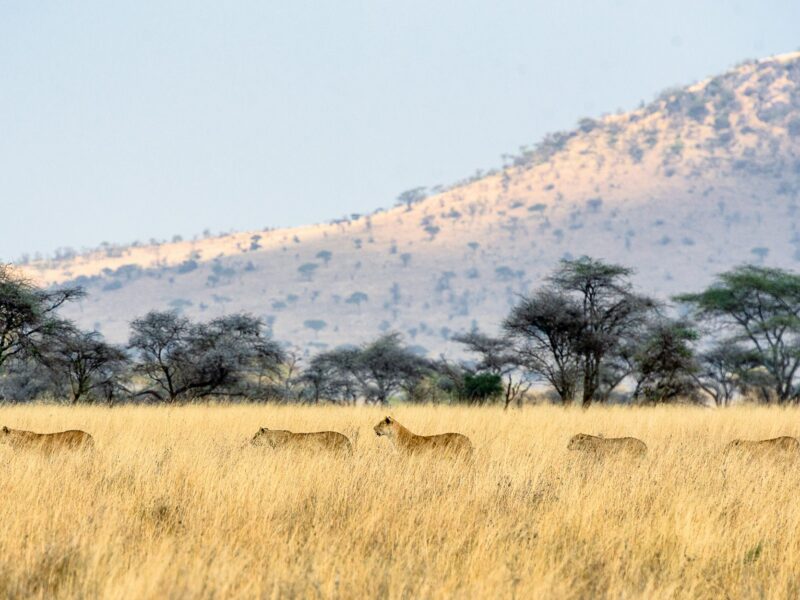
After the descent, a safari in the Serengeti or Ngorongoro is an easy addition, and Zanzibar offers beaches and Swahili coastal history. Our Kilimanjaro and safari page has ideas. Climbers from Ethiopia usually fly via Addis Ababa to Kilimanjaro International Airport (JRO), and those from Kenya may connect via Nairobi or travel overland through Namanga. Check entry rules on the official Tanzania eVisa portal.
Oromo-speaking support takes time to secure, so contact us early; the earlier you ask, the better the chance of a guide for your climb. Send your dates through our planning form.
FAQs
More Language Guides
Prefer to plan in another language? See all our safari and Kilimanjaro guides by language, or browse: