Highlights of Lake Manyara National Park
- Tree-climbing lions (sightings vary)
- Large baboon troops
- Flamingos and pelicans
- Treetop walkway
Best time to visit
All year; November–June for birdlife.
Getting there
Around 2 hours by road from Arusha.
Ideal for
Short safaris, birders, first stop on the circuit.
Want to include Lake Manyara National Park in your trip? Browse our Tanzania safari packages or ask for a tailor-made quote.
A compact park full of contrasts
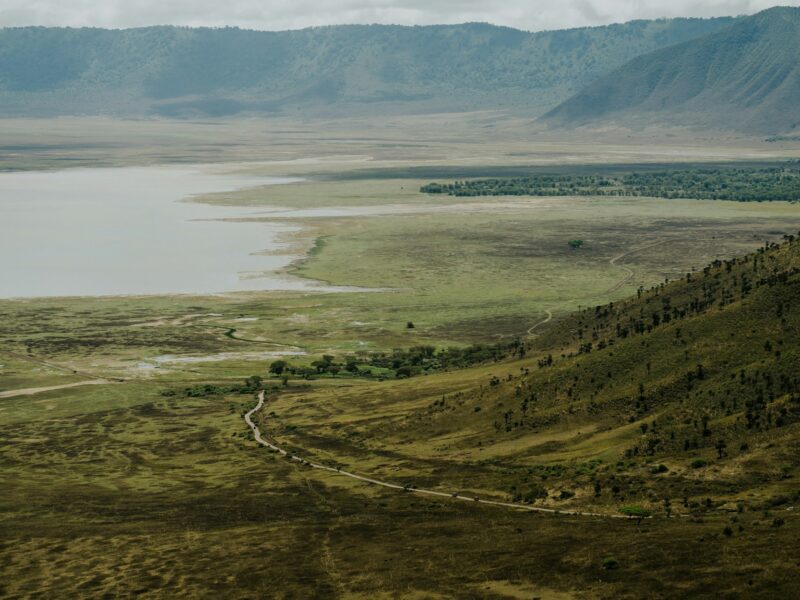
Lake Manyara National Park lies at the foot of the Great Rift Valley escarpment, about two hours from Arusha. Much of the park is the alkaline lake itself; the land section is a narrow strip packed with different habitats: groundwater forest, acacia woodland, open grassland and hot springs.
Ernest Hemingway famously praised its beauty, and it remains one of the most scenic stops on the northern circuit.
Wildlife and birds
- Large troops of olive baboons and blue monkeys in the forest
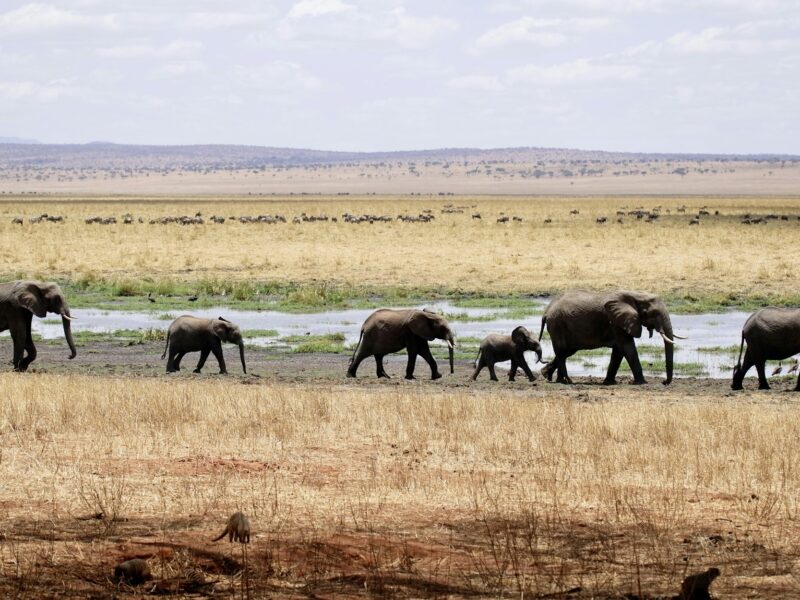
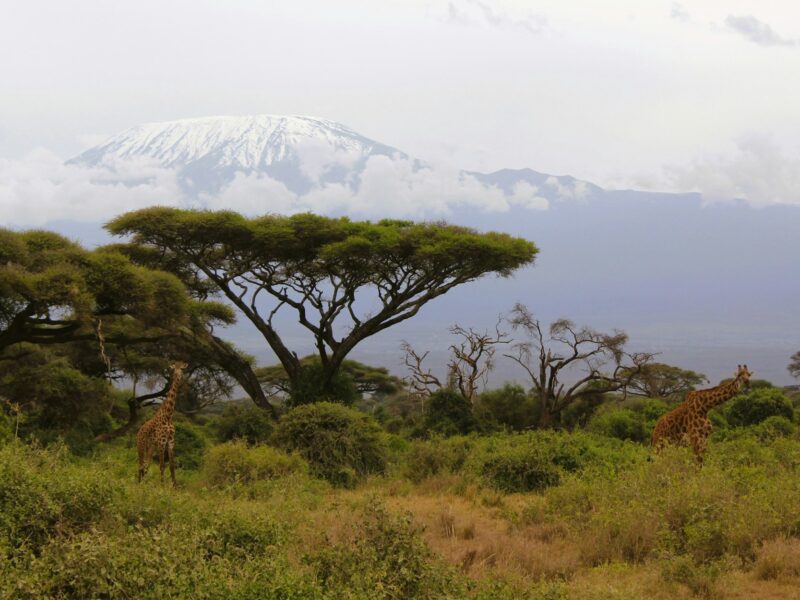
- Elephants, giraffes, buffalo, zebras and wildebeest
- Lions, which in Manyara are known for sometimes resting in trees (sightings vary)
- Hippos at the hippo pool
- Flamingos, pelicans, storks and more than 400 bird species
Things to do
- Game drives through forest and along the lake shore
- Treetop walkway through the forest canopy (operated within the park)
- Canoeing on the lake when water levels allow
- Cultural walk in Mto wa Mbu, a village of many tribes with banana farms and markets
Best time to visit
The park is good all year. The dry season (June to October) is best for large mammals, while the wet season (November to June) brings migrant birds and flamingos.
Combining Lake Manyara
Manyara sits on the route between Arusha and the Ngorongoro highlands, so it fits naturally into the 3-day safari and longer itineraries such as the 7 days Tanzania safari.
Why Lake Manyara works so well on a short safari
Because the park is compact, you can see a wide range of habitats and animals in a few hours. It is a great first or last stop, and the forest is pleasantly cool on hot days.
The Rift Valley escarpment
The park sits beneath a dramatic wall of the Great Rift Valley, rising several hundred metres above the lake. Lodges on the escarpment offer sweeping views over the lake and the Maasai steppe.
Mto wa Mbu
The village at the park entrance, whose name means ‘River of Mosquitoes’, is home to people from many different tribes. A cultural walk visits banana plantations, artists and a local home, with a lunch of traditional dishes.
A sample half-day in Lake Manyara
Many guests see Manyara in a morning or an afternoon on the way to or from the Ngorongoro highlands.
| Stage | What you typically see |
|---|---|
| Entrance and groundwater forest | Olive baboons, blue monkeys, bushbuck and hornbills under tall fig and mahogany trees |
| Hippo pool | Hippos, pelicans, storks and waders |
| Acacia woodland | Elephants, giraffe, impala and the chance of lions resting in branches |
| Lake shore grassland | Buffalo, zebra and wildebeest, with flamingos on the water when conditions suit |
The forest is fed by springs seeping from the base of the escarpment, which is why it stays green even in the dry season.
Where to stay
- On the escarpment: lodges with sweeping views over the lake and the Rift Valley floor
- In and around Mto wa Mbu: budget guesthouses and campsites close to the gate
- In Karatu: farm lodges in the highlands, convenient for the Ngorongoro Crater the next day
Karatu and Mto wa Mbu usually have the most availability.
Seasonal guide
| Season | What to expect |
|---|---|
| June to October | Dry, clear views, animals drawn to water and forest |
| November to December | Short rains, green landscapes and arriving migrant birds |
| January to February | Warm, often good for birds and young animals |
| March to May | Long rains, quieter roads and very lush forest |
How Manyara fits a northern circuit safari
Manyara sits between Arusha and the highlands, so it adds variety without adding much driving. Pair it with Tarangire National Park for big elephant herds and with the Ngorongoro Crater for high-density game viewing. With more time, carry on to the Serengeti National Park. If you would like a cultural day nearby, Lake Eyasi is reachable from Karatu.
Guide tips for Manyara
- Visit the forest early in the morning, when monkeys and birds are most active.
- Bring binoculars: the shore birds are often some way out on the water.
- Ask your guide to stop at the escarpment viewpoint on the way up to Karatu for the classic view over the lake.
- Keep windows up near the baboons, which are expert at stealing snacks.
Combining with a short safari
For travellers with only a few days, Manyara is an easy addition. Our 2 days Tarangire and Ngorongoro safari can often be extended by a day to include it.
Safari itineraries that include this destination
- 3 Days Tarangire, Lake Manyara & Ngorongoro Safari (3 Days)
- 4 Days Private Tarangire, Manyara & Ngorongoro Safari (4 Days)
- 5 Days Safari & Zanzibar (5 Days)
- 6 Days Budget Camping Safari (6 Days)
- 6 Days Tanzania Safari (6 Days)
- 7 Days Tanzania Safari (7 Days)
- 8 Days Private Big Five Safari (8 Days)
- 9 Days Tanzania Safari with Lake Eyasi (9 Days)
- 10 Days Tanzania Safari (10 Days)
- 11 Days Safari & Zanzibar (11 Days)
- 13 Days Private Grand Northern Safari (13 Days)
- 15 Days Safari & Zanzibar (15 Days)
Where to stay: karatu lodges
Compare our hand-picked karatu lodges, including The Manor at Ngorongoro, Gibb's Farm, Plantation Lodge, Ngorongoro Farm House, or browse all Tanzania safari accommodation.
Lake Manyara on a Tanzania Private Safari
Lake Manyara is compact, and a Tanzania private safari helps you make the most of its contrasts. In a few hours you can move from groundwater forest to open grassland and the lake shore, and with your own guide you decide how long to spend with the large baboon troops, scanning the trees for lions or watching flamingos and pelicans.
Ideas for a private visit
- The treetop walkway at your own pace
- Birdlife focus from November to June
- An early start before continuing to the Ngorongoro highlands
- A relaxed first day after arriving in Arusha
Its location at the foot of the Rift Valley escarpment, about two hours from Arusha, makes it a natural link between Tarangire and the crater. Browse routes in our Tanzania safari packages, or plan your private safari and we will fit Lake Manyara in where it suits you.
Related reading from our Safari Journal
- Ngorongoro Crater vs Serengeti: Do You Need to Visit Both?
- Tarangire's Elephants: When and Where to See the Great Herds
- Arusha Travel Guide: Things to Do Before or After Your Safari
Further reading
Learn more from independent, authoritative sources: