What to expect on a photography safari tanzania
- Private vehicle with bean bags and charging
- Early starts and late returns for the best light
- Guides experienced with photographers
- Flexible time at sightings
Popular itineraries
Built for the shot
Wildlife photography needs patience, light and position. A photographic safari gives you all three: a private vehicle, flexible timings and a guide who understands how to position for light and background.
Vehicle setup
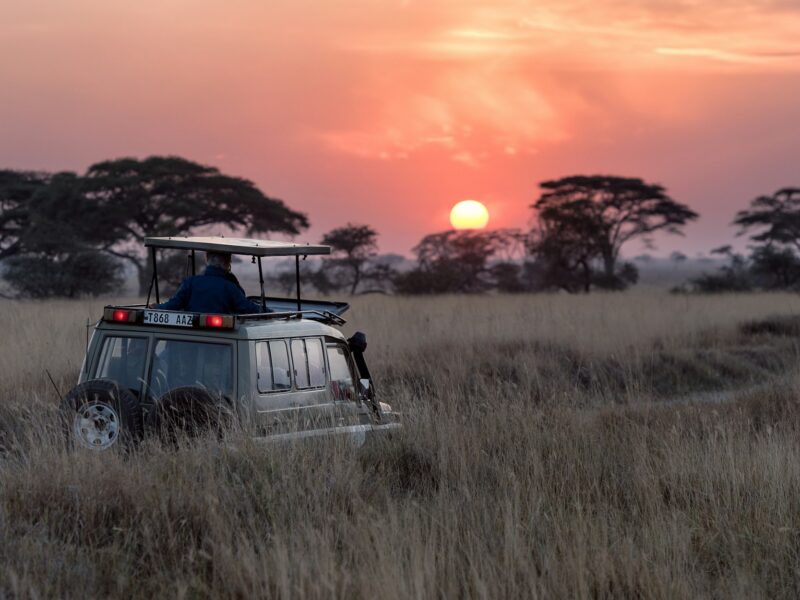
- Private Land Cruiser with pop-up roof
- Bean bags and window mounts
- Charging points for batteries and laptops
- Space for long lenses and camera bags
Best seasons for photography
- January to March: calving season, green backdrops and dramatic skies
- June to October: dry season, river crossings and concentrated wildlife
- November: short rains, moody light and fewer vehicles
Itinerary
What makes a good photo guide
A photographic guide anticipates animal behaviour, positions the vehicle for light and background, turns off the engine at the right moment and gives you time.
Photography etiquette
Always ask before photographing people, never use flash on animals and follow park rules on distance.
Light, timing and park hours
Tanzania lies just south of the equator, so sunrise and sunset fall at roughly the same time all year, typically around 6:15 to 7:00. The golden light is short and intense, which makes early starts essential. Most national parks admit vehicles from around 6:00 to 18:00, so staying inside or close to the park gives you the first and last light rather than spending it on the road.
Midday light on the plains is harsh. Many photographers use this time to rest, back up images and charge batteries, then head out again from mid-afternoon.
Where to point your lens
| Location | Photographic strengths |
|---|---|
| Serengeti | Big cats, migration herds, big skies and storms |
| Ngorongoro Crater | Black rhino, lions and dramatic crater-wall backdrops |
| Tarangire | Elephants among baobabs, especially in the dry season |
| Lake Natron | Flamingos, volcanic landscapes and abstract salt patterns |
| Nyerere | Boat-level wildlife and birds on the Rufiji River |
Our guides to the Serengeti, Tarangire and Lake Natron cover each area in more depth.
Camera gear checklist
- Two bodies if possible, to avoid lens changes in dust
- A telephoto zoom (for example 100–400 mm or 150–600 mm) plus a wide or mid-range zoom
- A bean bag; tripods are impractical inside vehicles
- Plenty of memory cards and a way to back up each night
- A blower and microfibre cloths for the dust
- Spare batteries, as charging at remote camps may be limited to certain hours
Light-aircraft flights limit luggage, usually to around 15 kg in soft bags, so plan your kit carefully if you are flying.
Working with your guide
Tell your guide on the first morning what you hope to photograph, whether that is cats on rocks, elephants against storm clouds or birds in flight. A good guide will read the light, position the vehicle so the sun is behind you, and switch off the engine to stop vibration. Patience pays: staying with one sighting for an hour often gives better images than chasing several.
Drones and special permissions
Flying a drone in Tanzania requires permits, and drone use is generally not allowed in national parks without specific permission. Leave it at home unless you have arranged this well in advance; our article on drone rules in Tanzania explains why.
Photography and the migration
Mara River crossings in the northern Serengeti, typically from July to October, demand patience: herds can gather for hours before crossing. A private vehicle lets you wait. Our 10 days private photography and migration safari is built around this.
Photography on a Tanzania Private Safari
Wildlife photography and shared vehicles rarely mix. A Tanzania private safari solves that: nobody asks you to move on before the light changes, and your guide can reposition the vehicle for a clean background without disturbing other passengers. Early starts and late returns can be planned around golden hour rather than a group meal time.
Set up for your camera
- Private Land Cruiser with a pop-up roof
- Bean bags and window mounts for steady shots
- Charging points for batteries and laptops
- Space for long lenses and camera bags
Our guides are experienced with photographers and understand patience, angles and animal behaviour. Tell us whether you are after big cats, birds or landscapes and we will tailor the route and season. See our private luxury safaris for camps in prime areas, or plan your private safari with your shot list in mind.
Related reading from our Safari Journal
- Safari Photography With a Smartphone: 12 Pro Tips
- Ngorongoro Crater vs Serengeti: Do You Need to Visit Both?
- Serengeti vs Maasai Mara: Which Should You Visit?
Further reading
Learn more from independent, authoritative sources: