Highlights of Ndutu Area & Calving Season
- Wildebeest calving season
- Lion, cheetah and hyena action
- Off-road driving permitted in the conservation area
Best time to visit
December–March (calving peaks around February).
Getting there
Around 5–6 hours by road from Arusha, or a short flight to Ndutu airstrip.
Ideal for
Migration seekers, photographers.
Want to include Ndutu Area & Calving Season in your trip? Browse our Tanzania safari packages or ask for a tailor-made quote.
The calving grounds
Ndutu lies in the south-west of the Ngorongoro Conservation Area, bordering the southern Serengeti. Its short-grass plains grow on volcanic soils rich in minerals, ideal for lactating wildebeest. Each year, roughly from December to March, the migration herds gather here to give birth.
What to expect
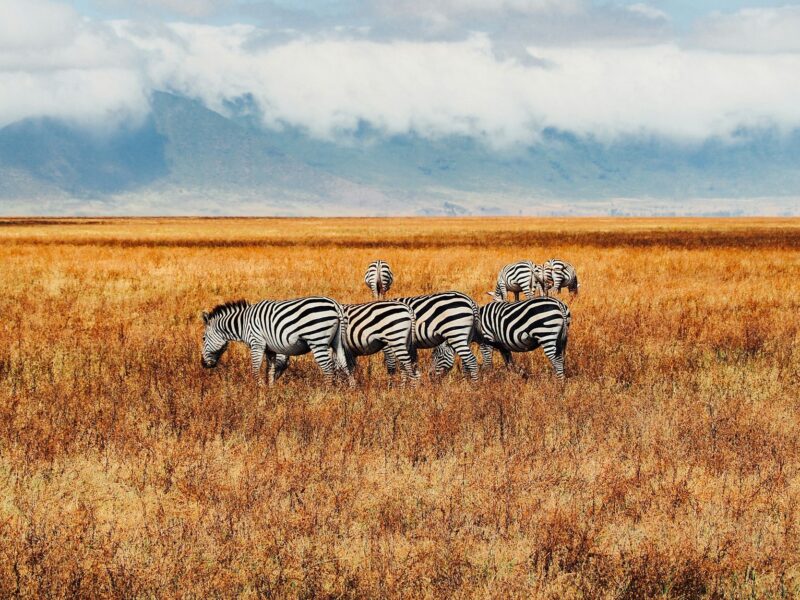
- Hundreds of thousands of wildebeest and zebras on the plains
- Calving, often peaking around February
- Lions, cheetahs, hyenas and jackals following the herds
- Lakes Ndutu and Masek with flamingos and resident wildlife
Special rules
Because Ndutu is in the conservation area, off-road driving is permitted under rules that protect the habitat, allowing better viewing than in the national park.
Itineraries
Photography in Ndutu
The green plains, stormy skies and constant action make Ndutu a favourite with photographers. Expect early starts and long days in the field.
Accommodation
Lodges and seasonal tented camps are spread across the area, with campsites for budget travellers.
Wildlife beyond the wildebeest
The calving herds draw the headlines, but Ndutu has excellent resident wildlife too. The mix of open plains, woodland and the shores of Lakes Ndutu and Masek supports a wide range of animals.
- Cheetahs hunting on the open short-grass plains
- Lion prides that follow the herds and stay in the woodland
- Spotted hyenas and golden and black-backed jackals
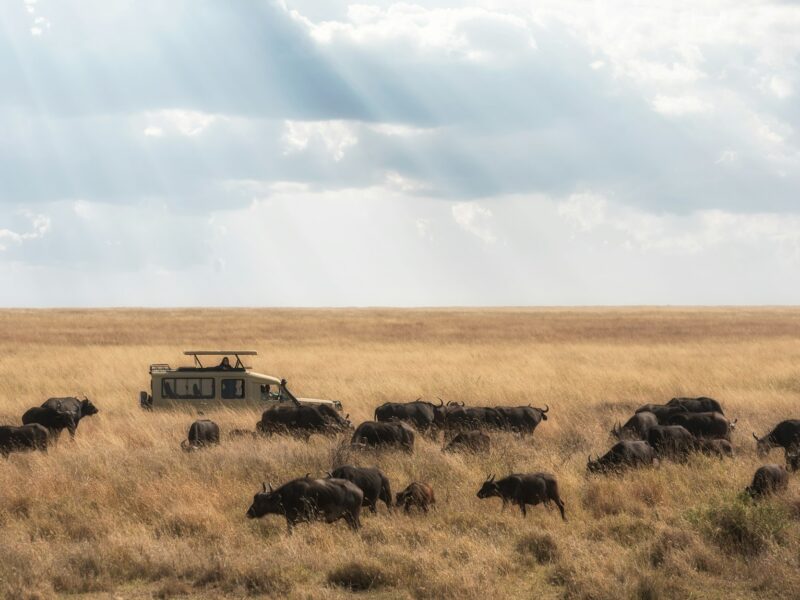
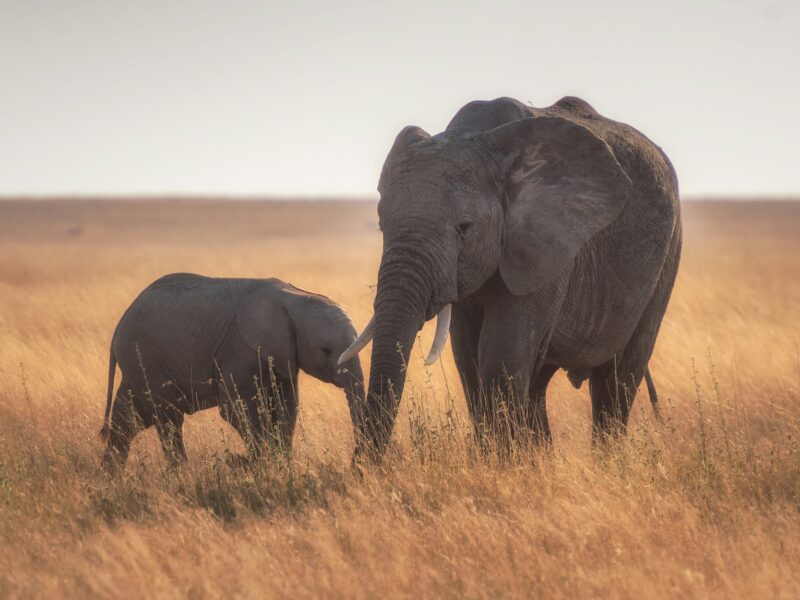
- Elephants, giraffes and buffaloes around the lakes and woodland
- Serval, bat-eared foxes and honey badgers if you are lucky
- Large flocks of birds, including flamingos on the alkaline lakes when conditions suit
The predators are drawn to the calving because newborn wildebeest are vulnerable, although calves can usually stand and run within minutes of birth.
Month by month in the Ndutu area
| Month | What usually happens |
|---|---|
| December | Herds start arriving as the short rains green the plains |
| January | Large herds settle on the plains; early births begin |
| February | Calving often peaks, with many thousands of births a day |
| March | Herds still present, starting to gather and move |
| April–May | Long rains; herds usually head north-west towards the central Serengeti |
| June–November | Quieter, with resident wildlife only |
These patterns depend on the rains and can shift by several weeks. Our Great Migration month-by-month guide explains the full annual cycle.
Getting the most from your game drives
Ndutu is about following the herds. Your guide reads the plains, checks where the herds are grazing and watches for vultures circling overhead or wildebeest staring in one direction.
- Plan full days in the field with packed lunches rather than returning to camp at midday
- Be patient; a cheetah hunt or birth can take hours to unfold
- Expect rain showers and dramatic skies in the afternoons
- Ask for a vehicle with plenty of space for camera gear
For photographers, our 8 days Serengeti photography safari is designed around this kind of patient, long-day approach.
Combining Ndutu with other areas
Because Ndutu is within the Ngorongoro Conservation Area, it combines naturally with the Ngorongoro Crater on the way in or out. Many guests also visit Olduvai Gorge, the famous archaeological site, which lies between the crater and the Ndutu plains. If you have more time, continue into the central Serengeti to see resident big cats along the Seronera River.
Finding space in calving season
February is among the busiest times in the southern Serengeti and Ndutu, and camps fill early. If you are booking late, consider January or early March, be flexible about the exact camp, or stay in the southern Serengeti and drive across. Our 5 days private Ndutu calving safari is a good short option.
Safari itineraries that include this destination
- 5 Days Private Ndutu Calving Safari (5 Days)
- 5 Days Private Great Migration Fly-In Safari (5 Days)
- 6 Days Great Migration Safari (6 Days)
- 7 Days Calving Season Safari in Ndutu (7 Days)
- 8 Days Serengeti Photography Safari (8 Days)
- 10 Days Private Photography & Migration Safari (10 Days)
- 13 Days Migration Safari & Zanzibar (13 Days)
Where to stay: serengeti lodges and camps
Compare our hand-picked serengeti lodges and camps, including Four Seasons Safari Lodge Serengeti, Singita Sasakwa Lodge, andBeyond Serengeti Under Canvas, Serengeti Serena Safari Lodge, or browse all Tanzania safari accommodation.
Ndutu Calving Season on a Private Safari
Between December and March the migration herds gather on the short-grass plains around Ndutu, and calving usually peaks around February. Because the area lies within the Ngorongoro Conservation Area, off-road driving is permitted, which suits a Tanzania private safari particularly well: your guide can follow the herds and predators without waiting for a group to agree.
What a private vehicle adds
- Long sightings of lion, cheetah and hyena among the herds
- Early starts and late returns whenever the light is best for photography
- Freedom to move as the herds shift with the rain
Ndutu is around 5 to 6 hours by road from Arusha, or a short flight to Ndutu airstrip. We tailor the route, whether you drive in or fly directly. See our Tanzania safari packages for calving-season ideas.
To time your trip, plan your private safari with our team.
Related reading from our Safari Journal
- Great Migration 2027: Where the Herds Should Be, Month by Month
- How to See a Mara River Crossing: Tips From Our Guides
- Ngorongoro Crater vs Serengeti: Do You Need to Visit Both?
Further reading
Learn more from independent, authoritative sources: