Highlights of Serengeti National Park
- The Great Migration of wildebeest and zebra
- Big cats in the Seronera valley
- Hot-air balloon safaris
- Kopjes and endless plains
Best time to visit
All year; June–October for river crossings, January–March for calving.
Getting there
Around 7–8 hours by road from Arusha, or 1–2 hours by light aircraft.
Ideal for
First-time safaris, migration seekers, photographers.
Want to include Serengeti National Park in your trip? Browse our Tanzania safari packages or ask for a tailor-made quote.
Why the Serengeti is special
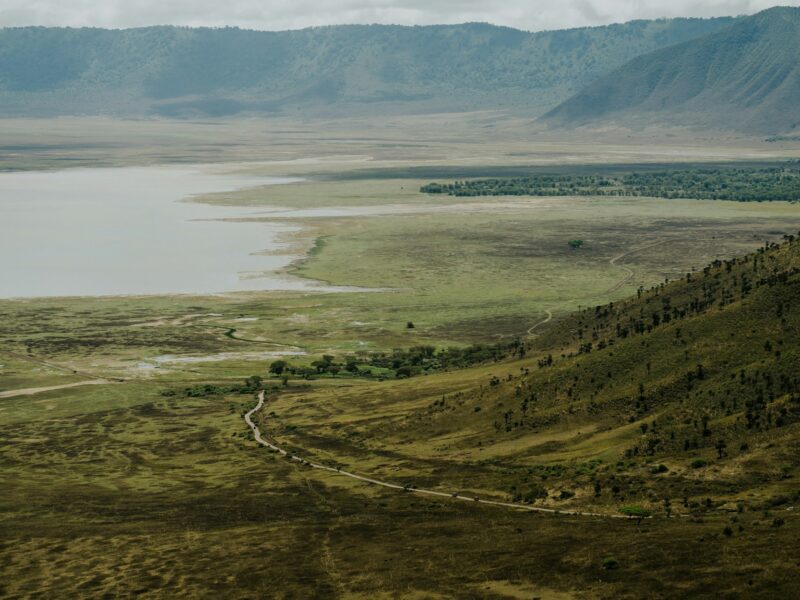
The Serengeti covers about 14,750 square kilometres of grassland, woodland and riverine forest in northern Tanzania. Together with Kenya’s Maasai Mara and the surrounding reserves it forms one ecosystem, home to the largest overland migration of large mammals on earth. Its name comes from the Maasai word for ‘endless plains’, and standing on the short-grass plains in the south you understand why.
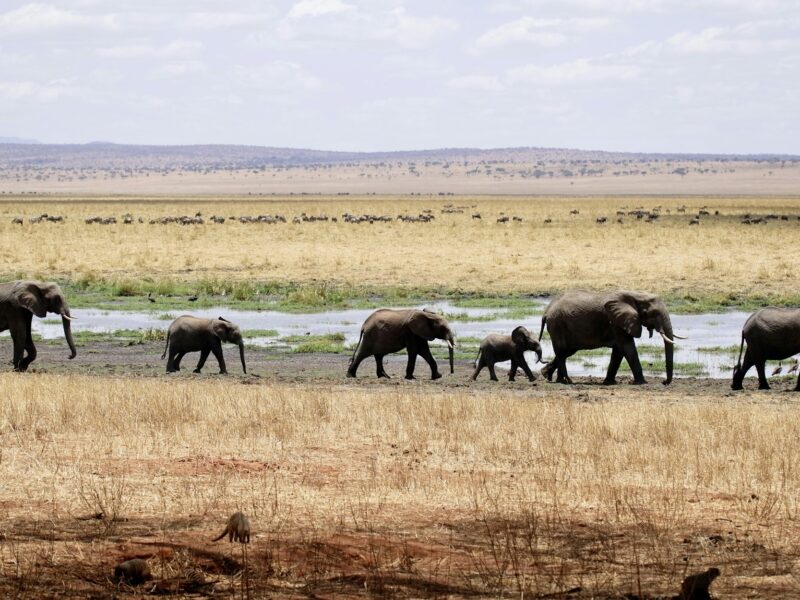
It was declared a national park in 1951 and became a UNESCO World Heritage Site in 1981. Beyond the migration, the park’s resident wildlife is exceptional all year: lions, leopards, cheetahs, spotted hyenas, elephants, giraffes, buffalo, topi, hartebeest, eland and more than 500 bird species.
The four regions of the Serengeti
Central Serengeti (Seronera)
The Seronera River valley is the heart of the park and one of the best places in Africa to see leopards. Permanent water means wildlife is present in every month, and lion prides hold territories around the granite kopjes.
Southern Serengeti and Ndutu
From roughly December to March the herds graze the short-grass plains of the south, where the wildebeest give birth. Predator action is intense. See our Ndutu calving season guide.
Western Corridor
Stretching towards Lake Victoria, the corridor is crossed by the Grumeti River, home to very large Nile crocodiles. The herds usually pass through around May to July.
Northern Serengeti (Kogatende and Lamai)
From about July to October the herds reach the Mara River, where the famous crossings take place. Outside these months the north is quiet and beautiful.
Wildlife you can expect
- Lions: large prides, frequently seen on kopjes and in the Seronera valley
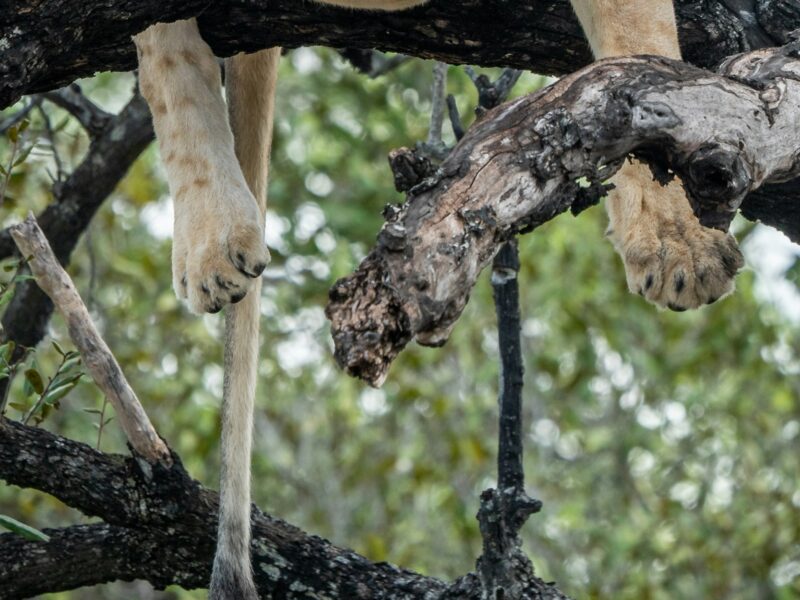
- Leopards: often resting in sausage and acacia trees along rivers
- Cheetahs: most visible on the open southern plains
- Wildebeest, zebras and Thomson’s gazelles in vast numbers
- Elephants, giraffes, buffalo, hippos and Nile crocodiles
- Spotted hyenas, jackals, bat-eared foxes and servals
Best time to visit the Serengeti
| Months | What happens | Where to stay |
|---|---|---|
| December–March | Calving season on the southern plains | Ndutu and southern Serengeti |
| April–May | Long rains, lush and quiet, lower rates | Central Serengeti |
| June–July | Herds in the Western Corridor and centre | Western Corridor, Seronera |
| July–October | Mara River crossings | Northern Serengeti |
| November | Herds move south with the short rains | Central and eastern Serengeti |
Activities
- Game drives in a pop-up roof 4×4, including full days with picnic lunches
- Sunrise hot-air balloon safaris from Seronera and other areas (seasonal)
- Guided walks in selected private concessions
- Cultural visits to Maasai communities on the edges of the ecosystem
Getting to the Serengeti
By road, the central Serengeti is about 7–8 hours from Arusha through the Ngorongoro Conservation Area, usually broken with a night in Karatu or on the crater rim. By air, scheduled light aircraft fly from Arusha, Kilimanjaro and Zanzibar to several Serengeti airstrips in 1–2 hours.
Where to stay
The park offers everything from public campsites to some of Africa’s finest lodges. Mobile tented camps move with the migration, placing you close to the herds. We match your accommodation to the season and your budget.
Finding space in the Serengeti
Because the park is so large, there is almost always a well-placed camp with space somewhere. Popular options are 4 days Serengeti and Ngorongoro, 6 days Great Migration and the 3 days fly-in safari.
A typical day on safari in the Serengeti
Most days start with coffee at first light, around 6:00 am, and a game drive while it is still cool, when lions return from the night’s hunting and cheetahs begin to look for prey. Mid-morning you stop for breakfast in the bush or return to camp. The heat of the day is quieter, ideal for a picnic under an acacia or time by the pool. Afternoon drives run until sunset, when the light turns gold and predators become active again. Park rules require vehicles to be back at camp after dark, so evenings are spent around the fire swapping stories of the day.
Serengeti photography tips
- Ask your guide to position the vehicle with the sun behind you in the morning and evening
- Bring a zoom lens of at least 300 mm for cats in trees
- Use a bean bag on the window frame for stability
- The kopjes make beautiful backdrops for lions at sunset
Conservation and park rules
Vehicles must stay on designated tracks in the national park, keep a respectful distance from animals and limit the number of vehicles at sightings. Park fees fund rangers, anti-poaching work and community projects around the park.
Safari itineraries that include this destination
- 3 Days Private Serengeti & Ngorongoro Safari (3 Days)
- 3 Days Serengeti Fly-In Safari (3 Days)
- 3 Days Serengeti Safari from Zanzibar (3 Days)
- 4 Days Tanzania Budget Camping Safari (4 Days)
- 4 Days Private Honeymoon Safari (4 Days)
- 4 Days Private Serengeti Fly-In Safari (4 Days)
- 4 Days Serengeti & Ngorongoro Crater Safari (4 Days)
- 5 Days Luxury Tanzania Safari (5 Days)
- 5 Days Private Great Migration Fly-In Safari (5 Days)
- 5 Days Tanzania Northern Circuit Safari (5 Days)
- 6 Days Budget Camping Safari (6 Days)
- 6 Days Family Safari in Tanzania (6 Days)
- 6 Days Great Migration Safari (6 Days)
- 6 Days Private Northern Serengeti Safari (6 Days)
- 6 Days Private Senior Safari (6 Days)
- 6 Days Private Western Corridor Safari (6 Days)
- 6 Days Serengeti Safari & Zanzibar (6 Days)
- 6 Days Tanzania Safari (6 Days)
- 7 Days Calving Season Safari in Ndutu (7 Days)
- 7 Days Mara River Crossing Safari (7 Days)
- 7 Days Private Luxury Safari (7 Days)
- 7 Days Private Walking & Wildlife Safari (7 Days)
- 7 Days Safari & Zanzibar (7 Days)
- 7 Days Tanzania Safari (7 Days)
Where to stay: serengeti lodges and camps
Compare our hand-picked serengeti lodges and camps, including Four Seasons Safari Lodge Serengeti, Singita Sasakwa Lodge, andBeyond Serengeti Under Canvas, Serengeti Serena Safari Lodge, or browse all Tanzania safari accommodation.
The Serengeti on a Tanzania Private Safari
The Serengeti is vast, and a Tanzania private safari helps you use that space well. With your own guide and vehicle, you can follow the season: river crossings from June to October, calving from January to March, or the big cats of the Seronera valley at almost any time. If a cheetah begins to stalk, you wait as long as you like.
Private Serengeti advantages
- Full-day game drives with a picnic lunch when you choose
- Time at quiet kopjes away from busier sightings
- Flexibility to add a hot-air balloon safari
- Arrival by road from Arusha or by light aircraft
We choose camps for the area the wildlife is likely to be in during your dates. See how the Serengeti fits into our private luxury safaris, or plan your private safari and we will suggest the right number of nights.
Related reading from our Safari Journal
- Ngorongoro Crater vs Serengeti: Do You Need to Visit Both?
- Serengeti vs Maasai Mara: Which Should You Visit?
- Is a Serengeti Hot-Air Balloon Safari Worth It?
Further reading
Learn more from independent, authoritative sources: