Compare Kilimanjaro routes
| Route | Days | Difficulty | Scenery | Traffic |
|---|---|---|---|---|
| Machame | 6–7 | Moderate–challenging | Excellent | Busy |
| Lemosho | 7–8 | Moderate | Excellent | Medium |
| Marangu | 5–6 | Moderate | Good | Busy |
| Rongai | 6–7 | Moderate | Good | Quiet |
| Umbwe | 6–7 | Challenging | Dramatic | Quiet |
| Northern Circuit | 8–9 | Moderate | Excellent | Very quiet |
How to choose
- First-time trekkers: Lemosho 8 days or Machame 7 days
- Prefer huts: Marangu 6 days
- Rainy season: Rongai
- Maximum acclimatisation: Northern Circuit
Our climb standards
- Certified, first-aid trained guides
- Fair wages and proper equipment for porters
- Quality tents and nutritious meals
- Daily health checks and emergency oxygen
- Hotel nights before and after
Best time to climb
January to March and June to October are the driest months. Full moon climbs are popular for a bright summit night.
Combine your climb
Add a safari after the climb with our Kilimanjaro climb and safari package, or relax on Zanzibar.
What a typical climb looks like
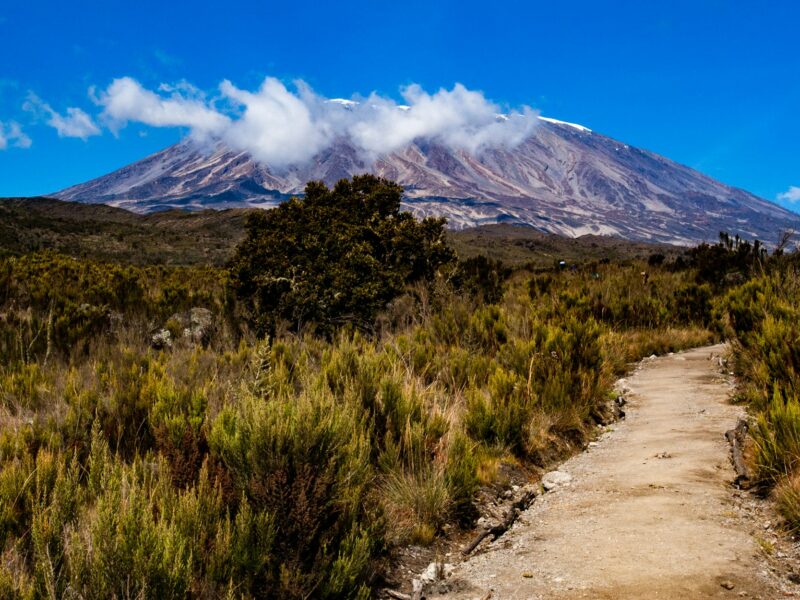
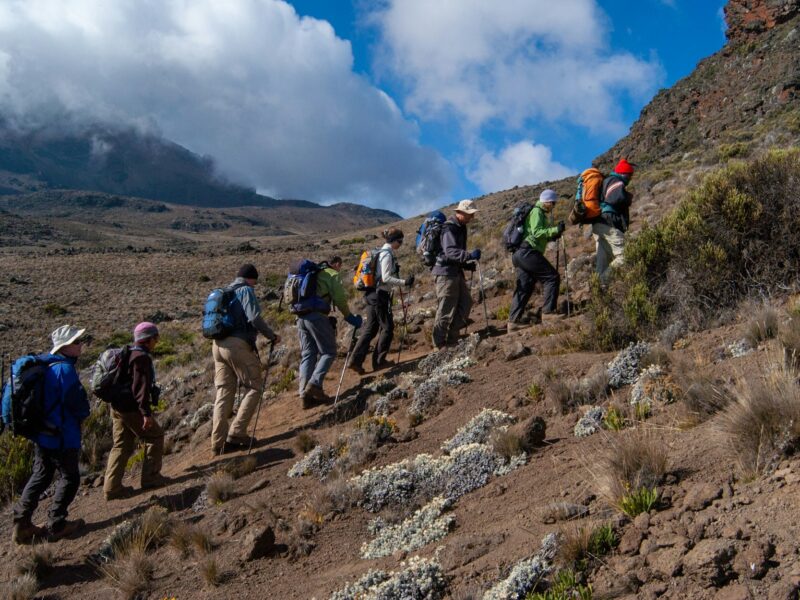
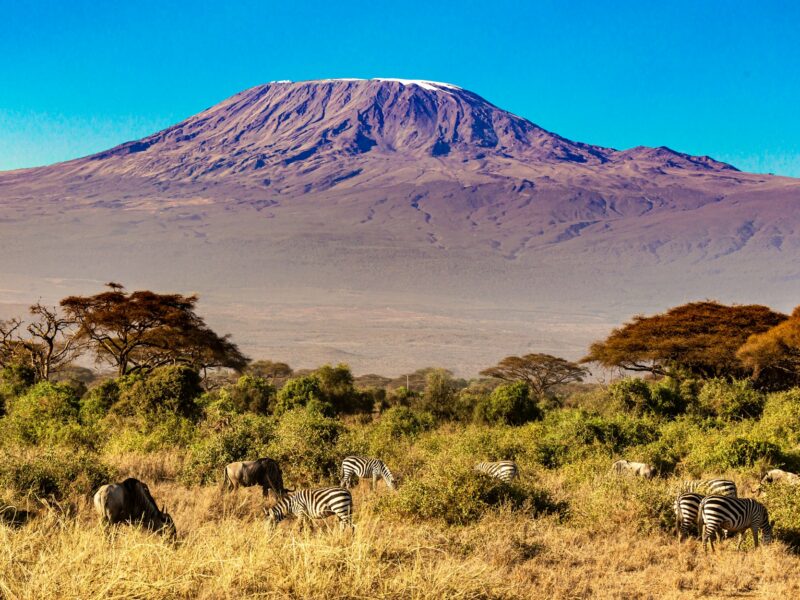
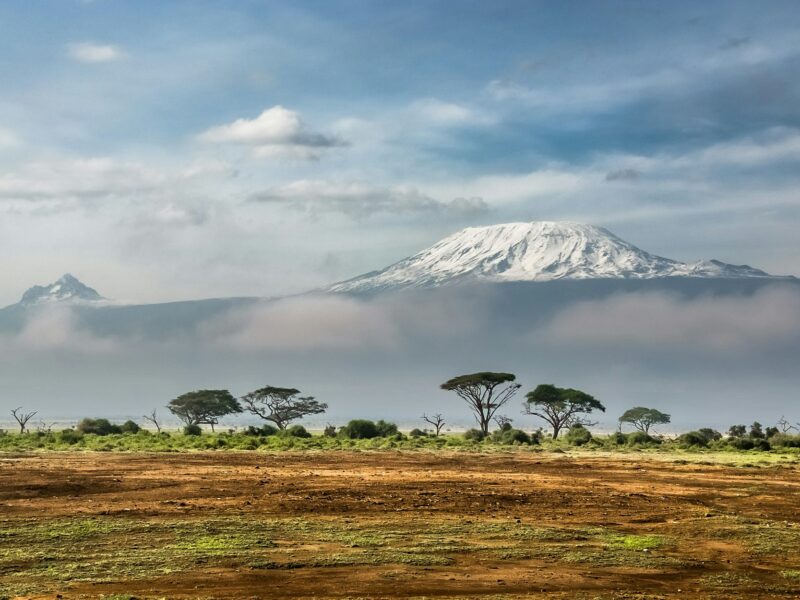
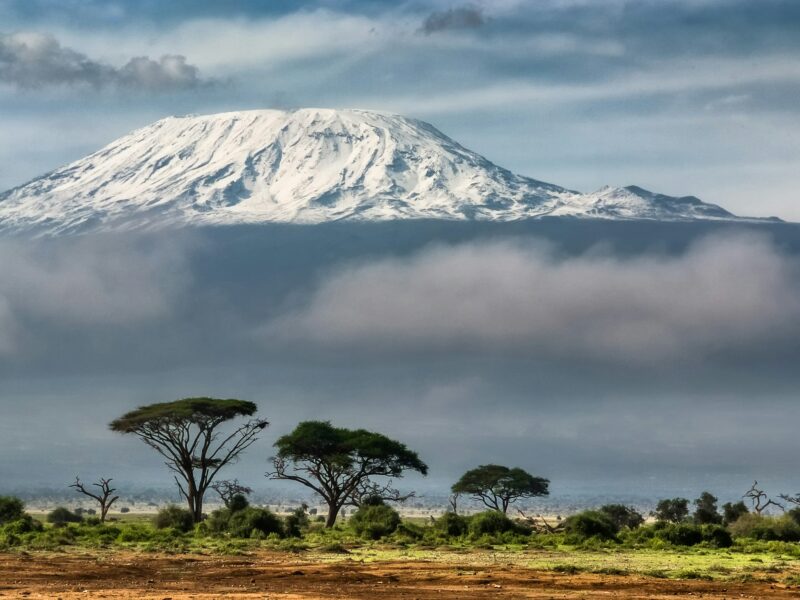
At 5,895 m, Uhuru Peak is the highest point in Africa and the tallest free-standing mountain in the world. You do not need technical climbing skills, but the altitude makes it a serious trek. Most days involve four to seven hours of walking at a slow, steady pace – the famous ‘pole pole’ – followed by rest and a hot meal at camp.
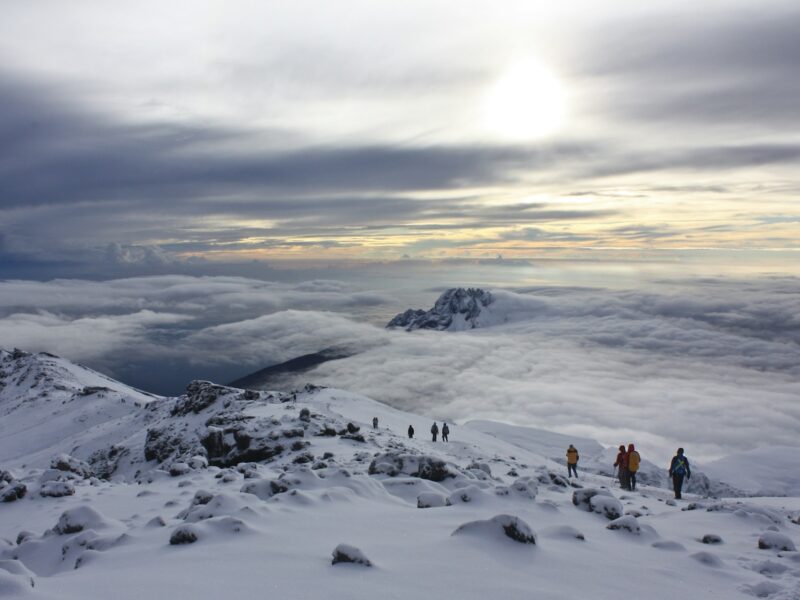
Summit night is the hardest part. You usually leave around midnight from high camp, reach the crater rim at Stella Point (about 5,756 m) or Gilman’s Point (about 5,685 m) around dawn, then continue to Uhuru Peak before descending.
Climate zones you pass through
| Zone | Approximate altitude | What you see |
|---|---|---|
| Cultivation | Below about 1,800 m | Farms, villages and coffee plantations |
| Rainforest | About 1,800–2,800 m | Tall trees, mosses and colobus monkeys |
| Heath and moorland | About 2,800–4,000 m | Giant heather, groundsels and lobelias |
| Alpine desert | About 4,000–5,000 m | Rocky, dry and cold, with strong sun |
| Arctic summit | Above 5,000 m | Glaciers, snow and freezing temperatures at night |
Choosing the right number of days
More days mean better acclimatisation and a higher chance of reaching the top. We generally recommend at least seven days on the mountain for first-timers. Shorter itineraries save money but give your body less time to adjust. Read our guides to the Machame route and the Lemosho route, or compare costs on how much it costs to climb Kilimanjaro.
Preparing for the climb
- Start training at least two to three months ahead, with long hill walks
- Break in your boots well before you travel
- Learn the symptoms of altitude sickness and tell your guide how you feel
- Drink plenty of water and keep eating, even when your appetite fades
- Pack layers for temperatures that can fall well below freezing on summit night
Our 12-week Kilimanjaro training plan is a good place to start.
Why the crew matters
Your guides set the pace, monitor your health twice a day and make the decisions on summit night. Porters carry tents, food and water so you can focus on walking. We choose crews who are fairly paid and properly equipped, and we keep groups small so your guide can watch each climber closely.
Other ways to experience the mountain
Not ready for the summit? A Kilimanjaro day hike into the rainforest gives you a taste. For a serious acclimatisation warm-up, many climbers tackle Mount Meru (4,566 m) first.
Where to stay: hotels and lodges in moshi
Compare our hand-picked hotels and lodges in moshi, including AMEG Lodge Kilimanjaro, Weru Weru River Lodge, Kaliwa Lodge, Springlands Hotel, or browse all Tanzania safari accommodation.
Private Kilimanjaro Climbs and Safaris
Every route in our comparison table can be climbed as a private trip, with your own lead guide, crew and start date. Many guests then rest their legs on a Tanzania private safari, travelling from Moshi to the northern parks with the same planners looking after both parts.
Choosing your route privately
- First-time trekkers often prefer Lemosho over 8 days or Machame over 7 days
- Marangu suits those who would rather sleep in huts
- Rongai is a sensible choice in the rainy season
- The Northern Circuit gives the most time to acclimatise
Our climb standards apply whether you climb alone, as a couple or with friends: certified, first-aid trained guides, fair wages and proper equipment for porters, quality tents, daily health checks and emergency oxygen. Ask about combining your climb with our private luxury safaris.
When you know your dates, plan your private safari and climb with us.
Related reading from our Safari Journal
- Kilimanjaro Training Plan: How to Prepare in 12 Weeks
- Altitude Sickness on Kilimanjaro: How to Prevent It
- The Complete Kilimanjaro Packing List
Further reading
Learn more from independent, authoritative sources: