Highlights of Mahale Mountains National Park
- Chimpanzee trekking
- Lake Tanganyika kayaking
- Remote, roadless wilderness
Best time to visit
July–October.
Getting there
Light-aircraft flights, usually combined with Katavi.
Ideal for
Primate lovers, luxury fly-in safaris.
Want to include Mahale Mountains National Park in your trip? Browse our Tanzania safari packages or ask for a tailor-made quote.
Chimpanzees in a mountain rainforest
Mahale Mountains National Park rises steeply from the clear waters of Lake Tanganyika. With no roads, it is reached by light aircraft and boat, and it is home to one of the largest known populations of wild chimpanzees, studied by researchers since the 1960s.
Experience
- Daily chimpanzee treks with expert trackers
- Kayaking and swimming in Lake Tanganyika
- Dhow trips at sunset
- Remote beach camps with very few guests
Combining Mahale
Mahale is usually combined with Katavi on a fly-in western circuit. The best time is July to October.
Remote luxury
Mahale’s few camps are simple but beautifully set on white-sand beaches. With no roads, the experience feels like a true expedition.
Best time
July to October, when chimpanzees are often lower on the slopes and trails are drier.
A park like nowhere else in Tanzania
Mahale covers around 1,600 km² of forested mountains on a peninsula jutting into Lake Tanganyika. The range rises to Nkungwe, at roughly 2,460 m, and the lower slopes are covered in tropical forest. Lake Tanganyika itself is the longest freshwater lake in the world and the second deepest, reaching close to 1,470 m, with crystal-clear water that is home to hundreds of species of colourful cichlid fish.
Research into Mahale’s chimpanzees began in the 1960s, and the habituated community studied here, known as the M group, has made it one of the best places in Africa to watch chimpanzees in their natural home.
What a chimpanzee trek is like
Treks usually start after breakfast. Trackers head out early to locate the chimpanzees, then radio the guides with directions. Depending on where the group is, the walk can take from under an hour to several hours over steep, slippery trails. Once you find them, time with the chimpanzees is typically limited to one hour.
- Wear long trousers, sturdy shoes and a light rain jacket
- Bring water, insect repellent and a small daypack
- Face masks are typically required near the chimps to reduce disease risk
- Keep a respectful distance, usually around 8–10 m
- No flash photography, eating or drinking near the animals
A minimum age, usually around 12, applies for chimpanzee trekking, and you should not trek if you feel unwell.
Life at a lakeshore camp
Between treks, days at Mahale move slowly. You might kayak along the shoreline, swim in the clear water, fish from a dhow or simply watch the light change over the lake. Evenings are spent on the beach, with the mountains of the Democratic Republic of the Congo sometimes visible on the far shore on clear days.
Getting there in practice
| Leg | How |
|---|---|
| Arusha to Mahale airstrip | Scheduled light aircraft, a few times a week, often via Katavi |
| Airstrip to camp | Boat along the lakeshore, usually one to two hours |
| Moving on | Flights to Katavi, Arusha or onward connections |
Because flights operate on set days, your stay length is often shaped by the schedule. That is why the park suits trips planned well ahead, though we always check availability for your dates.
Combining Mahale with other parks
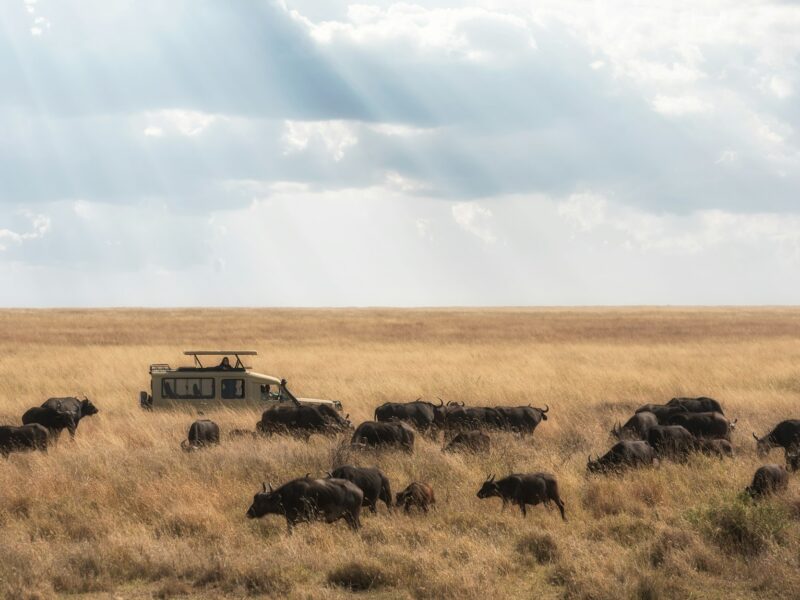
The classic pairing is with Katavi National Park for big herds of buffalo and hippos. Our 12 days private Katavi and Mahale safari and the 14 days private wildlife and chimpanzee safari show how it fits together. If you are deciding between Tanzania’s chimp parks, read our comparison of Gombe and Mahale or see Gombe Stream National Park.
Mahale Mountains by Private Fly-in Safari
With no roads, Mahale is reached by light aircraft and boat, which makes careful planning essential. On a Tanzania private safari we handle every connection, so you can focus on trekking for chimpanzees in a mountain rainforest that researchers have studied since the 1960s.
How a private trip works here
- Flights arranged around your dates, often combined with Katavi for a western circuit
- Treks with time to watch the chimpanzees at a relaxed pace
- Quiet hours on Lake Tanganyika, where kayaking is a highlight
Who it suits
Mahale is a favourite with primate lovers and travellers on luxury fly-in safaris who want somewhere remote. It works best between July and October. We tailor the length of stay and the parks it is paired with, and it sits comfortably within our private luxury safaris.
When you are ready, plan your private safari with our Arusha team.
Related reading from our Safari Journal
- Chimpanzee Trekking in Tanzania: Gombe vs Mahale
- Arusha Travel Guide: Things to Do Before or After Your Safari
- Safari Photography With a Smartphone: 12 Pro Tips
Further reading
Learn more from independent, authoritative sources: