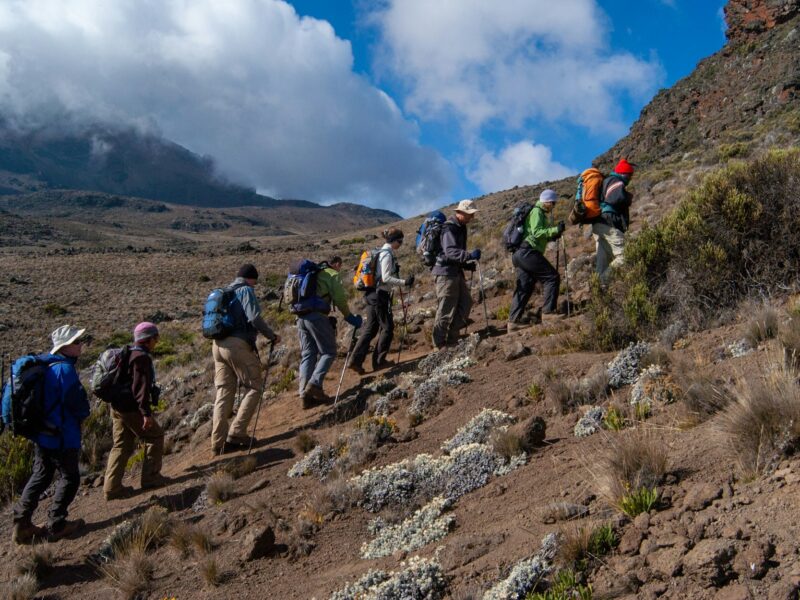
Reaching Uhuru Peak at 5,895 metres depends far more on listening than on fitness. Kilimanjaro climbing with English speaking guide support means every briefing, every warning about pace and every question at the evening health check is delivered in language you understand without effort, even when you are tired, cold and short of breath.
English is already the working language on most Kilimanjaro climbs, so the real choice is about clarity. Our role, as an Arusha-based operator, is to put you with a crew whose lead guide communicates calmly and precisely, and to do so even when you contact us only weeks or days before you want to start.
Why clear communication matters at altitude
Altitude affects concentration. By the third or fourth day many climbers find that complicated instructions blur together, so a guide who speaks plainly is a genuine safety asset. The most important conversations on the mountain are short and practical: drink more, slow down, tell me about your headache, put on another layer before the summit night.
Each morning and evening your guide will usually check your oxygen saturation and pulse with a pulse oximeter and ask how you are sleeping, eating and feeling. Honest answers depend on understanding the questions. Travellers who speak English as a second language sometimes say “fine” simply to avoid a difficult conversation, and a patient guide learns to ask again in a different way. Tell us in advance if anyone in your group would like extra time during briefings.
How the mountain crew is organised
Every climb must be led by licensed mountain guides working with a registered operator. A typical crew includes:
- a lead guide, responsible for pacing, route decisions and health checks;
- one or more assistant guides, depending on group size;
- a cook who prepares meals at camp;
- porters who carry tents, food and equipment.
The crew normally speaks Swahili among themselves and English with climbers. On your climb, the lead guide and assistant guides are the people who brief you, so we focus on their communication skills when assembling the team.
Choosing a route for Kilimanjaro climbing with English speaking guide
| Route | Character |
|---|---|
| Machame | Scenic and popular, with good acclimatisation |
| Lemosho | Quieter western approach, often over longer itineraries |
| Marangu | Hut accommodation and a direct ascent |
| Rongai | Drier northern side, gentler gradients |
| Northern Circuit | Long and remote, circling much of the mountain |
| Umbwe | Steep and direct, suited to experienced trekkers |
Read more on our Machame route and Lemosho route pages, or compare everything on the main Kilimanjaro climbing guide. Longer itineraries generally give the body more time to adapt to the thin air.
Preparing and picking your months
The most settled weather usually falls from January to March and from June to October. Training should focus on long walks with a loaded daypack, ideally on hills, over several months. Break in your boots, practise layering, and discuss any medical conditions with your doctor before you travel. Our page on what affects the cost of a climb explains what is typically included so you can compare quotes fairly.
Most international visitors fly into Kilimanjaro International Airport (JRO), Julius Nyerere International Airport (DAR) in Dar es Salaam, or Zanzibar (ZNZ), often connecting via hubs such as Doha, Dubai, Istanbul, Addis Ababa, Nairobi or Amsterdam. JRO is the natural choice for the mountain.
Adding a safari or a beach break
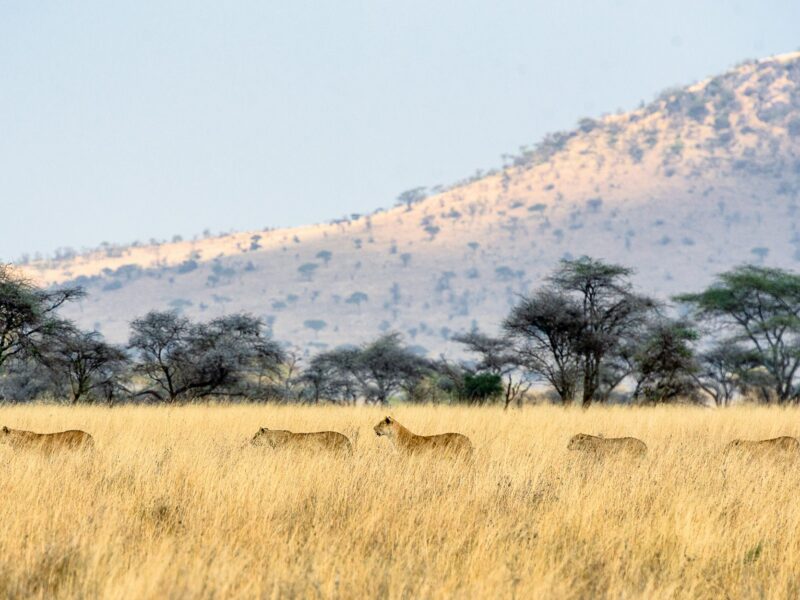
After a week of early starts, many climbers enjoy a few days watching wildlife from a vehicle or resting on a beach. A short northern safari to Tarangire, Ngorongoro or the Serengeti fits neatly after the descent, and Zanzibar is a short flight away. See our Kilimanjaro and safari combinations for ideas.
Climbs can often be arranged within days, but popular guides and dates fill quickly in peak months, so ask early. Start by sharing your dates through our trip planning form, and read more about Mount Kilimanjaro and the English language if you are curious.
Kilimanjaro questions answered
More Language Guides
Prefer to plan in another language? See all our safari and Kilimanjaro guides by language, or browse: