Ethiopia and Kenya are Tanzania’s neighbours in East Africa, yet Afaan Oromoo is rarely heard on safari here. If you are hoping for a Tanzania safari with Oromo speaking guide support, we will give you the honest picture: native Oromo-speaking guides are rare in Tanzania, but there are practical ways to make sure your group understands everything, and we confirm the right one for your dates.
Oromo (Afaan Oromoo) is one of the most widely spoken languages in Africa, used across the Oromia region of Ethiopia and in parts of northern Kenya, and written in the Latin-based Qubee script. There are also sizeable Oromo communities in North America, Europe and the Middle East. See the Oromo language article on Wikipedia for more.
Language options, including Swahili
Depending on availability, we can explore:
- a guide who speaks Oromo as a second language, if one is free on your dates;
- an English-speaking guide-driver working with a professional Oromo interpreter who travels with you;
- written notes in Afaan Oromoo, where a reliable translation is possible.
There is a useful regional angle too. Many Oromo speakers from Kenya also speak Swahili, which every Tanzanian guide speaks, and many Ethiopian travellers are comfortable in Amharic or English. If someone in your group speaks Swahili, communication with any guide becomes much easier. We never promise one option until it is confirmed.
Why understanding your guide makes the safari
Guides read the bush constantly. They notice the alarm call of a baboon that may mean a leopard is nearby, explain why wildebeest follow the rains, and point out the difference between a black-backed and a golden jackal. When explanations reach every member of your family, children stay curious and older travellers can ask questions without relying on someone else.
Culture is part of the story too. Visitors from pastoral backgrounds often find Maasai cattle traditions and age-set customs fascinating, and those familiar with the Oromo Gadaa system may enjoy comparing the two. A good interpreter helps those conversations go deeper.
Tanzania safari with Oromo speaking guide: how the trip works
You travel in a private 4×4 with a pop-up roof and your own guide-driver. Lodges can usually arrange halal meals, vegetarian food, or meals without animal products for Orthodox fasting days, provided you tell us in advance.
- Share your dates and needs through our planning form.
- We check guides and interpreters, then suggest an itinerary.
- You confirm, and we arrange the rest.
Suggested parks and itineraries
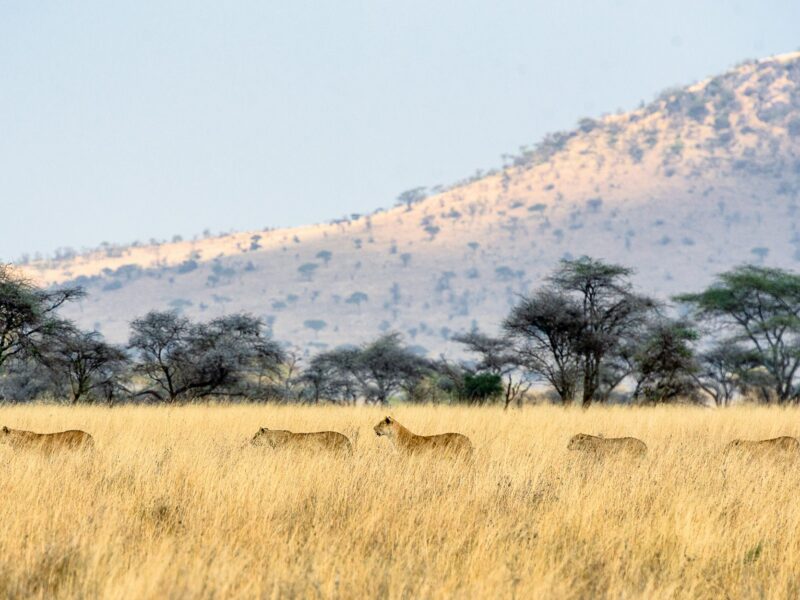
The Serengeti is the classic choice, with lions, cheetahs and the great herds; the Serengeti National Park entry on Wikipedia gives a good overview of the ecosystem. The Ngorongoro Crater is a volcanic caldera with dense wildlife, Tarangire is famous for elephants, and Lake Manyara is known for forest and birdlife. A shorter option is the two-day Tarangire and Ngorongoro safari, while our cultural tours add time with local communities. The southern parks, such as Nyerere and Ruaha, suit longer trips.
Seasons and getting to Tanzania
The dry season from June to October gives reliable game viewing. In January and February, the herds calve in the southern Serengeti and Ndutu, a busy time for predators.
International travellers usually arrive at Kilimanjaro International Airport (JRO), Julius Nyerere International Airport (DAR) in Dar es Salaam, or Zanzibar (ZNZ). From Ethiopia, flights typically connect via Addis Ababa, and from Kenya via Nairobi; some visitors from Kenya travel overland to Arusha through the Namanga border post. Diaspora travellers from North America or Europe often connect via Addis Ababa, Doha, Dubai, Istanbul or Amsterdam. Check the official eVisa portal for current entry rules, as these depend on your passport.
Oromo interpreters are hard to find, so the earlier you ask, the better the chance of an Oromo-speaking guide, though we always try our best.
FAQs
More Language Guides
Prefer to plan in another language? See all our safari and Kilimanjaro guides by language, or browse: