Climbing Africa’s highest mountain asks a lot of your body, and understanding every briefing clearly is part of staying safe. If you are looking at Kilimanjaro climbing with Amharic speaking guide assistance, we can plan the climb from Arusha and look for the right language support for your group.
We should be honest from the start: Amharic is not one of the languages Kilimanjaro crews commonly speak, and native Amharic-speaking mountain guides are rare. We explore the options for your dates and confirm what we can provide before you commit.
The case for briefings in Amharic
Altitude affects everyone differently. Each evening your lead guide talks through the next day’s walk, the clothing you will need and the warning signs of acute mountain sickness, such as a worsening headache, nausea or unusual breathlessness. Guides also carry out daily health checks, using a pulse oximeter to measure your blood oxygen and heart rate and asking how you feel. These are the moments when misunderstanding matters most. If you can describe symptoms precisely in your first language, and fully grasp the advice to slow down, drink more or descend, the crew can make better decisions with you.
Kilimanjaro Climbing with Amharic Speaking Guide: Crew Roles
No one may climb Kilimanjaro without licensed mountain guides, and those guides must work through a registered operator. A typical crew includes a lead guide, one or more assistant guides, a cook and porters who carry equipment, water and supplies. The crew normally communicates in Swahili and English.
The Amharic speaker on your climb could be:
- a lead or assistant guide who has learned Amharic as a second language, where one can be found;
- a professional Amharic interpreter who walks with your group alongside the licensed guides;
- or, failing those, written Amharic notes on safety and acclimatisation, where we can prepare them, used with an English-speaking crew.
We will not commit to one of these until we have checked. Climbs booked close to departure leave less time to find language support, so contact us early, though we still try hard for later requests.
Choosing a route
Each route has its own character:
- The Machame route is scenic and popular, with good acclimatisation over six or seven days.
- The Lemosho route starts in the west and gives extra time to adjust to altitude.
- The Marangu route is the only route with hut accommodation.
- Rongai approaches from the drier north side, the Northern Circuit is the longest and quietest route, and Umbwe is short and steep, suited only to experienced trekkers.
Read our full overview of Kilimanjaro climbing before deciding.
Preparing and picking your month
The best climbing conditions are generally January to March and June to October. Start walking regularly several weeks ahead, break in your boots and practise long days on hills. If you live in the Ethiopian highlands, the lower slopes may feel easier, but every climber still needs a gradual ascent and the same daily checks.
Most climbers fly into Kilimanjaro International Airport (JRO), and Addis Ababa is one of the hubs travellers commonly connect through. Look up current entry requirements on the official Tanzania eVisa portal before you travel.
Adding a safari or Zanzibar
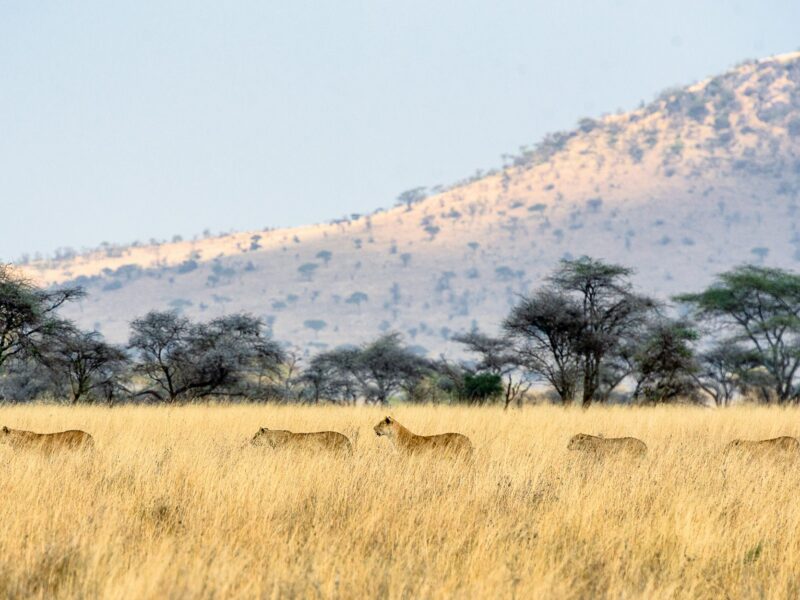
Many climbers spend a few days on safari after the descent, when tired legs appreciate a seat in a vehicle. Our Kilimanjaro and safari combinations can include the Serengeti or Ngorongoro, and a few nights on Zanzibar’s beaches make a relaxed finish. Tell us your ideas through our trip planning form and we will look at language support for both parts of the journey. Relatives curious about the language’s history can browse the Amharic language article.
Questions climbers ask
More Language Guides
Prefer to plan in another language? See all our safari and Kilimanjaro guides by language, or browse: