Lion and leopard
The Serengeti's Seronera valley is one of the best places in Africa for big cats. Leopards are often spotted resting in sausage trees along the rivers.
Elephant and buffalo
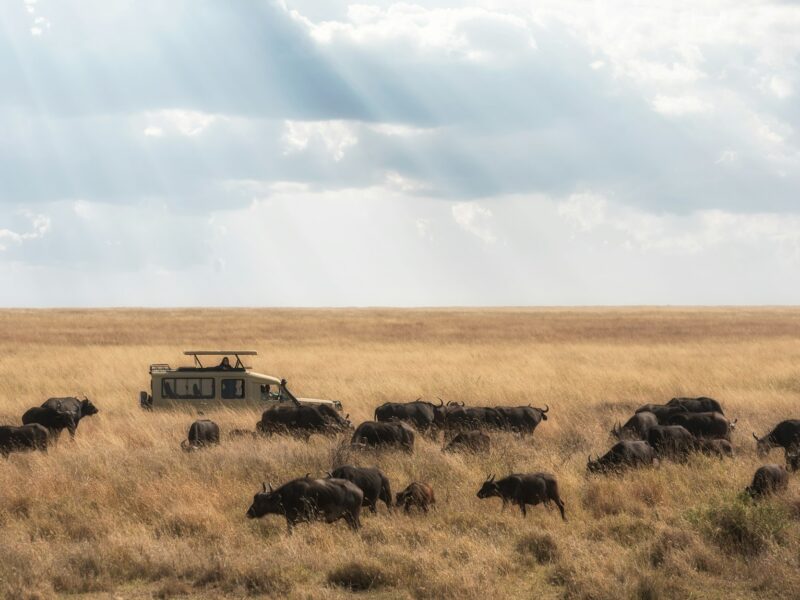
Tarangire is famous for its elephant herds, while buffalo are common across the northern parks and the crater floor.
Rhino
The Ngorongoro Crater is the most reliable place in northern Tanzania to see endangered black rhino.
Best itinerary
A trip of five days or more including Tarangire, the Serengeti and the Ngorongoro Crater gives the best chance of seeing all five.
Plan with local experts
Our planners in Arusha can help with every detail of your trip. Request a free quote or browse our safari packages.
Where each animal is easiest to see
| Animal | Best places |
|---|---|
| Lion | Serengeti, Ngorongoro Crater, Ruaha, Tarangire |
| Leopard | Seronera valley in the Serengeti, Tarangire, Ruaha |
| Elephant | Tarangire, Ruaha, Nyerere, Ngorongoro |
| Buffalo | Ngorongoro Crater, Serengeti, Katavi, Arusha National Park |
| Black rhino | Ngorongoro Crater (most reliable), parts of the Serengeti |
Best Big Five itinerary
A safari combining the Serengeti and the Ngorongoro Crater gives the best chance, for example the 4 days Serengeti and Ngorongoro or the 7 days Tanzania safari.
Beyond the Big Five
Look out for cheetahs, wild dogs, giraffes, hippos and the ‘Little Five’: elephant shrew, ant lion, rhino beetle, buffalo weaver and leopard tortoise.
Why the name ‘Big Five’?
The term comes from hunters who considered these animals the most dangerous to hunt on foot. Today they are shot only with cameras.
Meet the Big Five
Each of the five has its own habits, which shape where and when you are most likely to see it.
- Lion: Africa’s most social big cat, living in prides. Often seen resting by day and hunting in the cooler hours.
- Leopard: solitary and secretive, spending much of the day in trees or thick cover. Patience and a sharp-eyed guide make all the difference.
- Elephant: Tanzania holds some of Africa’s largest elephant populations, with family herds led by older females.
- Buffalo: found in large herds, especially near water, with old males often forming small bachelor groups.
- Black rhino: critically endangered and shy, browsing in thickets and open areas. Tanzania’s northern rhinos are carefully protected.
Best months for Big Five viewing
| Season | Typical months | What to expect |
|---|---|---|
| Dry season | June to October | Thinner vegetation, animals near water, easiest viewing |
| Short rains | November to December | Green landscapes, good cat sightings, fewer visitors |
| Calving season | January to March | Predators active on the southern plains |
| Long rains | April to May | Lush and quiet, but some roads and camps affected |
Most of the Big Five are resident in the northern parks all year, so you can see them in any month. The dry season simply makes it easier.
Park by park
The Ngorongoro Crater is the single most reliable place to see all five in one day: lions, buffalo and elephants are common on the crater floor, rhinos are often seen at a distance, and leopards occasionally appear in the forested areas.
The Serengeti National Park is outstanding for lions and leopards, while black rhino are present in a few areas such as the Moru Kopjes. Tarangire National Park is superb for elephants, especially in the dry season, with lions and leopards also seen. Lake Manyara is known for its tree-climbing lions, though sightings vary.
In the south, Ruaha and Nyerere offer excellent lions, elephants and buffalo with fewer vehicles, though rhinos are very rarely seen there.
A sample Big Five day in the crater
Your guide collects you at dawn from your lodge on the rim. You descend into the crater as the mist lifts, finding buffalo and lions on the grasslands and scanning the open plains for rhino. A picnic lunch by a hippo pool is followed by elephants in the forest near the crater walls before you climb back out by mid-afternoon. It is a long but rewarding day.
Tips for seeing all five
- Allow at least five days on safari, including a full day in the crater
- Bring good binoculars, as rhinos are often seen at a distance
- Tell your guide early that the Big Five are a priority
- Stay patient at leopard sightings, as they can be brief
Our 8 days private Big Five safari is built around these parks, and our guide to where to see black rhino in Tanzania goes deeper on the hardest animal to find.
Finding the Big Five on a Private Safari
Some of the Big Five are easy to find, while others take patience. On a Tanzania private safari your guide can spend longer searching for a leopard or wait quietly near a rhino, because no group schedule is pulling the vehicle onwards.
Where a private vehicle helps
- Leopard: time to scan the sausage trees along the rivers of the Seronera valley
- Black rhino: patient viewing on the Ngorongoro Crater floor, the most reliable place in northern Tanzania
- Elephant: unhurried time with the herds of Tarangire
- Lion and buffalo: widespread across the northern parks, with the flexibility to follow the action
A trip of five days or more covering Tarangire, the Serengeti and the Ngorongoro Crater gives the best chance of seeing all five. We plan the order of parks and the number of nights around your interests, from mid-range lodges to our private luxury safaris.
To build your route, plan your private safari with us.
Related reading from our Safari Journal
- Tanzania Welcomes a Record 5.9 Million Visitors: What It Means for Your Safari
- Ngorongoro Crater vs Serengeti: Do You Need to Visit Both?
- Tarangire's Elephants: When and Where to See the Great Herds
Further reading
Learn more from independent, authoritative sources: