The Ngorongoro Crater
The most reliable place in northern Tanzania. Rhinos usually graze on the open plains, so bring binoculars.
The Serengeti
A small population lives in parts of the Serengeti, including the Moru Kopjes area and the north; sightings are rare.
Conservation
Rhinos are closely monitored by rangers, and park fees help fund their protection.
Tips
- Spend as much of your crater time as possible on the open plains
- Ask your guide about recent sightings
- Be patient and respectful; never pressure guides to approach
Book a crater day trip.
Visiting the crater for rhinos
Arrive early, head for the open plains and scan with binoculars. Rhinos often graze far from the road.
Rhino behaviour
Black rhinos are mostly solitary and browse on shrubs. They can be shy and are often seen at a distance.
Supporting conservation
Choose operators who follow park rules and avoid crowding animals.
Other rhino locations in East Africa
Kenya’s conservancies also protect rhinos, but in Tanzania the crater remains the best bet.
Rhino facts
| Fact | Detail |
|---|---|
| Species | Black rhino |
| Status | Critically endangered |
| Best place | Ngorongoro Crater |
| Behaviour | Mostly solitary browsers |
About the rhinos you may see
The black rhinos of northern Tanzania belong to the eastern black rhino subspecies. In the Ngorongoro Crater, the population is small and closely guarded, which is why every sighting feels special. Rangers identify and monitor individual rhinos closely. Your guide will not know exactly where a rhino is, but experience of the crater’s open plains makes a huge difference.
Best places on the crater floor
The crater floor is compact, but rhinos favour certain areas. Guides often search the open grasslands, where the animals can be spotted from a distance, and the edges of wetlands and forest patches. Rhinos may rest in the shade around the middle of the day and are often most active in the cooler hours, so an early descent is your best chance. Binoculars are essential, as sightings are often at a distance.
Getting the timing right
| Factor | What to do |
|---|---|
| Time of day | Descend as early as the gates allow |
| Season | Any time of year; shorter grass in the dry season makes scanning easier |
| Length of stay | Allow a full morning on the crater floor |
| Repeat visits | A second crater descent on a longer trip doubles your chances |
| Where to stay | The crater rim or Karatu for an early start |
Rhinos and the rest of the Big Five
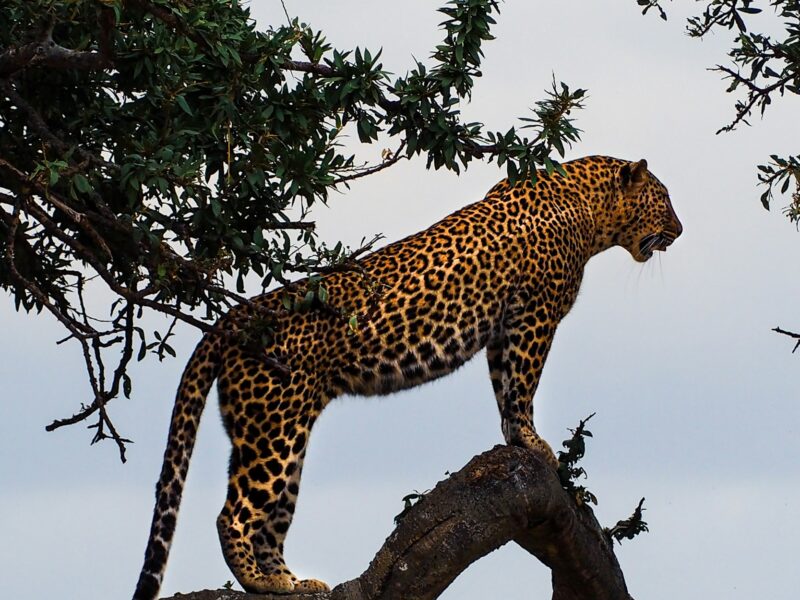
The Ngorongoro Crater is one of the few places in Tanzania where you can realistically see all of the Big Five in a single day: lion, leopard, elephant, buffalo and rhino. Leopards are the hardest to find on the crater floor, and elephants are mostly older bulls. Our Big Five safari in Tanzania guide explains the best parks for each animal.
How to plan a rhino-focused safari
If seeing a rhino is a priority, we suggest:
- Including at least one full morning in the Ngorongoro Crater
- Staying on the crater rim so that you can descend at first light
- Choosing a private vehicle so your guide can wait patiently on the plains
- Adding a few nights in the Serengeti National Park for the wider safari experience
Short on time? Our Ngorongoro Crater day trip and the private Ngorongoro Crater safari are designed around the crater floor.
Rhino viewing etiquette
Rhinos have poor eyesight but excellent hearing and a strong sense of smell. They can become nervous if crowded, which is why rangers and guides keep vehicles at a distance. Keep voices low and accept that you may see the animal through binoculars rather than close-up. Never share real-time locations of rhinos on social media, as this information could potentially be misused. Many conservationists recommend turning off location tags on wildlife photos for this reason.
Combining rhinos with a wider safari
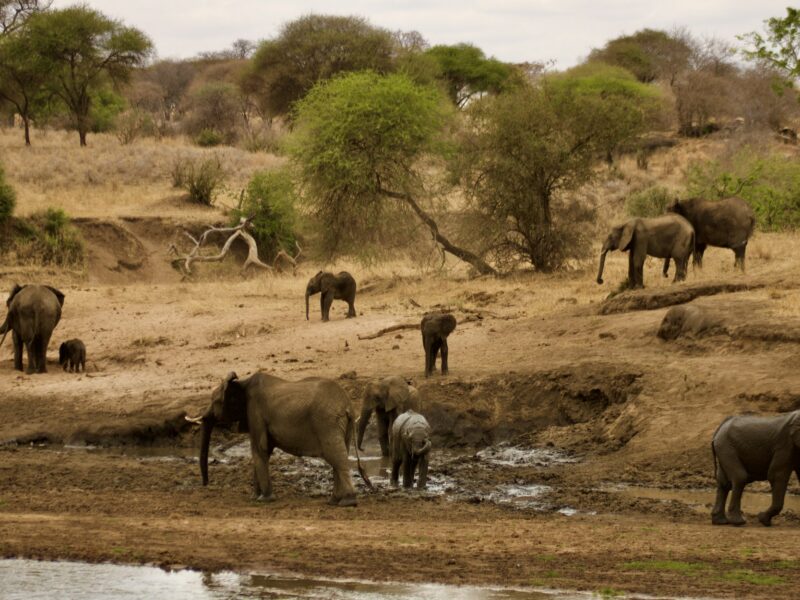
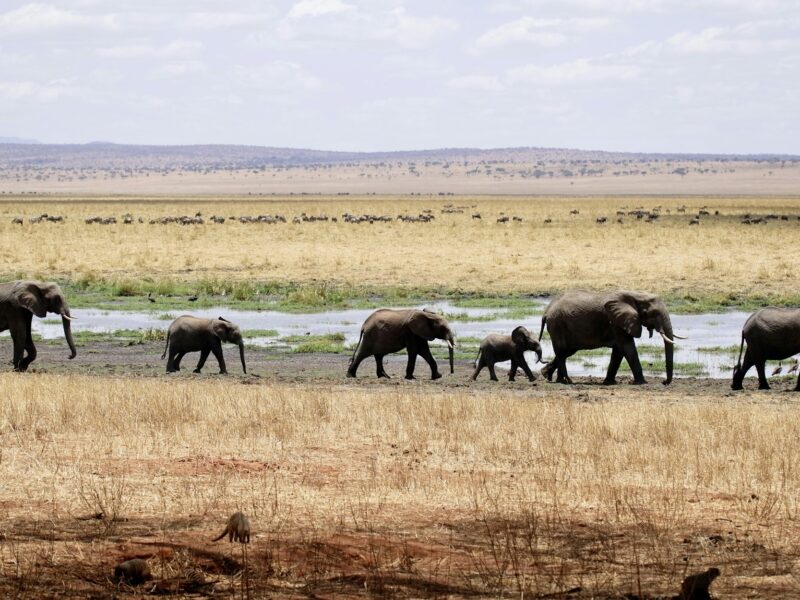
Most guests see the crater as part of a longer northern safari. A classic route starts in Tarangire for elephants, continues to the Serengeti for big cats and the migration, and ends on the crater rim, with a final morning on the floor looking for rhinos. This order means you descend into the crater rested and early, rather than on your first day after a long drive. If you have extra time, a second crater descent on another morning is a good investment for keen wildlife watchers.
A short history
Black rhino numbers collapsed across Africa in the late 20th century due to poaching. Strict protection in places like the Ngorongoro Crater has helped populations recover slowly.
Black vs white rhino
The black rhino has a hooked upper lip for browsing, while the white rhino has a wide, square mouth for grazing. Tanzania’s wild rhinos are black rhinos.
Photography tips
Rhinos are often far away; a long lens and binoculars are essential. Early morning light on the crater floor gives the best results.
Planning a trip? Our Arusha team can put together a tailor-made, itemised quote, often the same day. Plan my safari or browse our private safari deals.
Further reading
Learn more from independent, authoritative sources: