The Ngorongoro Crater
A volcanic caldera about 260 km² with dense resident wildlife, including black rhino. Visited in a single day.
The Serengeti
A vast ecosystem of about 14,750 km², home to the Great Migration and exceptional big cats. Needs at least two nights.
Comparison
| Ngorongoro Crater | Serengeti | |
|---|---|---|
| Time needed | Half to one day | 2+ nights |
| Black rhino | Best chance | Rare |
| Migration | No | Yes |
| Big cats | Lions, hyenas | Lions, leopards, cheetahs |
| Scenery | Enclosed caldera | Endless plains, kopjes |
The answer
Visit both. The road to the Serengeti passes the crater, so combining them is easy. See the 4 days Serengeti and Ngorongoro safari.
Practical differences
Access
The crater is about three hours from Arusha; the central Serengeti is seven to eight hours by road or a short flight.
Fees
Both require park or conservation fees; the crater also has a per-vehicle crater service fee.
Accommodation
Crater-rim lodges have stunning views; Serengeti camps place you in the wilderness.
Best season for each
The crater is good all year. The Serengeti’s best area changes with the migration.
Understanding the two areas
Although they sit side by side, the two areas are managed differently. The Serengeti is a national park, run by Tanzania National Parks, where wildlife has the land to itself. The Ngorongoro Crater is part of the Ngorongoro Conservation Area, a multiple land-use area where Maasai pastoralists live alongside wildlife. You may see Maasai herders and their cattle on the highlands as you drive through, which adds a cultural dimension to your safari.
The crater floor sits at roughly 1,700 to 1,800 m, with the rim rising to about 2,200 to 2,300 m. The Serengeti’s plains are lower and warmer. This difference affects what you pack and how cool the evenings feel.
How a crater visit works
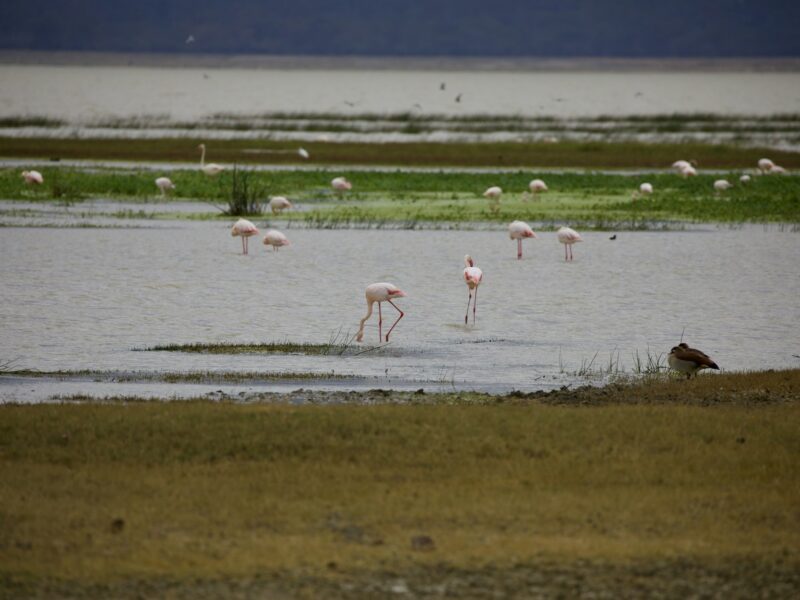
Vehicles enter the crater by designated roads, with separate routes in some sections for descending and ascending. Time on the crater floor is limited by the authorities, so most guides descend early, spend the morning exploring and stop for a picnic near one of the lakes or springs. Highlights usually include large herds of zebras and wildebeest, lions, spotted hyenas, buffalo, elephant bulls and, if you are lucky, black rhino on the open plains. Lake Magadi on the crater floor often has flamingos.
Wildlife that differs between them
| Animal | Ngorongoro Crater | Serengeti |
|---|---|---|
| Giraffe | Not present on the crater floor | Common |
| Black rhino | Best chance in northern Tanzania | Very rare |
| Cheetah | Occasional | Frequent on the open plains |
| Leopard | Occasional, more often around the rim forests | Good chances, especially at Seronera |
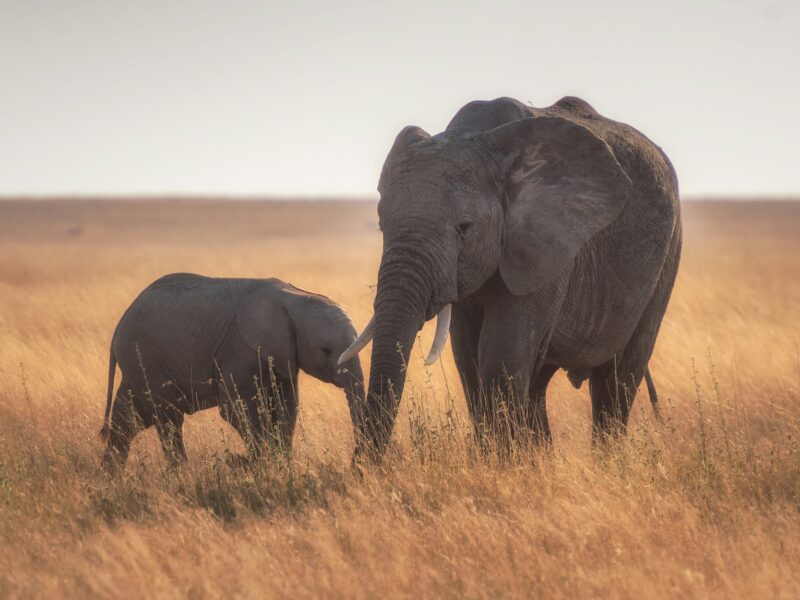
| Elephant | Mainly older bulls | Breeding herds in many areas |
| Migration herds | Resident herds only | Huge seasonal herds |
Olduvai Gorge on the way
Between the crater highlands and the Serengeti lies Olduvai Gorge, one of the most important sites in the study of human origins. A short stop at the museum breaks up the drive and gives context to the landscape you are crossing. Ask your guide to include it on your way to or from the Serengeti.
How to fit both into your itinerary
Because the road to the Serengeti from Arusha runs through the Ngorongoro Conservation Area, combining both requires little extra driving. Many guests stay on the rim on their way out of the Serengeti, so they can descend into the crater at first light. If you are short on time, a 3 days private Serengeti and Ngorongoro safari covers the highlights, and the Ngorongoro Crater day trip works if you are based in Arusha. For more detail, read our guides to the Ngorongoro Crater and the Serengeti National Park.
If you have only one day to spare
Travellers based in Arusha with a single free day should choose the crater. It is around three hours by road, and the density of wildlife on the floor means even a short visit can be extraordinary. The Serengeti really needs at least two nights to justify the journey, or a flight. With three days, you can do both by flying into the Serengeti and driving back via the crater, which is one of the most efficient short safaris in Tanzania.
What a day in each feels like
In the crater you descend early, see a remarkable number of animals in a compact landscape and climb out by mid-afternoon. In the Serengeti, days are longer and more exploratory: you follow tracks, wait at a kopje for a lioness to wake or drive for an hour to reach a herd.
Where to stay
For the crater, the rim or Karatu. For the Serengeti, choose the area that matches the season: Seronera all year, Ndutu in calving season or the north for river crossings.
Sample combined routes
- 3 days: fly into the Serengeti, drive out via the crater
- 5 days: Tarangire, two Serengeti nights, crater
- 7 days: add Lake Manyara and a third Serengeti night
Planning a trip? Our Arusha team can put together a tailor-made, itemised quote, often the same day. Plan my safari or browse our private safari deals.
Further reading
Learn more from independent, authoritative sources: