Clothing
Neutral colours such as khaki, olive and beige; a warm fleece for early mornings and the Ngorongoro rim; a hat, sunglasses and comfortable walking shoes.
Gear
Binoculars, a camera with a zoom lens, spare batteries and memory cards, a power bank and a universal adapter (Tanzania mainly uses UK-style plugs).
Health and comfort
Sunscreen, insect repellent, any prescription medicines, antimalarials if advised by your doctor, and a small first-aid kit.
Luggage
Use a soft duffel bag. Light aircraft often limit luggage to around 15 kg including hand luggage.
Plan with local experts
Our planners in Arusha can help with every detail of your trip. Request a free quote or browse our safari packages.
Complete checklist
Clothing
- 3–4 lightweight shirts in neutral colours
- 2 pairs of comfortable trousers or zip-offs
- Warm fleece or down jacket for mornings and evenings
- Light rain jacket (November to May)
- Wide-brimmed hat and sunglasses
- Comfortable closed shoes and sandals
- Swimwear for lodge pools or Zanzibar
Equipment
- Binoculars (one pair per person is ideal)
- Camera, zoom lens, batteries, memory cards
- Power bank and UK-style adapter
- Head torch
- Reusable water bottle
Health and documents
- Passport, visa, insurance documents and copies
- Personal medication and antimalarials if prescribed
- Sunscreen, insect repellent, hand sanitiser
- Small first-aid kit
What not to bring
- Hard suitcases on light-aircraft flights
- Camouflage clothing
- Single-use plastic bags, which are banned in Tanzania
Packing for Kilimanjaro
Climbing requires extra gear: a warm sleeping bag, insulated jacket, gloves, thermal layers and broken-in boots. We supply a full climbing checklist when you book.
Packing for Zanzibar
Light cotton clothing, a sarong or scarf for covering shoulders in Stone Town, reef shoes and reef-safe sunscreen.
What goes in your day bag
Your main bag usually stays in the vehicle or at the lodge, so a small day bag keeps essentials within reach on game drives.
- Binoculars and camera, with a spare battery
- Sunscreen, lip balm and a hat
- A warm layer for early mornings
- A buff or light scarf against the dust
- Wet wipes and hand sanitiser
- Any medication you may need during the day
- A charging cable, as many vehicles have charging points
Packing by season
| Season | Add to your bag |
|---|---|
| June to October (dry season) | Extra warm layers for cold mornings, a buff for dust, lip balm |
| November to December (short rains) | A light rain jacket and quick-dry clothing |
| January to February | Sun protection and breathable clothing for warm days |
| March to May (long rains) | A reliable waterproof jacket and shoes that can get muddy |
The Ngorongoro Crater rim, at around 2,200–2,300 m, can be cold at night all year, so a fleece or down jacket is worth packing whatever the month. For more detail, see Tanzania weather by month.
Colours to avoid
Neutral tones are best for blending in and staying cool. Avoid dark blue and black, which can attract tsetse flies in some areas, and bright white, which shows dust quickly. Camouflage clothing should be left at home. Our guide on what to wear on safari has more outfit ideas.
Laundry and luggage weight
Most lodges and many camps offer laundry, so you can pack less than you might think. Some camps do not wash underwear for cultural reasons, so pack a small travel wash. If you are flying between parks, the luggage limit on light aircraft is often around 15 kg, and soft bags fit the small holds more easily.
Electronics and charging
Tanzania mostly uses UK-style three-pin sockets at 230 V. Many lodges and camps run on solar power or generators, so charging may be limited to certain hours or a central area. A power bank is worth bringing. If you plan to fly a drone, read our article on drone rules in Tanzania first, as permits are required.
Packing for a private safari
If you are booking a safari that starts in a few days, focus on the essentials: comfortable layers, a warm jacket, sun protection, binoculars and your documents. Anything you forget, such as sunscreen or toiletries, can usually be bought in Arusha before you set off. Remember that plastic carrier bags are banned, so use packing cubes or cloth bags; our article on the plastic bag ban explains the rules.
Packing for a Private Safari Vehicle
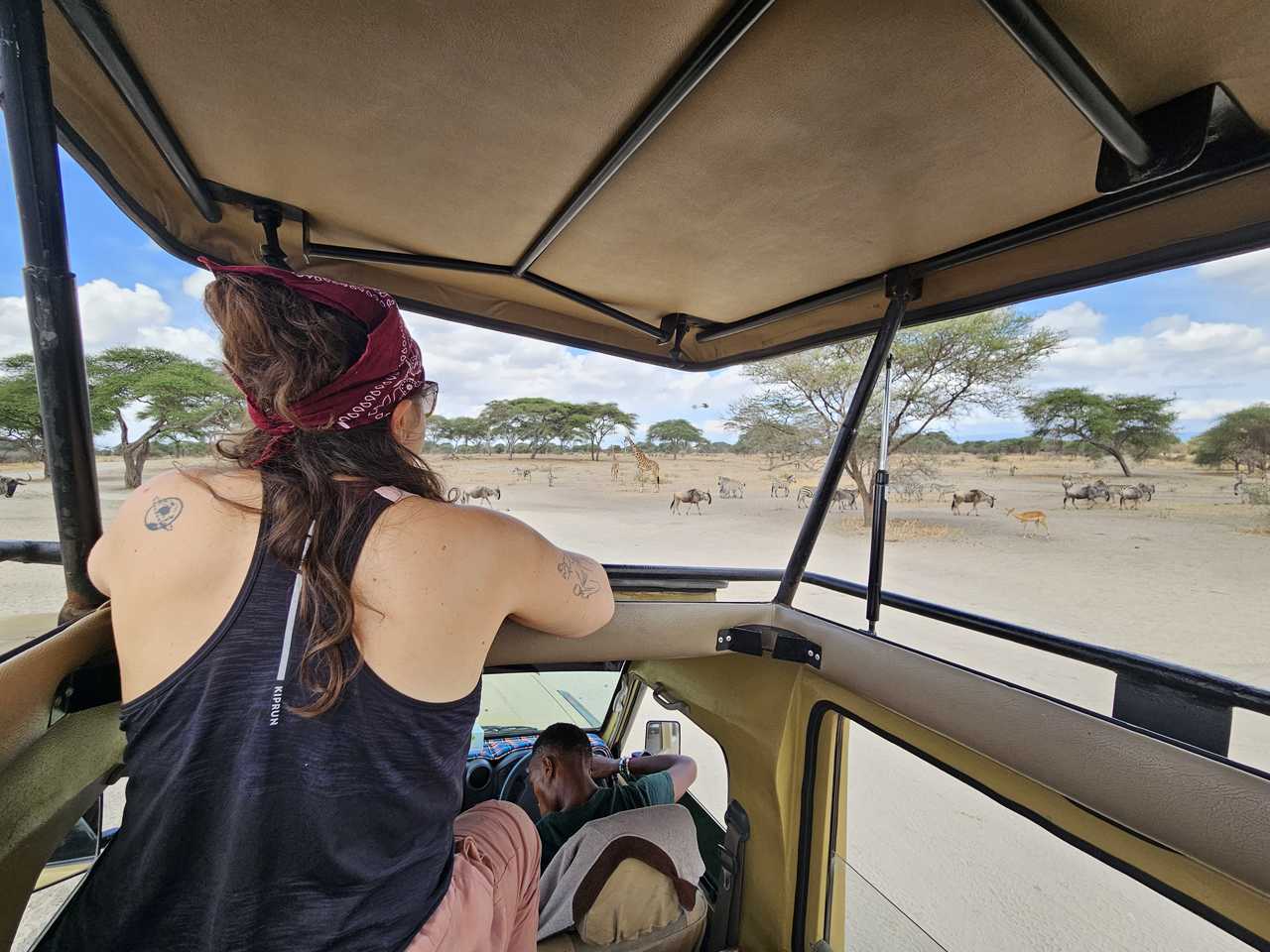
On a Tanzania private safari the vehicle is shared only with your party, so there is room to keep cameras, binoculars and a warm layer within reach rather than packed away. That makes a few small choices worthwhile.
Private-vehicle packing tips
- A small daypack for each traveller, kept by your seat for lenses, sunscreen and water
- Binoculars for everyone, so nobody waits their turn at a sighting
- A fleece for early mornings and the Ngorongoro rim, easy to grab when your guide stops
- A power bank, plus a universal adapter for UK-style sockets
Luggage rules still apply if your route includes flights: light aircraft often limit you to around 15 kg including hand luggage, in a soft duffel bag. Neutral colours such as khaki, olive and beige remain the best choice. If your trip includes fly-in legs, as many of our private luxury safaris do, we confirm the limit for each flight.
To check your route, plan your private safari with us.
Related reading from our Safari Journal
- The Complete Kilimanjaro Packing List
- Kilimanjaro Training Plan: How to Prepare in 12 Weeks
- Altitude Sickness on Kilimanjaro: How to Prevent It
Further reading
Learn more from independent, authoritative sources: