Namaste (नमस्ते). Whether you are travelling from Kathmandu, Darjeeling, the Gulf or a Nepali community in the UK or Australia, a first safari is a big occasion, and it helps when everyone understands what the guide is saying. Planning a Tanzania safari with Nepali speaking guide support takes some care, because native Nepali-speaking guides are rare in Tanzania. We will explain the options honestly and confirm what can be arranged for your dates.
Nepali (नेपाली) is the official language of Nepal and is also spoken in parts of India, such as Sikkim and the Darjeeling hills, and in Bhutan. It is written in Devanagari. The Nepali language article on Wikipedia has more detail.
Options for Nepali language support
Each request is checked individually. Possibilities include:
- a guide who speaks Nepali as a second language, should one be available on your dates;
- an English-speaking guide-driver accompanied throughout by a professional Nepali interpreter;
- printed notes in Nepali, for instance the daily plan and basic park rules, where we can arrange a reliable translation.
Many Nepali speakers also understand Hindi, and some are fluent in English. If that describes your group, let us know, as it may broaden the choice. We talk through the options openly rather than promising a particular one in advance.
Seeing the wildlife through your own language
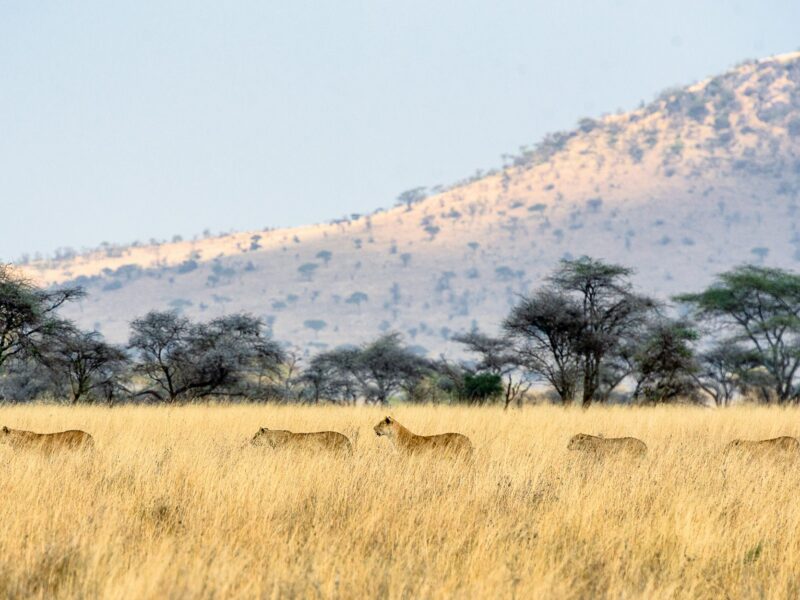
Nepal’s Chitwan and Bardiya national parks have rhinos, tigers and elephants, so some visitors arrive with safari experience already. Tanzania’s open savannah feels very different. Guides explain how lions coordinate a hunt, why giraffes are often seen with oxpeckers on their necks, and how the seasons push the herds across the Serengeti. Grandparents and children alike enjoy these stories more when they are told in Nepali, and questions come far more easily.
Tanzania safari with Nepali speaking guide: how we organise it
You will have a private 4×4 with a pop-up roof and your own guide-driver, so the vehicle is yours for the whole trip. Many Nepali travellers prefer vegetarian meals, and lodges can usually provide them on request, along with other dietary preferences.
- Tell us your dates, group size and language needs on our safari planning form.
- We look at guide and interpreter availability and suggest an itinerary.
- You confirm, and we reserve the team and accommodation.
Parks and suggested routes
A classic northern circuit includes Tarangire, Lake Manyara, the Ngorongoro Crater and the Serengeti. Families travelling with older parents might consider the six-day private senior safari, which keeps driving days comfortable. For a longer trip, the southern parks such as Ruaha and Nyerere add wilderness and fewer vehicles. The Ngorongoro Conservation Area page is useful background on the crater and the Maasai communities who live around it.
Best time and how to get here
June to October, the dry season, is excellent for game viewing. In January and February, the wildebeest calve in the southern Serengeti and Ndutu, which attracts predators and makes for dramatic sightings.
Your likely arrival airports are Kilimanjaro International Airport (JRO), Julius Nyerere International Airport (DAR) in Dar es Salaam and Zanzibar (ZNZ). From Kathmandu or the Gulf, journeys commonly connect via Doha, Dubai or Addis Ababa. Requirements for visitors can change, so check the official eVisa portal before you book.
Nepali interpreters take time to secure, so the earlier you get in touch, the better the chance of a Nepali-speaking guide. Whatever your timing, we will always try our best.
Frequently asked questions
More Language Guides
Prefer to plan in another language? See all our safari and Kilimanjaro guides by language, or browse: