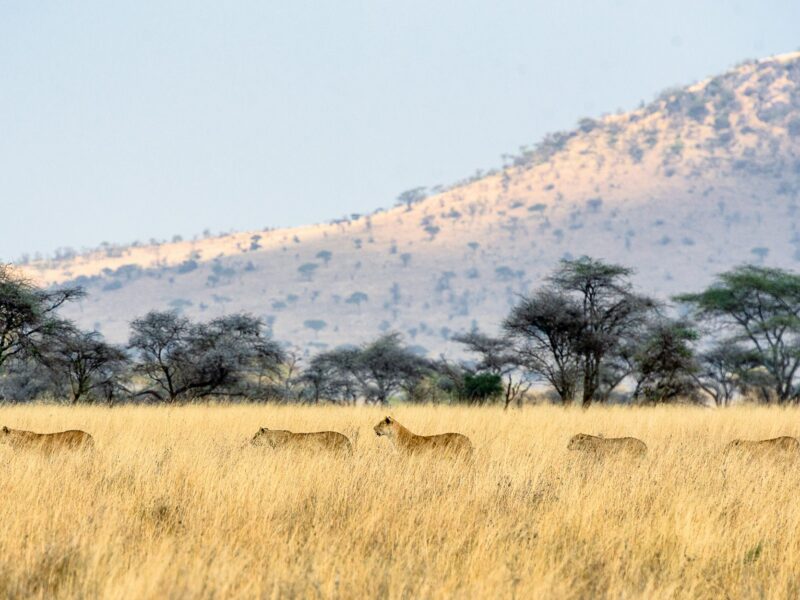
Namaskara! Many Kannada speakers have already been on safari at home, in Bandipur, Nagarhole or along the Kabini, where forest drives offer glimpses of tigers and Asian elephants. Tanzania is a very different experience: open grassland stretching to the horizon, huge herds and big cats out in the open. If you are planning a Tanzania safari with Kannada speaking guide support, this page explains what we can honestly arrange from our base in Arusha.
Kannada, written ಕನ್ನಡ, is the language of Karnataka, and Kannadigas also live in large numbers in the United States, the United Kingdom, the Gulf states and Australia.
The Honest Answer on Kannada-Speaking Guides
Native Kannada-speaking safari guides are rare in Tanzania, and we prefer to tell you that at the start. For each enquiry we look at what is available on your dates. Possibilities include a guide who speaks Kannada as a second language, an English-speaking guide paired with a professional Kannada interpreter who travels with you, and written Kannada briefings where we can prepare them.
Most Kannadigas are also comfortable in English, and many speak Hindi or Tamil, which can widen the options for older relatives. We confirm the exact arrangement before you book and never promise one specific option. The earlier you ask the better, because language support gets harder close to departure, but we still try our best whatever your dates.
Forest Safari Versus Savannah Safari
| Karnataka forest reserves | Tanzanian savannah parks | |
|---|---|---|
| Landscape | Dense deciduous forest | Open plains, crater and woodland |
| Vehicles | Shared or park-run jeeps | Your own private 4×4 with pop-up roof |
| Typical sightings | Tiger, gaur, Asian elephant | Lion, cheetah, giraffe, wildebeest |
| Pace | Fixed safari slots | Full days set by you and your guide |
A guide who can make these comparisons in Kannada helps your family connect what they see with what they already know, which children in particular love.
How Your Trip Works
You travel privately with your own guide-driver, who handles park entry, navigation and spotting. Send your dates and preferences through our safari planning form, and we reply with a route and the language options we can confirm. Once you approve both, we book lodges and send a detailed pre-trip briefing.
Vegetarian meals are widely available at lodges on request, and many kitchens can make simple rice and lentil dishes if asked in advance. Spice levels are usually mild, so some travellers bring their own pickles or podi.
Planning a Tanzania Safari with Kannada Speaking Guide Support: Where to Go
The northern circuit suits a first visit. Tarangire is famous for elephants and baobabs, Lake Manyara for forest and birds, the Ngorongoro Crater for its extraordinary concentration of wildlife inside a caldera, and the Serengeti for endless plains and predators. The Ngorongoro Conservation Area article on Wikipedia explains how Maasai communities share this landscape with wildlife.
If you want a beach finish, the 5-day safari and Zanzibar trip is a good starting template, and you can browse all Tanzania safari packages for longer itineraries, including southern parks such as Ruaha and Nyerere.
When to Go and How to Get Here
June to October, the long dry season, brings the most reliable game viewing. January and February are the calving season in the southern Serengeti and Ndutu. Indian school holidays and Dasara breaks may influence your dates, so plan early if travelling with children.
Travellers from Bengaluru and elsewhere usually land at Kilimanjaro International Airport (JRO), Julius Nyerere International Airport (DAR) in Dar es Salaam, or Zanzibar (ZNZ), with connections commonly through Dubai, Doha, Addis Ababa or Nairobi. Check the latest entry rules for your passport on the official eVisa portal, visa.immigration.go.tz. Learn more about the Kannada language and its literary history on Wikipedia.
Kannada Traveller FAQs
More Language Guides
Prefer to plan in another language? See all our safari and Kilimanjaro guides by language, or browse: