Dry season: June to October
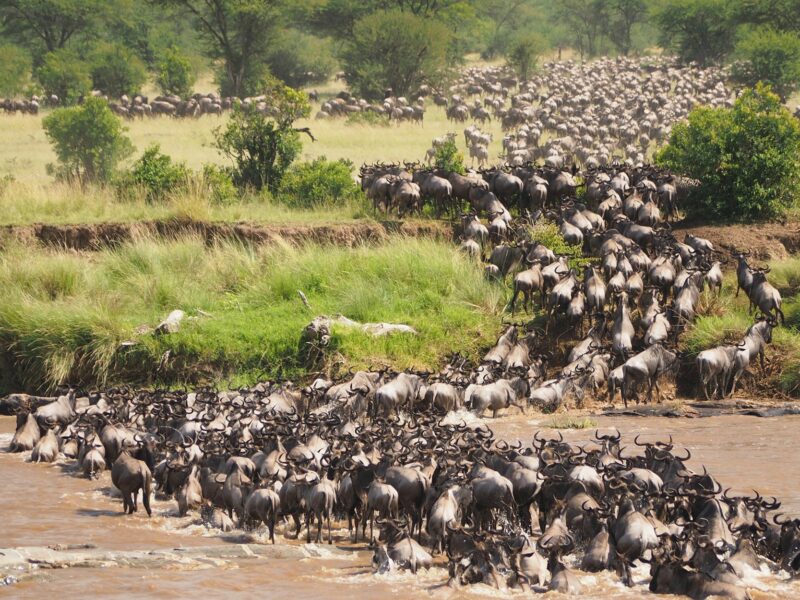
The long dry season is the classic safari time. Vegetation thins, animals gather around water and the northern Serengeti hosts the dramatic river crossings. It is also the busiest and most expensive period.
Short rains: November to December
Brief afternoon showers return the green. Prices begin to fall, migrant birds arrive and the herds move south towards Ndutu.
Calving season: January to March
Hundreds of thousands of wildebeest calves are born on the southern plains, attracting predators. This is a superb, slightly quieter time to travel.
Long rains: April and May
The green season brings the lowest prices and fewest visitors. Some camps close, but the parks are lush and the photography light is excellent.
Plan with local experts
Our planners in Arusha can help with every detail of your trip. Request a free quote or browse our safari packages.
Month-by-month summary
| Month | Safari | Migration | Kilimanjaro | Zanzibar |
|---|---|---|---|---|
| January | Excellent | Calving begins in the south | Good | Excellent |
| February | Excellent | Peak calving at Ndutu | Good | Excellent |
| March | Good | Herds in the south | Fair | Good |
| April | Green season | Herds start moving | Poor (rain) | Poor (rain) |
| May | Green season | Western Corridor | Poor to fair | Fair |
| June | Excellent | Western Corridor, Grumeti | Excellent | Excellent |
| July | Excellent | Moving north, first crossings | Excellent | Excellent |
| August | Excellent | Mara River crossings | Excellent | Excellent |
| September | Excellent | Mara River crossings | Excellent | Excellent |
| October | Excellent | Northern Serengeti | Good | Excellent |
| November | Good | Herds move south | Fair | Good |
| December | Good | Herds arrive in the south | Good | Excellent |
Best time by interest
- Great Migration river crossings: July to September
- Calving season and predator action: January to February
- Lowest prices and fewest vehicles: April to May
- Bird watching: November to April
- Kilimanjaro: January to March and June to October
- Zanzibar: June to October and December to February
Is it worth travelling in the green season?
Yes, if you are flexible. Rain usually falls in afternoon storms, landscapes are lush, there are newborn animals and lodges offer their best rates. Some southern camps close, but the northern parks remain open.
Finding space in peak months
July, August and the festive season are busiest. Even then, we often find space by being flexible on the exact camp, using mobile tented camps or adding a fly-in leg.
Festive season and school holidays
Christmas, New Year, Easter and European summer holidays are busy. Book as early as possible, or ask us to check for rooms released by cancellations.
Best time by park
Tanzania is a big country with several climate patterns, so the best time depends on where you go. The north has two rainy seasons, while the south and west usually have one long wet season from around November or December to April.
| Park or region | Best months | Why |
|---|---|---|
| Serengeti | All year | The migration is always somewhere; choose the area to match your dates |
| Ngorongoro Crater | All year | Resident wildlife on the crater floor |
| Tarangire | June to October | Elephants gather along the Tarangire River |
| Nyerere and Ruaha | June to October | Dry season concentrates wildlife; many camps close in the long rains |
| Katavi | June to October | Huge gatherings of hippos and buffalo as water dries up |
| Gombe and Mahale | All year, drier months easiest | Chimpanzee trekking is possible year-round; trails are less slippery in the dry season |
| Zanzibar | June to October and December to February | Driest and sunniest months |
For the dry-season elephant spectacle, see our Tarangire National Park page. For the south, our Ruaha National Park guide explains why the late dry season is often superb there.
The shoulder months
Some of the best value comes in the weeks either side of the main seasons. Early June often brings green landscapes with drier roads and fewer vehicles than July. Late October and early November can be quieter in the north while the herds start moving south. In January and February, the short dry spell between the rains brings calving on the southern plains and good beach weather on the coast.
Climbing Kilimanjaro by season
The main climbing seasons are January to early March and June to October. Late December to February is often clearer and slightly warmer, while July to September is drier but colder at night. Most climbers avoid April and May. Our Kilimanjaro climbing page compares the routes.
Private safari travel by month
- January to March: good availability outside the Christmas and Easter peaks
- April to May: easiest time to find space and the best rates
- June: availability is usually still good
- July to September: busiest; flexibility on camps helps
- October to mid-December: availability usually improves again
Because the weather drives so much of this, it helps to read our Tanzania weather by month guide alongside this page. If you are tempted by low-season prices, our article on green season safaris explains what to expect. For the herds in detail, see the Great Migration month by month.
Timing a Private Safari Around the Seasons
One advantage of a Tanzania private safari is that you are not tied to a group departure, so you can pick dates around the season that suits you best. Your guide can also adjust each day to conditions, which matters more in some months than others.
How the seasons play out privately
- June to October: the busiest period, when a private vehicle lets you set off early and time drives away from peak traffic
- November to December: short rains and falling prices, with drives planned around afternoon showers
- January to March: calving season around Ndutu, where off-road driving lets your guide follow the herds
- April and May: the green season, with the lowest prices and fewest visitors, though some camps close
Whichever months you choose, we match the parks and lodges to the season. Compare itineraries for each time of year among our Tanzania safari packages.
To choose your dates, plan your private safari with us.
Related reading from our Safari Journal
- Great Migration 2027: Where the Herds Should Be, Month by Month
- How to See a Mara River Crossing: Tips From Our Guides
- Ngorongoro Crater vs Serengeti: Do You Need to Visit Both?
Further reading
Learn more from independent, authoritative sources: