Best months
July to October, with August and September usually most reliable.
Tips
- Spend full days at the river
- Stay in a camp close to Kogatende
- Be patient: herds may hesitate for hours
- Keep noise low and engines off
- Use burst mode and a fast shutter speed
Respect the rules
Vehicles must not block crossing points.
Book the 7 days Mara River crossing safari.
Where to stay
Camps near Kogatende and the Lamai Wedge are closest to the crossing points.
Flying in
Flights from Arusha to Kogatende save a long drive.
Combining with Zanzibar
Direct connections via Arusha make a beach extension easy.
Photography settings
Fast shutter speed, continuous focus and a zoom lens.
Patience pays
Many crossings happen after hours of waiting.
Understanding crossing behaviour
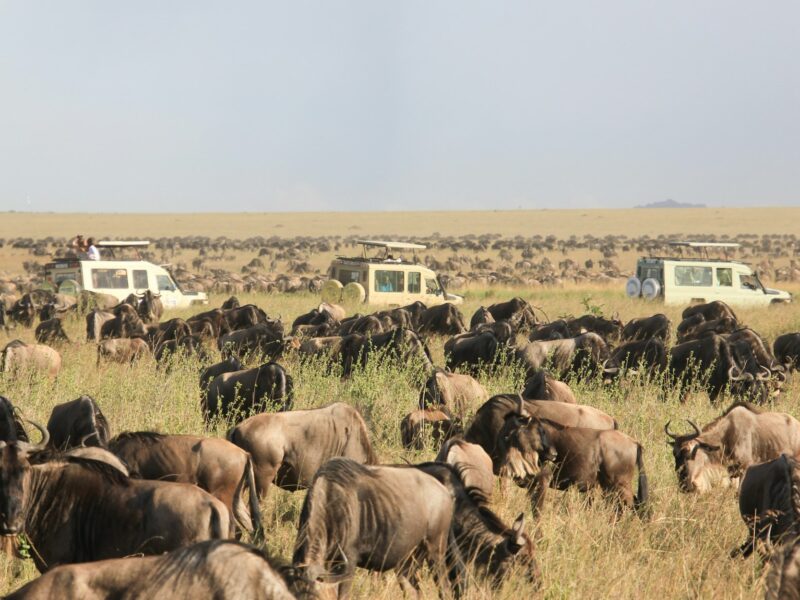
Herds gather at the river, sometimes for hours or days. They look for safe entry points, wary of crocodiles and predators. When one animal commits, others follow in a rush.
Best time of day
Crossings can happen at any time, but mid-morning to afternoon is common.
What else to see
Lions, leopards, cheetahs, hippos and crocodiles are present in the north.
Planning tips
| Tip | Why |
|---|---|
| Stay 3 nights near the river | More chances |
| Fly in or out | Save driving time |
| Book early | Northern camps fill fast |
What to bring
Binoculars, telephoto lens, snacks and patience.
How the northern Serengeti season unfolds
The Mara River runs through the far north of the Serengeti before crossing into Kenya’s Maasai Mara. Herds usually reach it in mid-year and move back and forth across it many times over the following months, which is why some days bring several crossings and others none.
| Period | What typically happens |
|---|---|
| Late June–July | First herds arrive; early crossings possible |
| August–September | Usually the most reliable crossing months |
| October | Herds start drifting south; crossings still possible |
| November | Most herds heading towards the central and southern plains |
Patterns change each year with the rains, so see our Great Migration month by month guide and ask us for current reports before you book.
Reading the river like a guide
Experienced guides look for clues long before the herds commit:
- Large numbers gathering on a bank and lining up along the edge
- Zebras moving to the front; they often lead the way
- Animals testing the water at a gently sloping entry point
- Crocodiles positioning themselves downstream
- Vultures circling, which can signal earlier crossings nearby
When these signs appear, your guide will position you at a respectful distance with a clear view, then wait quietly. Moving too early or too close can turn the herd away.
Choosing your base
Camps around Kogatende and the Lamai Wedge put you minutes from the main crossing areas. The northern Serengeti is remote, so most guests fly in, using a light aircraft from Arusha or the central Serengeti. If you prefer to drive, allow a full day from the central Serengeti with game viewing along the way.
Our 7 days Mara River crossing safari and 6 days private northern Serengeti safari are built around this area, and a private vehicle lets you stay at the river as long as you like.
Making the most of a crossing day
- Pack a picnic breakfast and lunch so you do not need to leave the river
- Carry extra water and sun protection; there is little shade at some points
- Agree a plan with your guide: some guests like to wait at one point, others to circulate
- Keep your camera ready and settings fixed for fast action
- Take breaks from the viewfinder to watch with your own eyes
Beyond the crossings
Even without a crossing, the north is spectacular. Rolling hills, riverine forest and rocky kopjes support resident lions, leopards and cheetahs, and you may see elephants, giraffes, topi and eland. The Bologonja and Lamai areas are quieter and good for exploring between crossings.
Booking and availability
The best-located northern camps fill early for August and September, but cancellations do happen. Through our private Great Migration safari service, we check camps across the north and suggest options that keep you within easy reach of the river. Being flexible on camp style and dates by a day or two greatly improves your chances.
Why herds hesitate
Wildebeest gather on the bank, sensing danger from crocodiles and predators. Any disturbance can delay a crossing for hours.
A typical crossing day
Your guide starts early, monitors herd movements and moves between crossing points. You may wait several hours, but when a crossing happens it is unforgettable.
Respecting the animals
Rangers enforce rules to prevent vehicles from blocking routes.
Planning a trip? Our Arusha team can put together a tailor-made, itemised quote, often the same day. Plan my safari or browse our private safari deals.
Further reading
Learn more from independent, authoritative sources: