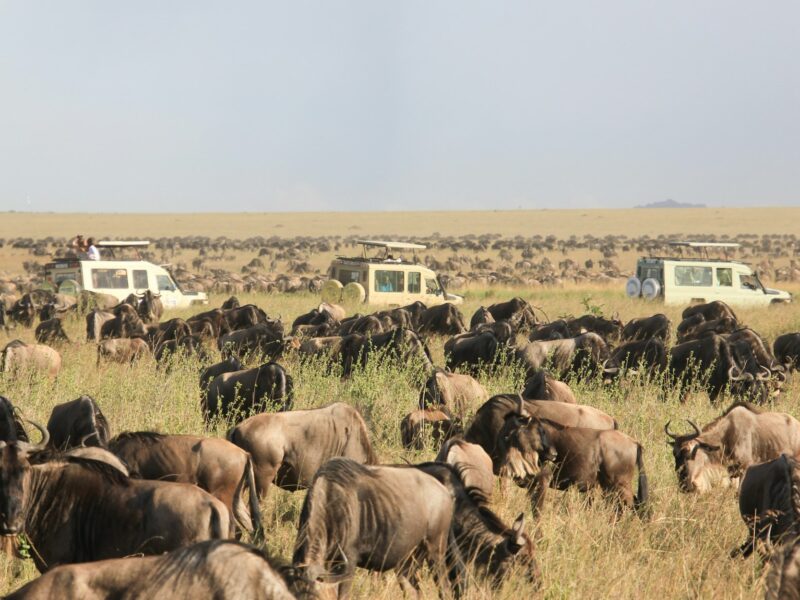
The Great Migration follows the rains, so exact timing changes a little every year. The overall pattern is reliable, and our guides track the herds daily to fine-tune each safari.
Month by month
| Month | Likely area | What to expect |
|---|---|---|
| January–February | Ndutu and southern plains | Calving, predators |
| March | South, moving west | Large herds, young calves |
| April–May | Central and western Serengeti | Green season, rutting |
| June | Western Corridor | Grumeti River crossings |
| July–September | Northern Serengeti | Mara River crossings |
| October | Northern Serengeti | Herds start turning south |
| November–December | Eastern and southern Serengeti | Short rains, return to the south |
How to choose your month
- For newborns and predator action: February
- For river crossings: August and September
- For fewer vehicles: May, June or November
Best itineraries for 2027
Booking advice
Mobile tented camps move with the herds and are the best way to stay close. Northern camps in August are in high demand; tell us your dates early or ask us to check for cancellations.
Understanding the cycle
The migration is driven by rainfall and grass. The short-grass plains in the south are rich in minerals, ideal for calving. As they dry, the herds move west and north in search of grazing and water, returning south when the rains come again.
Calving season in detail
Most calves are born within a few weeks, which overwhelms predators and gives more calves a chance to survive. Calves can stand within minutes. It is the best time for predator action.
The rut
Around May and June, males compete for females with noisy displays, a fascinating and less-known chapter of the migration.
River crossings in detail
The Grumeti River crossings in the west are often fewer but dramatic, with large crocodiles. The Mara River crossings in the north are the most famous and frequent.
Choosing your camp
Mobile camps relocate to stay near the herds. Permanent lodges in the central Serengeti are good all year and well placed to reach the herds in transition months.
A note on unpredictability
Early or late rains can shift the timing by weeks. A good operator adapts your itinerary as the herds move.
Where to base yourself each month
The most important booking decision is not the camp name but the area. This table shows the regions where we would usually suggest basing yourself, with the airstrip or gateway most often used.
| Months | Best base area | Typical access |
|---|---|---|
| January to March | Ndutu and the southern Serengeti plains | Drive via the Ngorongoro highlands or fly to a southern airstrip |
| April to May | Central Serengeti (Seronera) | Drive or fly to Seronera |
| June | Central Serengeti and the Western Corridor | Fly to a western airstrip or drive via Seronera |
| July to October | Northern Serengeti (Kogatende and Lamai areas) | Usually best by light aircraft |
| November to December | Eastern and central Serengeti, moving south | Drive or fly to Seronera |
Our Ndutu area and calving season page explains why the southern plains are so important early in the year.
The predators that follow the herds
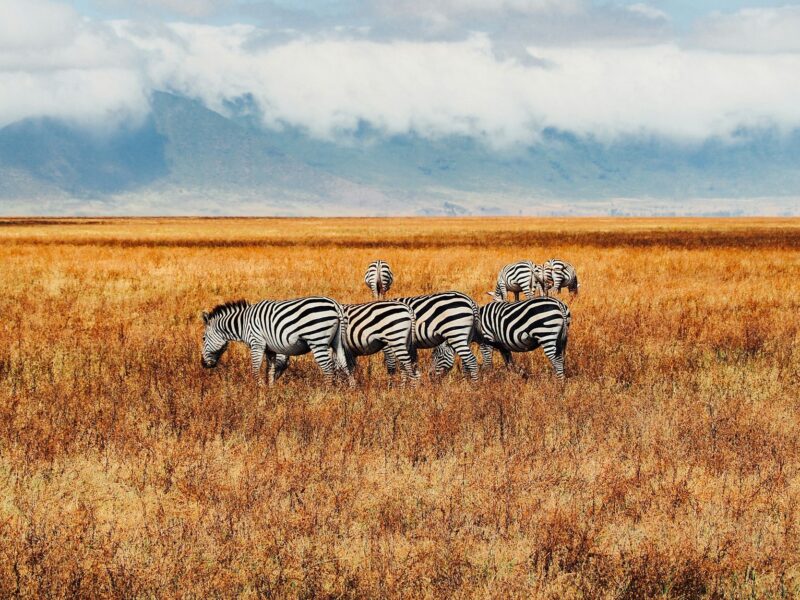
The migration is not only about wildebeest. Hundreds of thousands of zebras and Thomson’s gazelles travel with them, and predators shadow the movement in different ways. Lions and spotted hyenas hold territories, so they make the most of the herds while they pass through. Cheetahs are often easier to see on the open short-grass plains of the south, where there is little cover. In the rivers, Nile crocodiles wait for the crossing season. Each region therefore offers a different predator story depending on the month.
How to give yourself the best chance of a crossing
River crossings are the most unpredictable part of the year. Herds may gather on the bank for hours and then turn away, or cross several times in one afternoon. Our guides share these tips:
- Spend at least three nights in the north rather than one or two
- Take packed lunches so you can stay near the river through the middle of the day
- Be patient at a gathering herd; leaving too early is the most common way to miss a crossing
- Keep a respectful distance from the bank so the animals are not deterred
- Accept that some days will be quiet, and enjoy the resident wildlife too
Itineraries such as the 7 days Mara River crossing safari are designed around this approach, with enough time near the river.
Shoulder-month opportunities in 2027
The months when the herds are on the move between regions are often overlooked. In June, parts of the migration typically pass through the Western Corridor and the central Serengeti, and the rut may still be audible at night. In late October and November, the herds usually start drifting south through the eastern Serengeti as the short rains arrive. These months tend to be quieter and can offer good value, especially for travellers with flexible dates.
A flexible way to plan
If you are not tied to specific dates, tell us what matters most to you, such as calving, river crossings or simply large herds, and we will suggest the dates and areas most likely to deliver it. Read our Great Migration month by month guide for more detail on each phase, or see the private Great Migration safari page to plan your trip.
Planning a trip? Our Arusha team can put together a tailor-made, itemised quote, often the same day. Plan my safari or browse our private safari deals.
Further reading
Learn more from independent, authoritative sources: