Assalam-o-Alaikum (السلام علیکم). Families from Pakistan, Urdu speakers from India and the large communities in the UK, the Gulf and North America often ask about a Tanzania safari with Urdu speaking guide. It is a fair question, and it deserves a straight answer rather than a sales line.
Guides who speak Urdu as their mother tongue are rarely found on Tanzania’s safari circuit. Where a suitable Urdu speaker exists, a fluent guide is arranged on request, and we check they are free on your dates before you book.
What we can realistically offer in Urdu (اردو)
For each enquiry we look at what is actually available for your dates. The options are usually:
- a guide with good second-language Urdu, when such a guide can be found;
- an English-speaking guide paired with a professional Urdu interpreter, who joins you in the vehicle throughout;
- written Urdu briefings or materials, where possible, covering park rules and the daily plan.
Spoken Urdu and Hindi are closely related, so a Hindi-speaking guide or interpreter may also be an option if your family is comfortable with that. We will never promise any single arrangement before checking, and choices become more limited as your dates approach. Contact us early if you can, although we will still try our best when dates are close.
Family safaris, planned around you
Urdu-speaking travellers often come as multi-generational families, and a private safari suits that perfectly. Grandparents can rest at the lodge while others head out, children can stop for snacks whenever they need, and your guide can plan breaks for prayer during the day.
Lodges and camps can usually arrange halal meals on request. Give us the details of your requirements and we will confirm them with every property. Our 6-day family safari is a good example of a relaxed pace with plenty of time at each park.
What the commentary adds
On a game drive, the details matter. Your guide or interpreter can explain how elephants communicate with low rumbles, why wildebeest and zebras travel together, what the different alarm calls of monkeys mean and how the Maasai have shared this landscape with wildlife for generations. When this reaches the whole family in Urdu, the experience becomes far richer than a list of sightings.
How it works and where you go
You travel in a private 4×4 with a pop-up roof, with your guide driving. If an interpreter joins, they ride with you. Booking starts with our safari planning form; we then check language options and lodges, send an itinerary and confirm the details in writing.
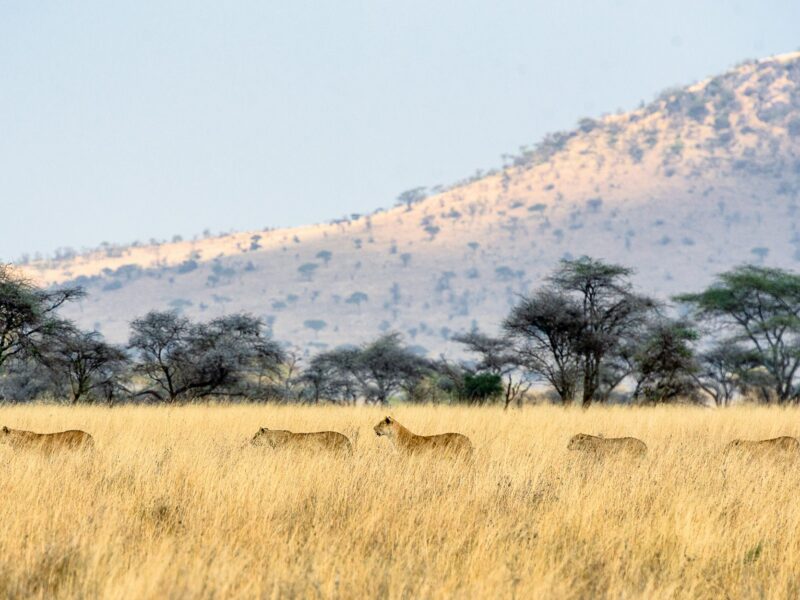
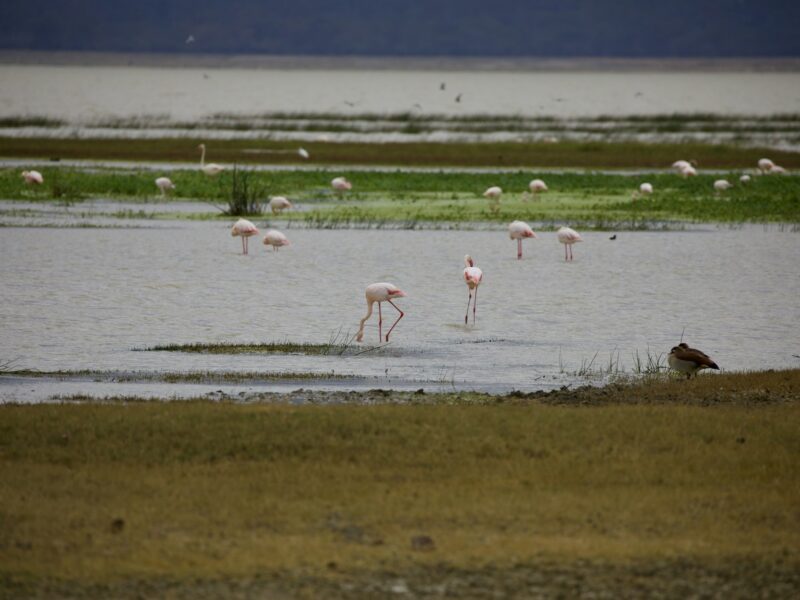
A typical northern route includes the Serengeti for wide plains and big cats, the Ngorongoro Crater for its extraordinary concentration of wildlife, Tarangire for elephants and Lake Manyara for birdlife. Those with more time can explore the southern parks.
Timing and travel for a Tanzania safari with Urdu speaking guide
The dry season from June to October is the most popular time, coinciding with summer holidays for many families. In January and February, attention shifts to the calving herds of the southern Serengeti and the Ndutu area. If your trip overlaps with Ramadan or Eid, let us know so we can plan meal times and activities sensibly.
Travellers from Pakistan, the UK and the Gulf typically fly into Kilimanjaro International Airport (JRO), Julius Nyerere International Airport (DAR) in Dar es Salaam or Zanzibar (ZNZ), connecting through hubs such as Doha, Dubai, Istanbul or Addis Ababa, just as most international visitors do.
Zanzibar, with its largely Muslim population and historic Stone Town, is a natural place to finish. Have a look at the 4-day safari and Zanzibar trip. Wikipedia has useful background on the Urdu language and the Ngorongoro Conservation Area.
Urdu safari questions
More Language Guides
Prefer to plan in another language? See all our safari and Kilimanjaro guides by language, or browse: