こんにちは. A Tanzania safari with Japanese speaking guide lets you experience the Serengeti and Ngorongoro in 日本語, the language you think and dream in. Japanese-speaking guides are requested regularly in Tanzania, and our Arusha team handles these requests often.
We do not keep a roster of names to show you. Instead, a guide fluent in Japanese is arranged on request, and we confirm that someone is available for your specific dates before any booking is made.
What a Tanzania Safari with Japanese Speaking Guide Adds
Many visitors from Japan arrive with a camera bag and a clear list of animals they hope to photograph. A guide who speaks Japanese can explain where to position the vehicle for the light, why a leopard is more likely in one kind of tree than another, and when to wait quietly rather than move on. Those details are hard to pass on in a language you only half share.
It helps beyond photography too. Travellers who are less confident in English can ask about the age of an elephant, the meaning of a cheetah’s chirp or the plants the Maasai use, and receive a full, relaxed answer. Family members of different generations all hear the same story at the same time.
The Vehicle, the Guide and the Plan
Your safari runs in a private 4×4 with a pop-up roof, which gives everyone a clear view and space to stand with a lens. The guide is also the driver, so you deal with one trusted person who knows the roads, the park regulations and your interests.
| Step | What happens |
|---|---|
| 1 | You share dates and wishes via our planning page |
| 2 | We check Japanese-speaking guide availability |
| 3 | You review an itinerary and confirm |
Japanese is a requested language, but guides are still a limited group. Contacting us early gives the widest choice of dates, and if your trip is very soon we will still do our best.
Parks and Suggested Itineraries
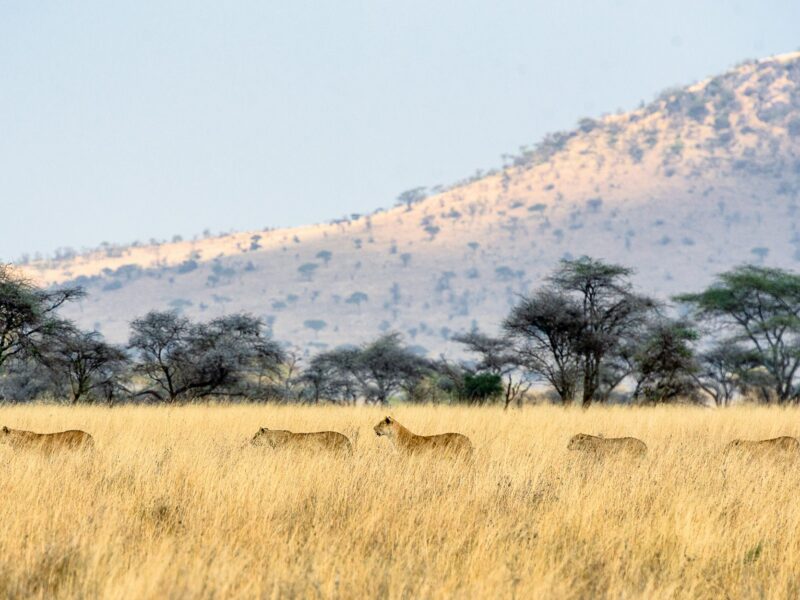
For a first visit, most people focus on the northern parks. The Serengeti is the centrepiece, with open grassland, kopjes and big cat country. The Ngorongoro Crater offers a full day on a caldera floor rich in wildlife. Tarangire is a favourite for elephants among ancient baobabs, and Lake Manyara is a short, pretty stop for birds and tree-lined shores.
Keen photographers may like our 8-day Serengeti photography safari, which allows longer sessions at sightings. Further south, Ruaha and Nyerere suit travellers who want fewer vehicles and a more remote atmosphere.
For background on the area’s geology and history, see the Ngorongoro Conservation Area on Wikipedia.
Best Months and Travel from Japan
The dry months from June to October bring reliable game viewing and comfortable temperatures, which suits those who can only take a week or two of annual leave. January and February are calving time in the southern Serengeti and Ndutu, when the migration herds give birth and predators gather nearby.
Most travellers fly into Kilimanjaro International Airport (JRO), Julius Nyerere International Airport (DAR) in Dar es Salaam, or Zanzibar (ZNZ). From Japan, journeys usually connect through hubs such as Doha, Dubai, Istanbul or Addis Ababa. Requirements for entry change, so check the latest rules with our visa and entry guide and the official Tanzanian eVisa portal.
Comfort, Food and Cultural Visits
Lodges and camps can usually adjust meals on request, for example lighter dishes, more rice or vegetarian options. Mention preferences when you book so your guide can pass them on. On cultural visits, your guide explains etiquette in Japanese, such as asking before photographing people, which helps everyone feel at ease.
The Japanese language is spoken mainly in Japan and within Japanese communities overseas, so we treat each request individually.
Japanese-Speaking Safari FAQs
More Language Guides
Prefer to plan in another language? See all our safari and Kilimanjaro guides by language, or browse: