Common symptoms
Headache, nausea, fatigue, dizziness and poor sleep.
Prevention
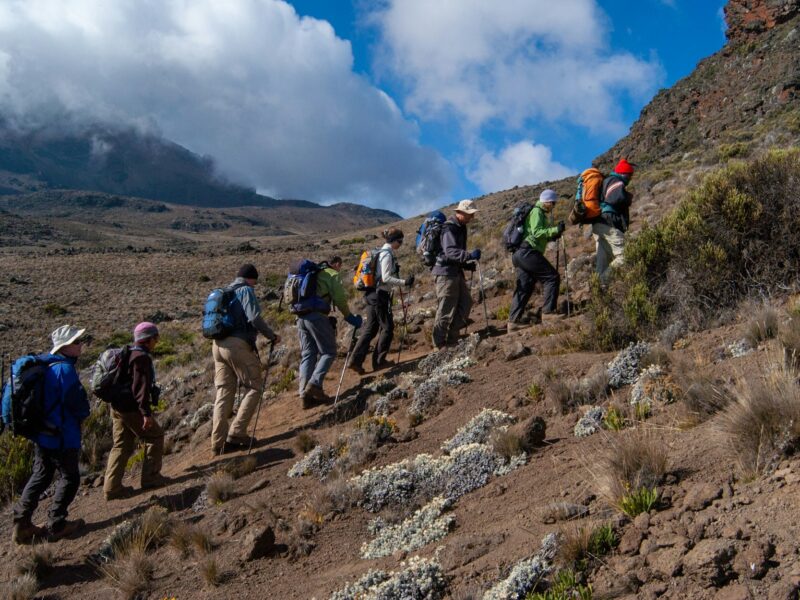
- Walk slowly: ‘pole pole’
- Drink plenty of water
- Choose a longer route
- Climb high, sleep low
- Talk to your doctor about medication
When to descend
Severe symptoms such as confusion or breathlessness at rest require immediate descent. Our guides check oxygen saturation daily.
This is general information, not medical advice.
Types of altitude illness
Acute mountain sickness (AMS) is common and usually mild. Rare but serious conditions such as HAPE and HACE require immediate descent.
Medication
Some climbers use medication on medical advice. Speak to your doctor.
Our safety protocol
Daily checks, emergency oxygen and descent plans.
Hydration
Drink three to four litres of water a day on the mountain.
Pace
Walking slowly is the most effective way to acclimatise.
Recognising symptoms early
| Mild AMS | Severe signs (descend immediately) |
|---|---|
| Headache | Confusion |
| Nausea | Loss of coordination |
| Fatigue | Breathlessness at rest |
| Poor sleep | Persistent cough |
The role of guides
Our guides are trained to recognise symptoms and make decisions about descent.
Insurance
Ensure your insurance covers trekking up to 6,000 m and emergency evacuation.
Acclimatisation profiles explained
‘Climb high, sleep low’ means hiking to a higher point during the day and descending to sleep. On the Machame and Lemosho routes, the Lava Tower day (4,600 m) followed by a night at Barranco (3,900 m) is a classic example.
Food and appetite
Altitude reduces appetite. Mountain cooks prepare carbohydrate-rich meals; eat little and often.
Sleep at altitude
Disturbed sleep is common. Stay warm and avoid sleeping pills unless prescribed.
Success rates
Longer itineraries are widely associated with higher summit success. Choose seven or eight days where possible.
Altitude bands on Kilimanjaro
Doctors often describe altitude in three broad bands, and a Kilimanjaro climb passes through all of them.
| Band | Height | On Kilimanjaro |
|---|---|---|
| High altitude | about 1,500–3,500 m | Gates, forest and lower moorland camps |
| Very high altitude | about 3,500–5,500 m | Shira, Barranco, Karanga and Barafu areas |
| Extreme altitude | above about 5,500 m | The crater rim and Uhuru Peak at 5,895 m |
Most people adapt well to high altitude with time. Very high altitude is where symptoms become common, and extreme altitude is only safe for short periods, which is why you summit and descend on the same day.
Monitoring yourself on the mountain
Honest self-reporting is one of the best safety tools you have. Each evening, ask yourself:
- Is my headache mild and eased by rest, water and simple pain relief, or getting worse?
- Am I eating and keeping food down?
- Can I walk in a straight line and think clearly?
- Am I breathless only when walking, or also at rest?
Tell your guide about every symptom, even if it feels minor. Guides use your answers alongside pulse and oxygen readings to decide whether to continue, rest or descend. Hiding symptoms to reach the summit is dangerous for you and for the team.
Common myths
- ‘Fitness protects you.’ Fit people get altitude sickness too; fitness helps with endurance, not adaptation.
- ‘If I felt fine on another mountain, I’ll be fine here.’ Previous experience helps, but your response can vary from trip to trip.
- ‘Going faster means less time at altitude.’ Going faster gives your body less time to adapt and raises the risk.
- ‘Medication means I can skip acclimatisation.’ Medication, if your doctor recommends it, supports but never replaces a slow ascent.
Pre-acclimatisation options
One of the most effective steps is to spend time at moderate altitude before you start. Climbing Mount Meru (4,566 m) in the days before Kilimanjaro is a classic approach, and our Mount Meru vs Kilimanjaro article explains how to combine them. A day hike on Kilimanjaro’s lower slopes or a few nights in Arusha, which sits at around 1,400 m, also helps a little.
Choosing a route with a good profile
Routes that rise gradually and include ‘climb high, sleep low’ days generally give the best results. The 8-day Lemosho route and the Northern Circuit route are among the best for acclimatisation, while short itineraries on any route increase the risk. If you are deciding on a route, our private Kilimanjaro climb team will steer you towards longer departures with space.
Pre-existing conditions
If you have heart or lung conditions, high blood pressure, anaemia, diabetes or a history of altitude illness, see your doctor well before your climb. Share any relevant medical information with us in confidence so your guides are prepared. This article is general information, not medical advice.
How altitude affects the body
As you climb, air pressure drops and each breath carries less oxygen. The body adapts over days, which is why longer itineraries have better summit success.
Daily health checks
Guides measure oxygen saturation and pulse and ask about symptoms each day.
Tips for better sleep
Stay warm, avoid alcohol and keep hydrated.
Planning a trip? Our Arusha team can put together a tailor-made, itemised quote, often the same day. Plan my safari or browse our private safari deals.
Further reading
Learn more from independent, authoritative sources: