Romania and Moldova are not yet major safari markets for Tanzania, which means native Romanian-speaking guides are genuinely hard to find here. That does not rule out a Tanzania safari with Romanian speaking guide support. It simply means we plan carefully, explain the options openly and confirm what is possible for your dates before you commit.
Romanian (limba română) is a Romance language spoken in Romania and Moldova, with sizeable communities in Italy, Spain, Germany, the United Kingdom and beyond. Its closest relatives are Italian, French, Spanish and Portuguese, a point that can be surprisingly useful on safari. More background is in the Wikipedia entry on the Romanian language.
Your language options, explained honestly
We look at each enquiry individually. Depending on availability, the choices usually include:
- a guide who has learned Romanian as a second language, if one is free on your dates;
- an English-speaking guide-driver plus a professional Romanian interpreter who travels with you;
- written Romanian materials, such as your itinerary or a short wildlife glossary, where possible.
There is a further possibility worth considering. Italian, French and Spanish speaking guides are requested regularly in Tanzania, and many Romanian travellers, particularly those who live or work in Italy or Spain, are comfortable in one of these languages. If that applies to you, say so and we will include it in our search. We do not commit to any single option until it is confirmed.
Why explanations in Romanian are worth asking for
Game drives are full of small details: why a giraffe splays its front legs to drink, how to tell a cheetah from a leopard, why vultures circling overhead can signal a recent kill. A guide who explains these in the language you think in lets you ask follow-up questions without hesitation. That matters most for children, who ask constantly, and for parents or grandparents who did not learn English at school.
Understanding matters for culture too. If you visit a Maasai village or meet Hadzabe hunter-gatherers near Lake Eyasi, an interpreter helps you show respect, ask thoughtful questions and grasp the answers properly.
Planning a Tanzania safari with Romanian speaking guide help
Safaris run in a private 4×4 with a pop-up roof, giving everyone a clear view and room for cameras. Your guide-driver knows the parks and their rules, while an interpreter, where chosen, sits with you and translates throughout.
- Tell us your dates, interests and who needs Romanian support using the trip planner.
- We check guides and interpreters, then send a tailored itinerary.
- You confirm, and we secure the team and accommodation.
Parks and suggested itineraries
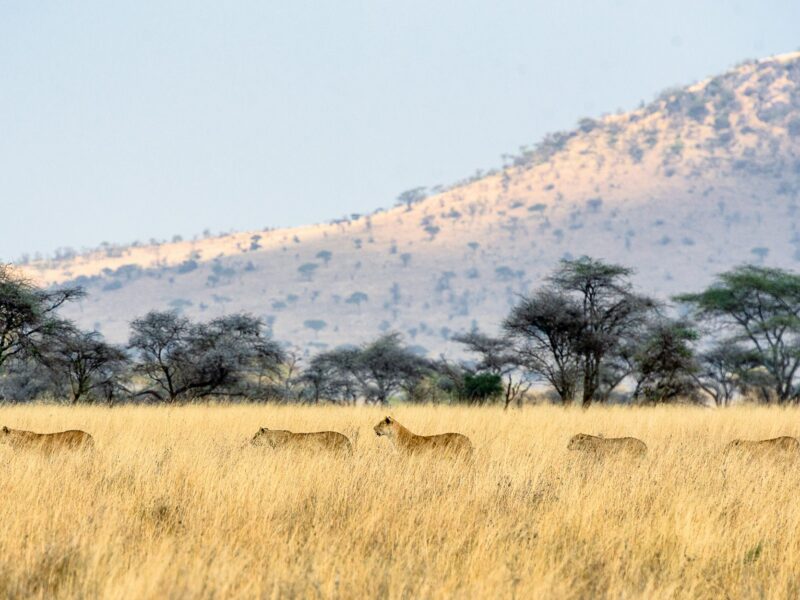
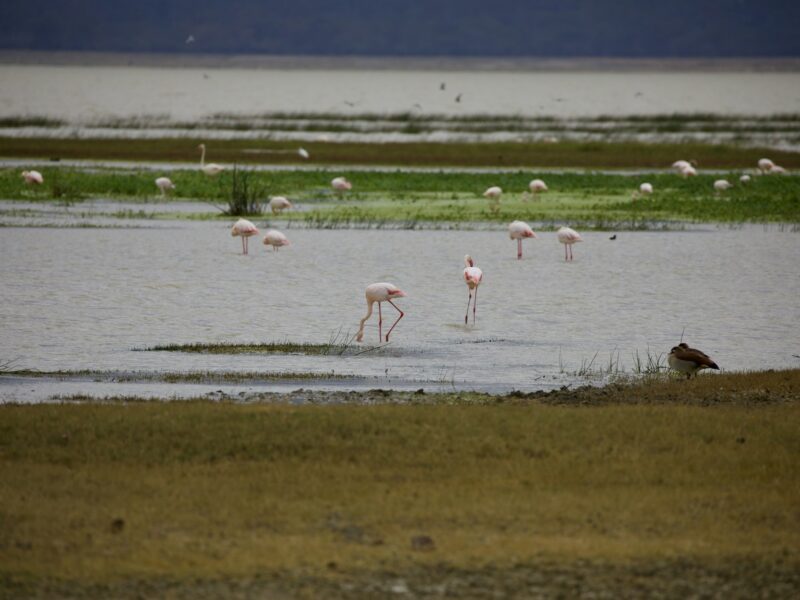
The northern circuit is the natural starting point. The Serengeti is famous for open plains and big cats, the Ngorongoro Crater for concentrated wildlife inside a collapsed volcano, Tarangire for elephants and baobabs, and Lake Manyara for its tree-lined shores and birdlife.
| Trip length | Suggested parks |
|---|---|
| 3 to 4 days | Tarangire, Lake Manyara and Ngorongoro |
| 5 to 7 days | Add the central and northern Serengeti |
| 8 days or more | Add a southern park such as Nyerere or Ruaha |
Ready-made ideas are in our Tanzania safari packages, and the Britannica guide to the Serengeti is a good introduction to the ecosystem.
Seasons and travel from Romania and Moldova
The dry season from June to October offers reliable game viewing. January and February bring the calving season in the southern Serengeti and Ndutu, when the migrating herds give birth.
From Bucharest, Chișinău or Romanian communities elsewhere in Europe, journeys typically connect via Istanbul, Doha, Dubai, Amsterdam or Addis Ababa to Kilimanjaro International Airport (JRO), Julius Nyerere International Airport (DAR) in Dar es Salaam or Zanzibar (ZNZ). Entry rules change from time to time, so check the official eVisa portal before you travel.
We plan every trip around your own dates, but interpreters book up quickly, so contact us as early as you can.
FAQs
More Language Guides
Prefer to plan in another language? See all our safari and Kilimanjaro guides by language, or browse: