नमस्कार. Families from Maharashtra often tell us the same thing: the younger generation is happy in English, but parents and grandparents would enjoy the trip far more in मराठी. A Tanzania safari with Marathi speaking guide support is possible to explore, although we must be honest that native Marathi-speaking guides are rare in Tanzania.
We are an Arusha-based operator, and most Marathi-speaking enquiries come from Mumbai, Pune, Nagpur and Nashik, as well as from Marathi families living in the United States, the United Kingdom and the Gulf.
What We Can Realistically Arrange
Every request is checked individually, and we never promise one specific option before confirming it. Depending on your dates, the possibilities include:
- a guide who speaks Marathi as a second language, if one is available;
- an English-speaking guide paired with a professional Marathi interpreter who travels with you;
- written Marathi notes about the parks, the animals and the safety rules, where possible.
Some families find that a guide who speaks Hindi as a second language is also helpful, and we can look into that alongside Marathi.
Why a Tanzania Safari with Marathi Speaking Guide Support Helps Elders
Older travellers often get the most from a safari when they can relax and listen without straining to follow fast English. Children, meanwhile, ask endless questions: how much does an elephant eat, why do giraffes fight with their necks, where do lions sleep at night? When answers come in a language everyone shares, the whole vehicle joins in.
Clear explanations of park regulations also matter. Staying seated when animals are close, never getting out of the vehicle except at marked sites, and keeping noise low are easier to respect when they are explained in a language you are comfortable with.
Vegetarian Food and Comfortable Travel
Many Marathi-speaking travellers are vegetarian, and some follow Jain dietary rules. Lodges and camps can usually arrange vegetarian meals on request, and many will adapt dishes further if they are told early. We pass your requirements on before you arrive.
For multi-generation groups, our 6-day family safari keeps driving times sensible, and a private 4×4 with a pop-up roof means everyone has a window seat and room to stand for photos. Your guide drives and explains, and an interpreter, if arranged, rides with you.
Parks on a Typical Northern Circuit
- Tarangire, famous for elephants and giant baobab trees.
- Lake Manyara, a compact park with forest and abundant birdlife.
- The Ngorongoro Crater, where a single day can bring lion, buffalo, zebra and hippo.
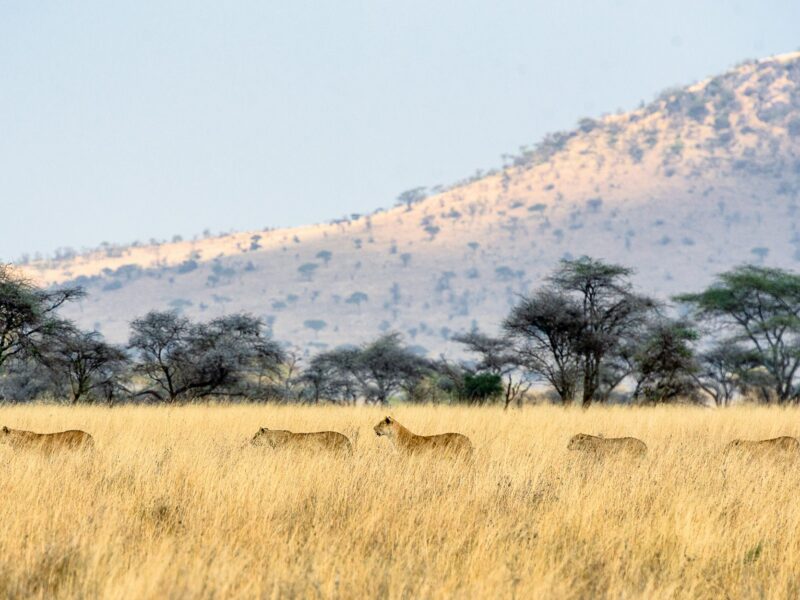
- The Serengeti, with its huge plains and big cats.
The Ngorongoro area also has a fascinating history, outlined in the Ngorongoro Conservation Area article on Wikipedia.
Seasons, Flights and Timing Your Request
June to October is the long dry season, a reliable time to see wildlife. January and February bring the calving season in the southern Serengeti and Ndutu. Indian school holidays sometimes overlap with these windows, so plan early if your dates are fixed.
International travellers usually fly into Kilimanjaro International Airport (JRO), Julius Nyerere International Airport (DAR) in Dar es Salaam, or Zanzibar (ZNZ). From India, routings commonly connect through hubs such as Doha, Dubai, Addis Ababa or Nairobi. Entry requirements change, so check current rules on the official Tanzanian eVisa portal.
Interpreters and second-language guides are limited, especially in busy months. Asking early gives you the best chance, but we still try our best when plans come together late. Share your details through our planning form and we will reply with honest options.
The Marathi language page on Wikipedia gives more background on its history and speakers.
Marathi Safari FAQs
More Language Guides
Prefer to plan in another language? See all our safari and Kilimanjaro guides by language, or browse: