Korean speakers who dream of the Serengeti often ask us one question before anything else: can someone explain what we are seeing in 한국어? This page sets out, honestly, how we handle a Tanzania safari with Korean speaking guide requests, which options are realistic, and how to plan around them when your holiday is close.
We are an independent operator based in Arusha, and most of our work is planning private, tailor-made trips around each traveller’s dates. So we set out the language arrangements before you pay anything.
Is a Native Korean-Speaking Guide Realistic?
Native Korean-speaking safari guides are rare in Tanzania, and we would rather say so now than surprise you on arrival. When you enquire, we look at three possible set-ups and tell you which can work for your dates:
- a Tanzanian guide-driver who speaks Korean as a second language, where one is free;
- an English-speaking guide-driver joined by a professional Korean interpreter who travels in the vehicle with you;
- written Korean briefings and notes on parks, animals and lodge routines, where we are able to prepare them.
We never commit to one particular option in advance, because the answer depends on who is available that week. Requests made well ahead have the widest choice; closer to departure the pool shrinks, but we still try hard and tell you plainly if something cannot be done.
Why Explanations in Your Own Language Matter
A good guide does far more than drive. They read tracks, predict where a cheetah may hunt, and explain why a herd of elephants has suddenly gone still. When that commentary reaches you in your first language, you can ask a follow-up question straight away instead of waiting for a translation app to catch up.
This is especially valuable for children who are still learning English, and for grandparents who would rather relax than concentrate on every word. If photography is a priority, being able to say “a little forward, the light is behind her” and be understood instantly can decide whether you get the shot.
How a Tanzania Safari with Korean Speaking Guide Support Works
Every trip we plan is private. You travel in a 4×4 with a pop-up roof, which lets everyone stand for clear views and photos, and the same guide-driver stays with you from start to finish. If an interpreter is part of the plan, they ride with you and join the briefings at each lodge or camp.
- Send your dates, group size and interests through our safari planning form and name Korean as the language you need.
- We check guide and interpreter availability and reply with options.
- Once the itinerary and the language arrangement both suit you, we confirm the booking.
- Before departure you receive a pre-trip briefing, translated into Korean where possible.
Parks and Suggested Routes
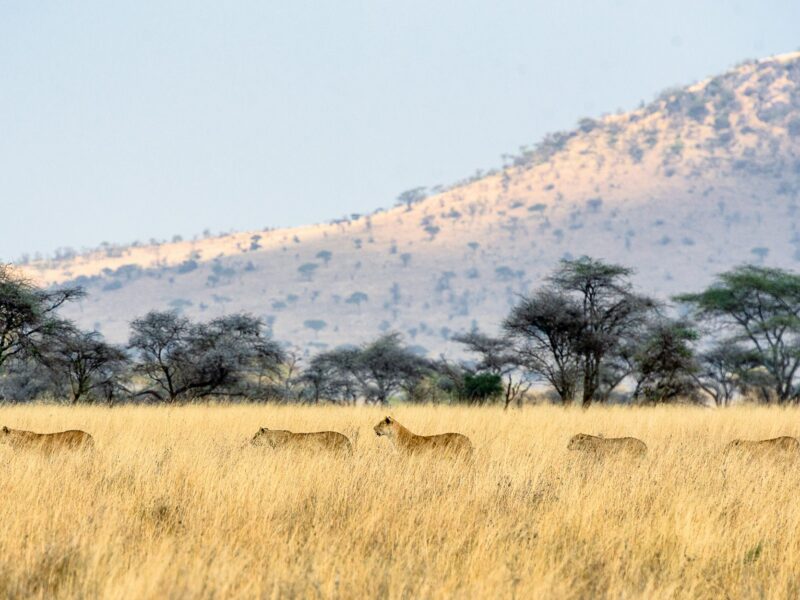
A first visit to the northern circuit usually links four parks. Tarangire is known for large elephant herds and ancient baobab trees. Lake Manyara is compact but varied, with groundwater forest beside a soda lake. The Ngorongoro Crater is a collapsed volcanic caldera where black rhino are sometimes seen, and the Serengeti offers the endless plains most people picture when they think of Africa.
With only a few days, the 4-day Serengeti and Ngorongoro safari is a sensible base to adapt. For wider background, this overview of Serengeti National Park is a helpful read before you go.
Best Time to Visit and Getting There
The long dry season, roughly June to October, is the classic window because animals gather near water and the grass is shorter. January and February bring the calving season in the southern Serengeti and Ndutu area, when the wildebeest herds give birth over a few short weeks.
The Korean language is spoken mainly in South Korea and North Korea, with sizeable communities in the United States, China and Japan. Wherever you start, most international travellers land at Kilimanjaro International Airport (JRO), Julius Nyerere International Airport (DAR) in Dar es Salaam, or Zanzibar (ZNZ), often connecting via hubs such as Doha, Dubai, Istanbul or Addis Ababa. Entry rules change, so check the current requirements on the official eVisa portal, visa.immigration.go.tz, before travelling.
Korean Safari Questions
More Language Guides
Prefer to plan in another language? See all our safari and Kilimanjaro guides by language, or browse: