Sannu! Hausa is one of the great languages of West Africa, spoken across northern Nigeria and Niger and by communities in Ghana, Cameroon, Chad, Sudan and beyond. If you are researching a Tanzania safari with Hausa speaking guide support, you deserve a straight answer about what is possible on the other side of the continent, so here it is.
Language Options, Explained Without Exaggeration
Hausa-speaking safari guides are rare in East Africa. We do not claim to have them on call. When you contact us, we explore what can be arranged for your dates, which might be:
- a guide who speaks Hausa as a second language, if one can be found;
- an English-speaking guide with a professional Hausa interpreter travelling alongside you;
- written briefings in Hausa covering parks, wildlife and daily routines, where we can provide them.
Many Hausa speakers are also fluent in English, especially travellers from Nigeria and Ghana, while those from Niger may be more comfortable in French. English and French are both languages that safari visitors request regularly in Tanzania, so a combination of an English or French-speaking guide plus Hausa materials can sometimes work well. We confirm the final arrangement before you book and never promise one particular option in advance.
Why It Helps to Hear the Story Clearly
Some animals in Tanzania will be familiar names from home, while others, such as the wildebeest herds or the tree-climbing lions sometimes seen at Lake Manyara, may be entirely new. A guide who can explain behaviour clearly lets you ask the questions that matter to you: how does a cheetah differ from a leopard, why do zebras and wildebeest travel together, how close is too close to an elephant?
For grandparents, children and anyone less confident in English, that clarity turns a pleasant drive into a real understanding of the ecosystem.
Tanzania Safari with Hausa Speaking Guide Support: Step by Step
1. Tell us your dates, group size and preferred language through the plan my safari form.
2. We check what language support is available and send a suggested itinerary.
3. You review the plan and the language arrangement together and only confirm when both suit you.
4. On arrival you meet your guide-driver, who stays with you in a private 4×4 with a pop-up roof for the whole trip.
Halal meals are usually available at lodges and camps on request, and your guide can plan stops for prayer where the parks allow.
Recommended Parks and Itineraries
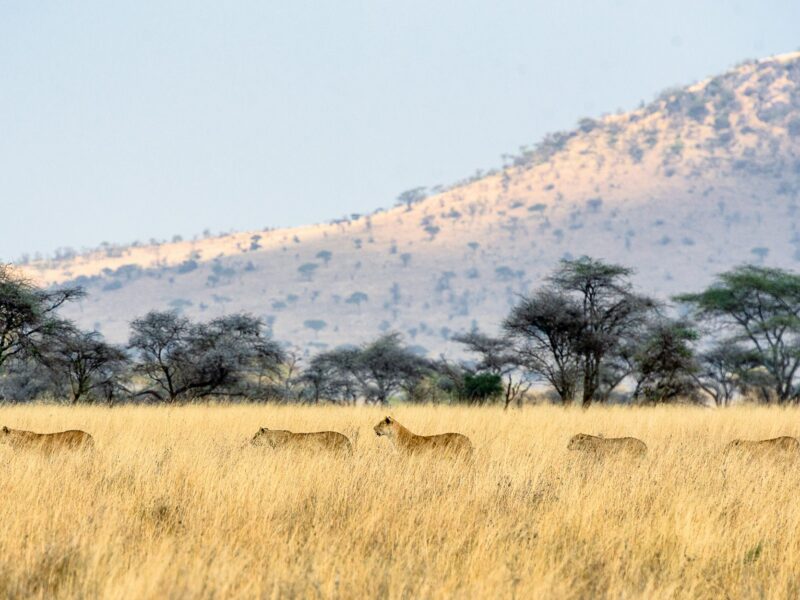
The northern circuit is the natural starting point. The Serengeti is a vast savannah ecosystem shared with Kenya’s Maasai Mara. The Ngorongoro Crater is a volcanic caldera with lions, buffalo and, with luck, black rhino. Tarangire is excellent for elephants, and Lake Manyara offers forest, birdlife and a dramatic escarpment. For a longer trip that also covers some quieter areas, look at the 7-day Tanzania safari, or browse all safari packages.
Those with more time can add the southern parks, such as Nyerere and Ruaha, for a wilder feel. Background reading on the Serengeti from Britannica is a good primer.
When to Travel and How to Get Here
June to October is the dry season and the easiest time for game viewing. January and February are the calving months in the southern Serengeti and Ndutu, when predators follow the herds closely.
Most international travellers fly into Kilimanjaro International Airport (JRO), Julius Nyerere International Airport (DAR) in Dar es Salaam, or Zanzibar (ZNZ). From West Africa, connecting via hubs such as Addis Ababa, Nairobi, Doha or Dubai is common. Check entry rules for your passport on the official eVisa portal, visa.immigration.go.tz, as they can change. To learn more about the Hausa language, including its Boko and Ajami scripts, Wikipedia has a detailed article.
Questions from Hausa Speakers
More Language Guides
Prefer to plan in another language? See all our safari and Kilimanjaro guides by language, or browse: