Travellers from Hong Kong often ask us whether a Tanzania safari with Cantonese speaking guide support is possible. It is a fair question with an honest answer: native Cantonese speakers are rare among Tanzania’s safari guides, and Cantonese requests are handled separately from Mandarin ones. We are an Arusha-based operator, and we will explain what can realistically be arranged.
Cantonese-speaking enquiries come to us from Hong Kong, Macau and Guangdong, and from long-established communities in the UK, Canada, Australia, the United States and Malaysia. Many are families, photographers or couples on a special trip.
Realistic Options for 廣東話 Support
When you send your dates, we check who is genuinely available. We never promise one specific option before confirming it, but the possibilities include:
- a guide who speaks Cantonese as a second language, where one is available;
- an English-speaking guide working with a professional Cantonese interpreter who travels with you;
- written Chinese briefings or notes on the parks, animals and safety rules, where possible.
If some of your group are also comfortable in Mandarin, tell us. Guides who speak Mandarin are requested more often in Tanzania, which can widen the choice, but we will treat Cantonese as your first preference.
Why a Tanzania Safari with Cantonese Speaking Guide Support Is Worth It
City life in Hong Kong is fast, and a safari is the opposite: slow, patient and full of small details. Your guide may spend ten minutes explaining how a leopard hides its kill in a tree, or why vultures circling overhead can lead to a lion pride. In your own language, these moments become stories you will retell for years.
Grandparents who are more at home in Cantonese than English can follow every sighting. Children can ask why the hippo yawns or how the giraffe drinks without waiting for a parent to translate. Park rules, such as staying inside the vehicle and respecting the animals’ space, are easier to follow when everyone understands them.
Built for Photographers and Families
Our private safaris use a 4×4 with a pop-up roof, giving you room to stand and shoot with long lenses. Your guide is also the driver, so positioning for light and angle happens quickly, and any interpreter sits with you in the vehicle.
Serious photographers might consider our 10-day private photography migration safari. Lodges can usually adapt meals on request, for example with plain rice, noodles or lighter dishes.
Where to Go
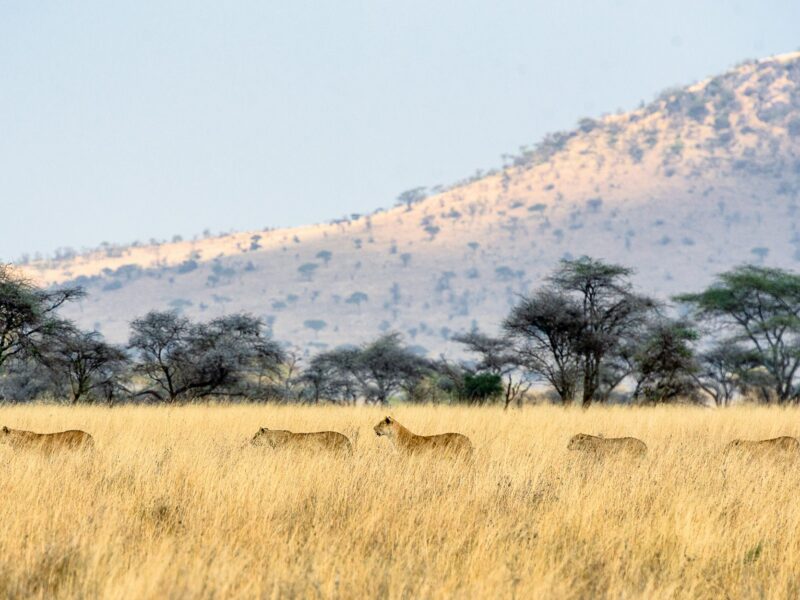
Most first visits follow the northern circuit. The Serengeti is the highlight, with big cats and seasonal migration herds. The Ngorongoro Crater offers a full day of game viewing on the floor of a collapsed volcano. Tarangire has elephants and baobabs, and Lake Manyara adds forest and birdlife. Read more about the Serengeti on Wikipedia’s Serengeti page.
Seasons and Flights
The dry season from June to October is the most popular time, with excellent wildlife viewing. January and February are calving months near Ndutu and the southern Serengeti, when newborn wildebeest attract predators.
Most international travellers arrive at Kilimanjaro International Airport (JRO), Julius Nyerere International Airport (DAR) in Dar es Salaam, or Zanzibar (ZNZ). From Hong Kong, itineraries commonly connect through hubs such as Doha, Dubai or Addis Ababa, while travellers from the UK or Canada may route via Amsterdam or Istanbul. Check the current entry rules on the official Tanzanian eVisa portal before you travel.
Booking Early, or Close to Your Dates
Cantonese interpreters and second-language guides are few, so availability can be tight, which makes an early enquiry the safest choice. Still, flexible private travel is our speciality, and we will try our best even if you are leaving soon. Start by sharing your plans through our safari planning form.
Wikipedia’s page on Cantonese covers the language’s history and regions.
Cantonese Safari FAQs
More Language Guides
Prefer to plan in another language? See all our safari and Kilimanjaro guides by language, or browse: