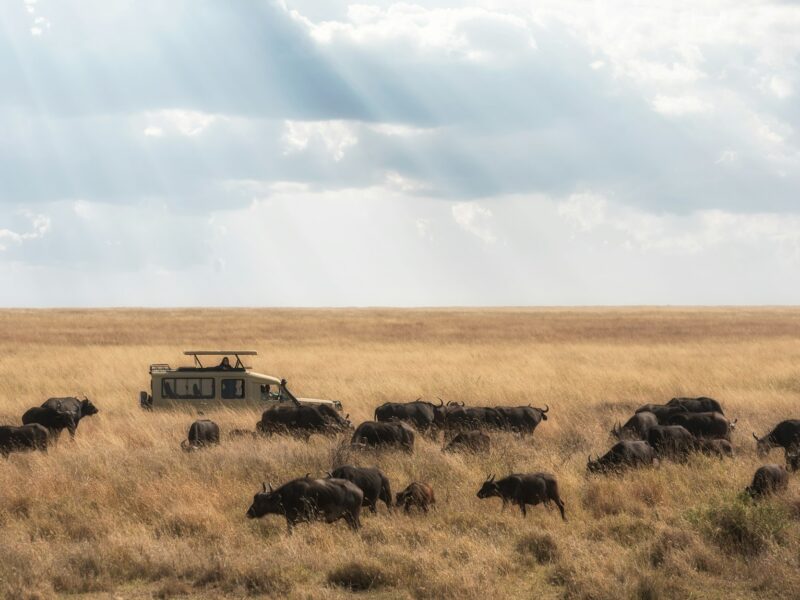
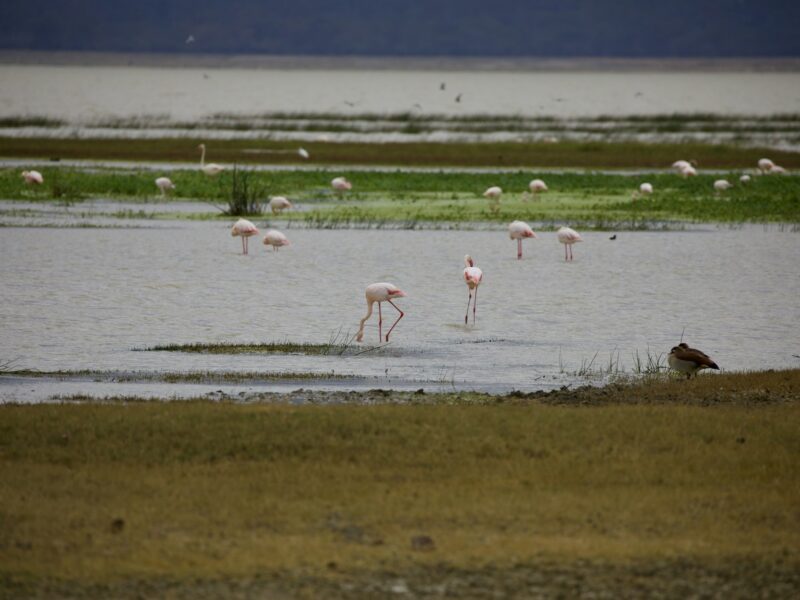
A Tanzania private safari package gives you a tested route through the country’s finest wildlife areas, with your own vehicle and guide and none of the compromises of a shared tour. Our Tanzania private safari packages are starting points rather than fixed products: each one sets out a sensible sequence of parks, driving times and overnight stops, which we then adjust to your dates, pace and budget.
Because we are based in Arusha, close to the gateway for the northern parks, we can often pull a package together within days while lodges still have space. This page explains how the packages are structured, what they typically include, how the accommodation levels differ and which months suit each route.
How Our Tanzania Private Safari Packages Work
Every package is built around a dedicated 4×4, usually a Toyota Land Cruiser with a pop-up roof for game viewing and photography. Your professional driver-guide stays with you from the first morning to the final transfer, so you decide when to leave camp, how long to wait at a sighting and when to head back for lunch. Nobody else in the vehicle has a different agenda.
Start dates are flexible. There is no departure calendar to fit around, which matters if you are pairing the trip with a Kilimanjaro climb, a beach stay or a business visit. Families can travel at a gentler rhythm, photographers can stay out longer in good light, and couples can steer towards quieter areas away from the busiest tracks.
Choosing a Package by Length
The right length depends on how far you want to travel and how much time you can spare. The table below summarises the usual shapes; every one of them can be stretched or shortened.
| Package length | Typical route | Best suited to |
|---|---|---|
| 2 to 3 days | Tarangire and Ngorongoro Crater | Short add-ons before or after Zanzibar or a climb |
| 4 to 5 days | Tarangire, Lake Manyara or Ngorongoro, plus central Serengeti | First-time visitors after the classic highlights |
| 6 to 8 days | Full northern circuit with time in more than one Serengeti area | Travellers following the migration region or slowing down |
| 10 days or more | North and south combined, or safari plus Zanzibar | Repeat visitors and those who want variety |
Short packages work well, though the road from Arusha to the Serengeti is a long one. On a compact trip, a fly-in option to a Serengeti airstrip can save most of a day in the vehicle. Our three-day private itinerary and four-day private route show how shorter trips are paced without feeling rushed.
What a Package Typically Includes
Inclusions vary slightly between lodges and parks, but a standard private package usually covers:
- Your own 4×4 with pop-up roof and game drives within park opening hours
- An English-speaking professional driver-guide for the whole trip
- Accommodation at your chosen level, normally full board while on safari
- Entry and conservation fees for each protected area on your route
- Arrival and departure transfers
- Bottled drinking water in the vehicle
Items that are typically excluded:
- International flights, visas and travel insurance
- Tips for your guide and lodge staff
- Optional extras such as hot-air balloon flights or village visits
- Drinks and personal purchases not covered by the lodge
Every quote lists the inclusions line by line, so there are no surprises when you arrive. If you are unsure how much to set aside for gratuities, our safari tipping guide gives practical pointers.
Lodge Levels Within Each Package
The same route can be run at three broad standards. Budget packages rely on simple lodges, basic permanent tented camps or public campsites, often just outside park gates. Mid-range options are comfortable lodges and tented camps with en-suite bathrooms, typically closer to or inside the parks. Luxury packages use smaller, more exclusive properties with higher service levels, more space and positions chosen for game viewing.
Changing the accommodation while keeping the route is the simplest way to shape what you spend. Our guide to what drives the cost covers the other factors, from season to internal flights.
When to Travel on Each Route
The long dry season, roughly June to October, brings thinner vegetation, animals gathering near water and the busiest lodges. Around January and February, the southern Serengeti and Ndutu host the wildebeest calving, which suits a package that spends extra nights in that area. The long rains, roughly April to May, mean that many camps close or often offer lower rates, while the short rains around November tend to bring brief showers rather than washed-out days.
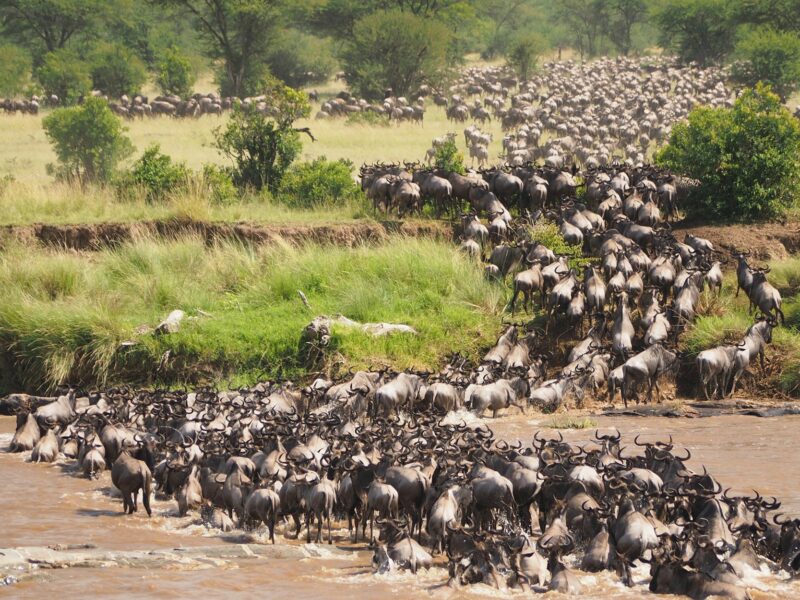
The Great Migration moves through different parts of the ecosystem month by month and is never guaranteed in a particular spot, so we position each package where the herds are most likely to be. For a month-by-month view, see our best time to visit Tanzania guide.
Adapting a Package to Suit You
Most travellers change at least one element. You might add a night in the Ngorongoro Conservation Area to visit the crater floor at dawn, swap Lake Manyara for a longer stay in Tarangire, or finish with a few days on the coast. We can also start your route the morning after you land, or build in a rest day if you are arriving on a long-haul flight.
If you are still weighing up whether travelling privately is right for you, our overview of the Tanzania private safari explains the approach in full. When you are ready, tell us your dates, group size and interests through our free safari planning form and we will send a tailor-made package with a clear breakdown of what is included.