Our top picks for beginners
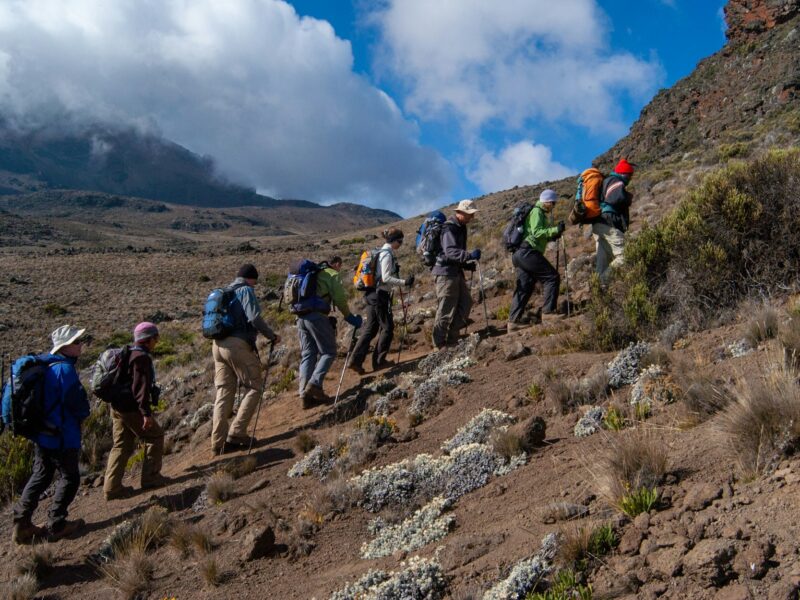
- Lemosho, 8 days: excellent acclimatisation and scenery
- Machame, 7 days: popular and scenic
- Rongai, 7 days: quieter, drier, gentler
- Marangu, 6 days: huts instead of tents
What matters most
More days on the mountain give your body time to adapt. Avoid the shortest itineraries.
See our route comparison.
Summit success factors
Days on the mountain, pace, hydration, guides and weather.
Crowds
Machame and Marangu are the busiest routes; Lemosho and Rongai are quieter.
Our recommendation
The 8-day Lemosho for the best balance of scenery and acclimatisation.
Route summaries
Lemosho
Starts in the remote west, crosses the Shira Plateau and joins the southern circuit.
Machame
Steep but scenic, with the Barranco Wall.
Rongai
Approaches from the north, drier and quieter.
Marangu
The only hut route, with a gentle gradient.
Final advice
Choose a route with at least seven days if possible.
Detailed route comparison
| Route | Start | Accommodation | Pros | Cons |
|---|---|---|---|---|
| Lemosho | West | Tents | Scenic, quiet start, great acclimatisation | Longer and more expensive |
| Machame | South | Tents | Scenic, popular | Busy |
| Rongai | North | Tents | Drier, quieter | Less scenery variety |
| Marangu | South-east | Huts | Huts, gentle | Busy, same route up and down |
Summit night
On Lemosho, Machame and Umbwe you summit via Stella Point; on Marangu and Rongai via Gilman’s Point.
Why longer is better
Extra days allow your body to adapt to altitude, improving summit chances and making the climb more enjoyable.
Booking tips
Choose an operator that pays porters fairly and carries emergency oxygen.
Match the route to your priorities
| If your priority is | Consider | Why |
|---|---|---|
| Best acclimatisation | Lemosho 8 days or Northern Circuit | Long, gradual profiles |
| Scenery | Lemosho or Machame | Shira Plateau, Barranco Wall, varied zones |
| Quiet trails | Rongai or Northern Circuit | Fewer climbers on the lower sections |
| Rainy season | Rongai | Drier northern slopes |
| Sleeping in huts | Marangu | Bunks in shared huts |
For a full overview of every route, visit our Kilimanjaro climbing tours page.
Don’t overlook the Northern Circuit
The Northern Circuit route is the longest route on Kilimanjaro, usually around nine days. It starts in the west like Lemosho, then circles around the quieter northern slopes before summiting. For a beginner with time, the extra days make acclimatisation very gradual and the trail feels peaceful. The main downsides are cost and the time needed away from home.
What a beginner’s day looks like
A typical day on the mountain is simpler than many people expect:
- Wake-up around 6:30 am with tea or coffee delivered to your tent
- Breakfast, then pack your day bag while porters break camp
- Walk at a slow, steady pace for four to seven hours with rest and lunch stops
- Arrive at camp, rest, and take a short acclimatisation walk if advised
- Dinner, a health check with your guide, and an early night
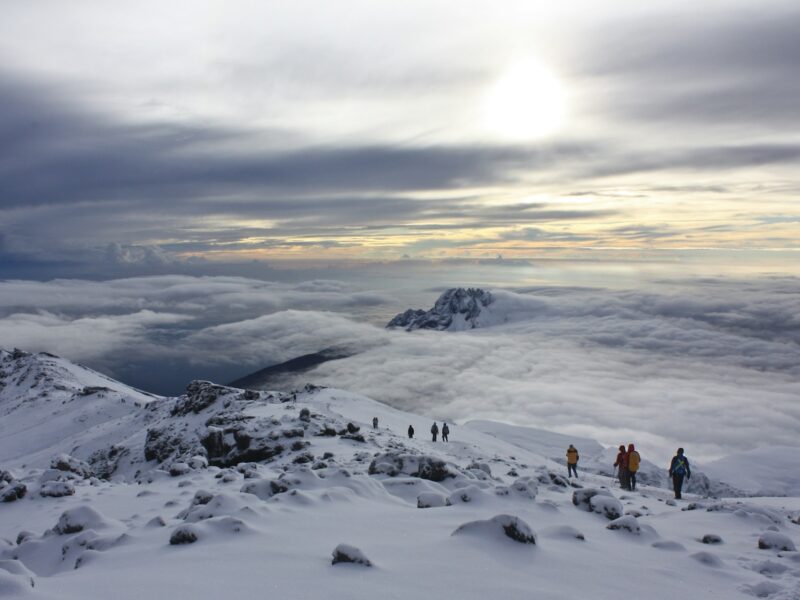
Summit day is different: you usually start around midnight, reach the crater rim at dawn and continue to Uhuru Peak at 5,895 m before descending. Every route shares this tough night, which is why acclimatisation matters so much.
Seasons and route choice
The main climbing seasons are roughly January to early March and June to October, when the weather is usually drier. During the long rains, approximately March to May, and the short rains around November, trails are wetter and colder. Rongai, on the drier northern side, is often a good choice in the shoulder months, while the southern routes are more exposed to rain.
Questions to ask any operator
- How many days does the itinerary include, and can I add one?
- Do guides carry a pulse oximeter and emergency oxygen?
- Are porters paid fairly and is their load weighed?
- What is the guide-to-climber ratio?
- What happens if I need to descend early?
Clear answers to these questions say more about safety than a headline price. Our Kilimanjaro climb cost guide explains what a fair package includes. When you are ready to book, our private Kilimanjaro climb team can check which routes have upcoming departures.
A note on the Marangu route
Marangu is often called the easiest route because of its gentle gradient and huts, but its shorter standard itinerary and lack of a ‘climb high, sleep low’ profile can make acclimatisation harder. If you choose it, take the six-day version with an extra acclimatisation day. See the Marangu route page for details.
Route comparison
| Route | Days | Acclimatisation | Scenery |
|---|---|---|---|
| Lemosho | 7–8 | Excellent | Excellent |
| Machame | 6–7 | Good | Excellent |
| Rongai | 6–7 | Good | Good |
| Marangu | 5–6 | Fair (6 days recommended) | Good |
Routes to avoid as a beginner
Umbwe is steep and fast; it suits experienced trekkers.
Planning a trip? Our Arusha team can put together a tailor-made, itemised quote, often the same day. Plan my safari or browse our private safari deals.
Further reading
Learn more from independent, authoritative sources: