Greetings are important in Tanzanian culture. ‘Jambo’ is common with visitors, while ‘Habari’ (news?) is a more natural greeting, answered with ‘Nzuri’ (good). Elders are greeted with ‘Shikamoo’, answered ‘Marahaba’.
At the market
English
Swahili
How much?
Bei gani?
Too expensive
Ghali sana
I will take it
Nitachukua
Thank you, no
Hapana, asante
On safari
English
Swahili
Look!
Angalia!
Animal
Mnyama
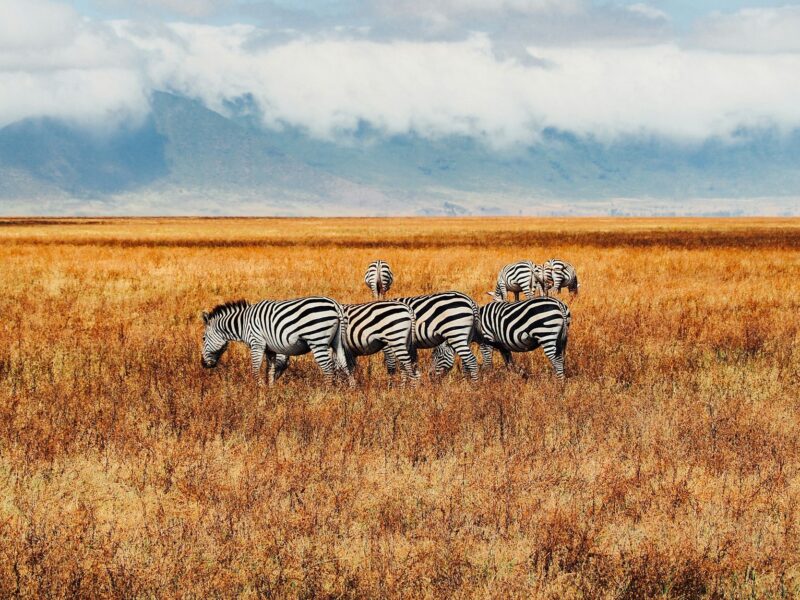
Zebra
Punda milia
Hippo
Kiboko
Cheetah
Duma
At the hotel
English
Swahili
Water
Maji
Food
Chakula
Room
Chumba
Good night
Usiku mwema
Tips for learning
Practise with your guide; Tanzanians appreciate any effort.
Phrases for your guide
English
Swahili
Let’s go
Twende
Stop here please
Simama hapa tafadhali
Wait
Subiri
Beautiful
Nzuri sana
Respect phrases
English
Swahili
Excuse me
Samahani
Congratulations
Hongera
Welcome
Karibu
Swahili in everyday situations
At breakfast your waiter may greet you with ‘Habari za asubuhi?’ (How is your morning?). Reply ‘Nzuri, asante’ (Good, thank you). When leaving a lodge, staff often say ‘Safari njema’ (Have a good journey). On game drives, guides use Swahili animal names on the radio, so learning a few helps you follow the action.
Fun facts about Swahili
‘Safari’ itself is a Swahili word meaning journey
‘Hakuna matata’ really is used, meaning ‘no worries’
Swahili is spoken by tens of millions of people across East Africa
Many words come from Arabic, reflecting centuries of coastal trade
Learning resources
Phrasebooks and language apps cover the basics. Your guide will be happy to teach you more on the road.
A tiny grammar lesson
Swahili, or Kiswahili as it is called in the language itself, is a Bantu language. Its words change at the start rather than the end, using prefixes that show which group, or noun class, a word belongs to. You do not need to master this, but seeing the pattern helps you remember words.
Prefix
Meaning
Example
M-
One person
Mtoto (child), Mtalii (tourist)
Wa-
More than one person
Watoto (children), Watalii (tourists)
Ki-
Language or a thing
Kiswahili (Swahili language), Kiingereza (English)
Ma-
Plural of some nouns
Maji (water), Matunda (fruits)
Telling the time the Swahili way
Swahili time starts counting at sunrise, around 6 am, rather than at midnight. So ‘saa moja’ (hour one) means 7 o’clock, and ‘saa mbili’ (hour two) means 8 o’clock. If someone says to meet at ‘saa nne’, they mean 10 am. Add ‘asubuhi’ for morning, ‘mchana’ for afternoon, ‘jioni’ for evening and ‘usiku’ for night. When in doubt, check whether a time is in Swahili or English time; it can save a long wait.
Food and drink
English
Swahili
Tea
Chai
Coffee
Kahawa
Cold beer
Bia baridi
Fish
Samaki
Chicken
Kuku
Meat
Nyama
Rice
Wali
Banana
Ndizi
Delicious
Tamu
The bill, please
Naomba bili
‘Nyama choma’, or grilled meat, is a much-loved meal across Tanzania. Try it in Arusha with our Arusha travel guide, or explore coastal dishes in the Zanzibar food guide.
More numbers
Number
Swahili
20
Ishirini
50
Hamsini
100
Mia moja
1,000
Elfu moja
10,000
Elfu kumi
These help at markets, where prices in shillings are often in the thousands. Our money in Tanzania guide covers paying and bargaining.
Emergencies and directions
English
Swahili
Help!
Saidia!
I am sick
Mimi ni mgonjwa
Doctor
Daktari
Toilet
Choo
Left / right
Kushoto / kulia
Straight on
Moja kwa moja
Using Swahili on your trip
Your guide is your best teacher. On a game drive, ask the Swahili name of every animal you see; by the end of a week you will know dozens. In Zanzibar and on the coast, Swahili is spoken with a slightly different accent and some different words, but the phrases here work everywhere. Learning a few words is also part of travelling respectfully, as explained in our sustainable safari guide. For practical trip information, see the Tanzania travel guide.
Numbers
Number
Swahili
1
Moja
2
Mbili
3
Tatu
4
Nne
5
Tano
10
Kumi
Useful phrases
English
Swahili
How much?
Bei gani?
Where is…?
…iko wapi?
No problem
Hakuna matata
I don’t understand
Sielewi
Planning a trip? Our Arusha team can put together a tailor-made, itemised quote, often the same day. Plan my safari or browse our private safari deals.
Further reading
Learn more from independent, authoritative sources:
It is a common word for a foreigner, usually a white person. It is generally used descriptively rather than as an insult, and children may call it out in a friendly way.
Is the Swahili in Zanzibar different?
Zanzibar is often considered the heartland of standard Swahili. Accents and some local words differ, but visitors will find the same basic phrases understood everywhere in Tanzania.
How do I reply when someone says 'Karibu'?
Simply say 'Asante' (thank you). 'Karibu' is also the polite reply when someone thanks you, meaning 'you are welcome'.
Is English widely spoken?
Yes, in the tourism sector.
Inspired?
Turn This Into Your Own Tanzania Safari
Tell us your dates and we will send real availability and an itemised quote, often the same day.
Your Tanzania Private Safari Starts with a Conversation
Send us your dates and group size. A planner in Arusha will check real availability and reply with a clear, itemised quote. Email: safari@wildblickexpeditions.com