A 9 days Tanzania group joining safari is built around the Ndutu plains and the central Serengeti, giving the group time for the calving season when it is under way. You share a vehicle and guide with other travellers while visiting Tarangire, Lake Manyara and the Ngorongoro Crater along the way.
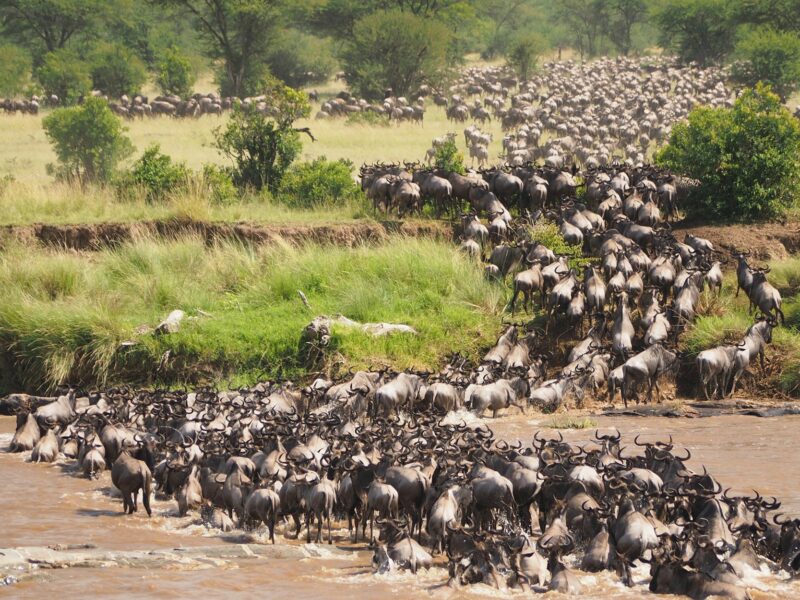
In January and February, Ndutu can be one of the most exciting places in Africa, with newborn wildebeest attracting lions, cheetahs and hyenas. Should you wish to keep this route but travel only with your own party, ask about a Tanzania private safari through our private safari team.
At a Glance
- Duration: 9 days, 8 nights
- Route: Arusha, Tarangire, Lake Manyara, Ndutu, central Serengeti, Ngorongoro Crater, Arusha
- Best months: January to February for calving; June to October with extra Serengeti time instead of Ndutu
- Ideal for: wildlife enthusiasts, photographers and solo travellers with time
- Pace: comfortable, with several full days in one area
Day-by-Day Itinerary
Day 1: Arusha to Tarangire
The group leaves Arusha in the morning for the two-to-three-hour drive to Tarangire. Your afternoon game drive explores the river and swamps, where elephants and buffalo come to drink.
Overnight: a budget camp or basic lodge in Mto wa Mbu village.
Day 2: Lake Manyara
Explore the lush forest and floodplain of Lake Manyara, home to baboons, blue monkeys and many birds. The lake’s edge can host pelicans and flamingos, depending on water levels.
Overnight: one of the simple Karatu lodges or campsites used by our groups.
Day 3: Karatu to Ndutu
You cross the Ngorongoro highlands and descend to the short-grass plains around Lake Ndutu, on the border of the Serengeti. In the calving season, herds of wildebeest and zebra may spread across the horizon.
Overnight: campsite or simple camp in the Ndutu area.
Day 4: Ndutu Plains
Spend the whole day following the herds. Births happen mainly in the morning, and newborns are up on their feet within minutes, while predators patrol the edges. Big cat activity can be intense here, but no specific sighting is assured.
Overnight: same Ndutu site.
Day 5: Ndutu to Central Serengeti
The group drives north across the plains towards Seronera, game viewing on the way. The landscape shifts from open grassland to woodland and kopjes.
Overnight: Seronera area campsite or a simple tented camp.
Day 6: Central Serengeti
A full day in the Seronera area offers chances to see leopards in sausage trees, hippos in river pools and lions lounging on rocks. Your guide adapts the route to recent sightings.
Overnight: same central Serengeti site.
Day 7: Serengeti to Karatu
After a morning drive you leave the Serengeti and climb back into the highlands. You may stop at Olduvai Gorge if the group wishes.
Overnight: back in Karatu at a campsite or simple lodge.
Day 8: Ngorongoro Crater
Descend early into the crater for a full game drive among dense herds and resident predators. The crater is one of the best places in Tanzania to look for black rhino, though they are often distant.
Overnight: Karatu area.
Day 9: Mto wa Mbu Village and Return
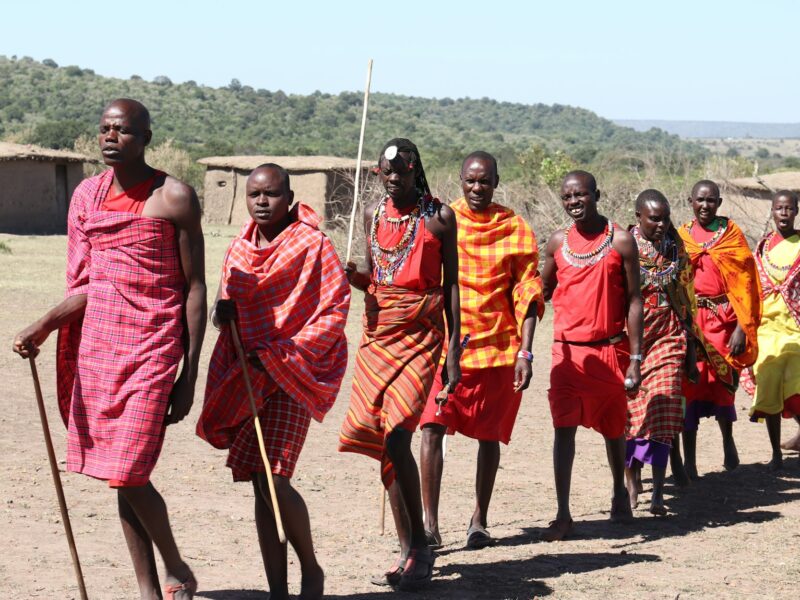
Before heading home, the group can join a guided walk through Mto wa Mbu, a busy market town with many different communities. Then it is a short drive back to Arusha.
Overnight: own arrangements.
Included and Not Included
Our quotes usually include:
- Shared vehicle and professional safari guide
- Park, crater and Ndutu area fees
- Meals and drinking water on safari
- Eight nights at campsites or simple lodges
Our quotes usually exclude:
- International flights and visas
- Tips and drinks
- Personal travel insurance
How the Group Shares Nine Days
Over nine days, a group develops its own routines and inside jokes. The guide involves everyone in planning, especially in Ndutu, where decisions about which herd to follow can change by the hour. Expect a maximum of about six or seven travellers in the vehicle.
Bring a compact soft bag, warm layers for highland nights and a rain jacket, as short showers can fall in the calving season. Solo travellers get plenty of company and can often request a single tent.
Sharing does involve compromise. The group moves together, meal times are fixed and accommodation is basic, which some travellers love and others find limiting. Our small group joining safaris page sets out the differences in more depth.
Calving Months, Dry Months and Who Comes
January and February are ideal for the calving season around Ndutu, although the herds’ exact position is never certain. Between June and October, we usually replace the Ndutu nights with extra time in the central or northern Serengeti. Departures thin out during April and May.
This trip suits travellers keen on wildlife behaviour. Compare it with the 8 days group joining safari and the 10 days group joining safari, or see the full list on the group joining safari hub. Learn more about the area on our Ndutu safari area page.
See Tanzania National Parks for park details and the Ngorongoro Conservation Area Authority for Ndutu and crater rules.
Ask About Departures
Use our plan my safari form to ask about nine-day groups, especially during the busy calving months.